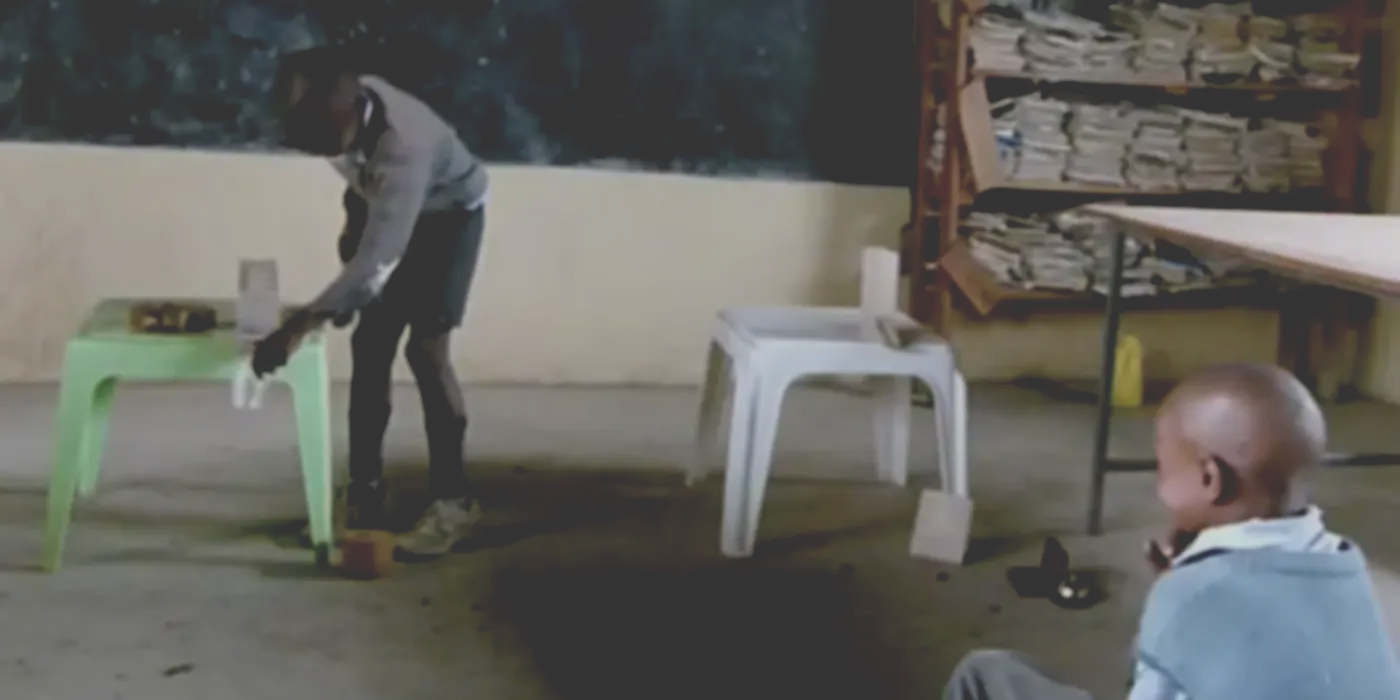
Kids Helping Kids Is Universal - But Cultures Help Differently
A simple game reveals a universal instinct in kids
A simple game reveals a universal instinct in kids


Results from the first study of the Asian longhorned beetle (ALB) in forests show that the invasive insect can easily spread from tree-lined city streets to neighboring forests. Successful ALB eradication efforts in Chicago, and ongoing eradication efforts in Boston, New York, and other U.S. cities have focused exclusively on urban street trees and the ongoing ALB infestation in Worcester, Mass., is the only outbreak so far that has allowed the beetle to invade nearby closed-canopy forests.

King Solomon is credited with a lot. He knew everything, he could turn lead into gold, conjure demons and become invisible. Jamaicans even credit him with discovering marijuana. If you know the Captain Marvel comic book superhero, the keyword he uses to change from Billy Batson to Captian Marvel is an acronym, SHAZAM - the S stands for Solomon and Solomon gave Cap wisdom.(1)But he was also the prototype for Faust. According to the Talmud, written around 500 A.D., Solomon cut a deal with the devil to build the great temple of Jerusalem – with disastrous consequences.
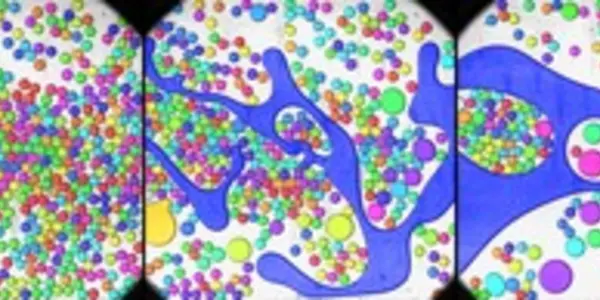
In microfluidic devices, small separated droplets flow in a stream of carrier liquid. Occasionally, selected droplets have to be merged to carry out a chemical reaction, which can be greatly facilitated with the use of electric field through a process of electrocoalescence. Researchers from the Institute of Physical Chemistry of the Polish Academy of Sciences have recently found what governs the process and how to maximize the efficiency of merging.

A fossil discovered in northeast China has pushed back mammal evolution 35 million years and provides new information about the earliest ancestors of most of today's mammal species—the placental mammals. A team of scientists led by Carnegie Museum of Natural History paleontologist Zhe-Xi Luo describes in Nature Juramaia sinensis, a small shrew-like mammal that lived in China 160 million years ago during the Jurassic period. Juramaia is the earliest known fossil of eutherians, the group that evolved to include all placental mammals, which provide nourishment to unborn young via a placenta.

Successful aging and positive quality of life indicators correlate with sexual satisfaction in older women, according to a report in the Journal of the American Geriatric Society which also shows that self-rated 'successful' aging, quality of life and sexual satisfaction appear to be stable even in the face of declines in physical health of women between the ages of 60 and 89.The study used 1,235 women enrolled at the San Diego site of the Women's Health Initiative (WHI) study, an ongoing program funded by the National Institutes of Health which has addressed causes of death, disability and quality of life in more than 160,000 generally healthy, post-menopausal women since 1993.
The authors of a new study in Nature Neuroscience studied mechanisms used by the brain to store information for a short period of time. The cells of several neural circuits store information by maintaining a persistent level of activity; a short-lived stimulus triggers the activity of neurons, and this activity is then maintained for several seconds. The mechanisms of this information storage phenomenon occurs in very many areas of the brain.
A robot named MABEL was created in a University of Michigan lab but 'she' can run like a human, up to 6.8 miles per hour.Unless HYDRA and SHIELD exist in secret underground lairs, MABEL is the world's fastest bipedal robot - with knees, that is.

Science, history and a little detective work? Yes, please! Tony Lupo, professor and department chair of atmospheric sciences at the University of Missouri, and Mike Madden, a meteorology student, pulled together bits and pieces of global meteorological flotsam to compile a Missouri weather forecast from 150 years.They created their weather forecast for the Battle of Carthage, which took place early in the Civil War on July 5, 1861. Why that one? Well, they live in Missouri.

2007 OR10, nicknamed Snow White by the graduate student who discovered it because it would presumably be white due to breaking off from icy fellow dwarf planet Haumea, turned out to be red.Well, it still turned out to be ice also but the surprise is it may have methane slowly dissipating into space, which means it may have once had an atmosphere.

A study on activity in a the parahippocampal cortex (PHC) found people will remember a visual scene when the brain is more active.The PHC, which has previously been linked to recollection of visual scenes, wraps around the hippocampus, a part of the brain critical for memory formation. However, this NeuroImage study is the first to investigate how PHC activity before a scene was presented would affect how well the scene was remembered.

The fossils of 3.4-billion-year-old microbes that used sulfur compounds for energy have been found in rocks from Western Australia, reports a paper published in Nature Geoscience. David Wacey, Martin Brasier and colleagues analyzed microstructures present in rocks from the Strelley Pool Formation in Western Australia, and determined that they were the fossils of ancient microbes. The fossils were associated with tiny crystals of pyrite, a mineral composed of iron and sulfur. The isotopic composition of the sulfur suggests that the pyrite was formed as a by-product of cellular metabolism based on sulphate and sulfur.

At Science 2.0 we are not big fans of being clever just for the sake of being clever - we were smart kids and there are smart kids today and the belief by government funding agencies that STEM outreach needs to be cartoons and video games and mascots is a little patronizing to intelligent young people.So young people do not need to be talked down to but some things are just cool and everyone likes cool - magic goggles and interactive maps are just that.Gaetano Ling, an Imperial College London postgraduate, has developed interactive tools to make museums and galleries a little less 'dry' for children, including magic goggles, a Harry Potter style map and brushes that make sounds.