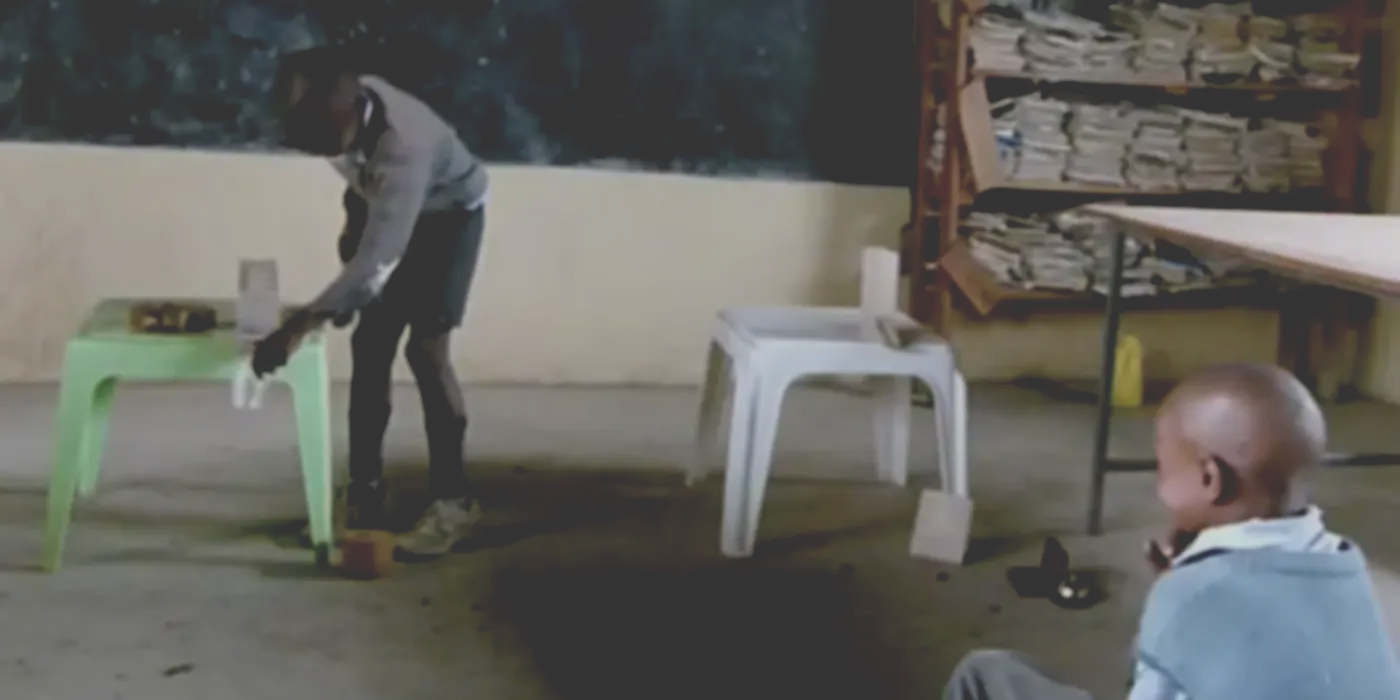
Kids Helping Kids Is Universal - But Cultures Help Differently
A simple game reveals a universal instinct in kids
A simple game reveals a universal instinct in kids


A new paper says that as many as 20 percent of the most distant galaxies currently detected appear brighter than they actually are, because of an effect called "strong gravitational lensing."How strong gravitational lensing works; from our view on Earth, if a faraway galaxy and a nearby galaxy line up on the sky, the gravity of the nearby galaxy bends the light from the faraway galaxy, as if the nearer galaxy were a magnifying glass, or lens. Einstein predicted decades ago that gravity could bend light, and astronomers have since proven him right. In fact, modern astronomers exploit the effect to find distant objects that would otherwise be invisible, such as planets orbiting other stars.

Scientists are reporting the development of a new, ultra-light form of 'frozen smoke', the world's lightest solid material, and the new kind has amazing strength and an incredibly large surface area. The new "multiwalled carbon nanotube (MCNT) aerogel" could be used in sensors to detect pollutants and toxic substances, chemical reactors, and electronics components.

A cave inside some remote mountains of Armenia contain what is being called the oldest winery yet discovered, dating back to around 4,100 B.C., 1,000 years earlier than previous finds.The discovery was made in the same mysterious Armenian cave complex where ancient leather shoe was found last summer. This is the oldest complete wine production facility ever found, including grape seeds, withered grape vines, remains of pressed grapes, a rudimentary wine press, a clay vat apparently used for fermentation, wine-soaked potsherds, and even a cup and drinking bowl.

The Fermi Gamma-ray Space Telescope has detected beams of antimatter launched by thunderstorms, which act like enormous particle accelerators and can emit gamma-ray flashes called TGFs - and also high-energy electrons and positrons. TGFs are produced inside thunderstorms and shown to be associated with lightning. It is estimated that about 500 such flashes occur daily worldwide, but most go undetected. Scientists now think that most TGFs produce particle beams and antimatter.

Hanny's Voorwerp, a strange, glowing green cloud of gas that has mystified astronomers since its discovery in 2007, has gotten a better look by Hubble. The cloud of gas is lit up by the bright light of a nearby quasar and shows signs of ongoing star formation. Hanny's Voorwerp (Hanny's Object in Dutch) is a mysterious, glowing green blob of gas is floating in space near a spiral galaxy - the size of the Milky Way.
Why haven't antioxidant therapies yielded more positive results? The answer may be that Nrf2, a protein that plays an important role in some antioxidant therapies, may not be as effective due to additional mechanisms that cause it to promote atherosclerosis - clogging of the arteries.Nrf2 has been thought to be an important drug-therapy target for diseases such as cancer because it can induce chemopreventive activity by attaching to specific sequences of DNA, leading to the release of numerous antioxidant and anti-inflammatory genes and enzymes that can decrease or inhibit the effects of carcinogens.
Without question nanotechnology is a key component in our energy future. In recent years, developers have been investigating light-harvesting thin film solar panels made from nanotechnology and promoting efficiency metrics which they say make the technology marketable but a researcher has challenged recent "charge" measurements for increasing solar panel efficiency.While we need to invest in the future, we need to make sure there is no hype that promises to increase efficiencies in thin film panels.

Neurons within the brain's neocortex behave much like people in social networks, with a small population of highly active members who give and receive more information than the majority of other members, says Alison Barth, associate professor of biological sciences at Carnegie Mellon in new research. By identifying these neurons, scientists could increase understanding of the neocortex, thought to be the brain's center of higher learning.
The compound resveratrol found in grapes displays not only antioxidant but other positive properties, according to a study published this week in the Journal of Biological Chemistry.Resveratrol stimulates the expression of adiponectin, a hormone derived from cells that manufacture and store fat, the research team found. Adiponectin has a wide range of beneficial effects on obesity-related medical complications, said senior author Feng Liu, Ph.D., professor of pharmacology at the University of Texas Health Science Center at San Antonio and member of the Barshop Institute of Longevity and Aging Studies at the Health Science Center.
A new study following the evolution of lice discovered something interesting - modern humans started wearing clothes about 170,000 years ago, and that was a key factor in successfully migrating out of Africa. Principal investigator David Reed, associate curator of mammals at the Florida Museum of Natural History on the UF campus, studies lice in modern humans to better understand human evolution and migration patterns. His latest five-year study used DNA sequencing to calculate when clothing lice first began to diverge genetically from human head lice.
Ibn al-Haytham can be called the father of modern optics. His 11th-century Book of Optics, which was published 1000 years ago, is considered by some to be in the same league as Newton's Principia regarding its influence in physics, yet very little is known about the writer.
It may seem intuitive that the Moon might have a core, just as Earth does, but science doesn't work on intuition. Absent drilling or inference, it has been hypothesized that Luna has a core but now researchers are closer to an answer, thanks to old Apollo missions.A group of researchers analyzed older seismic data using new techniques and now say the Moon possesses an iron-rich core with a solid inner ball nearly 150 miles in radius, and a 55-mile thick outer fluid shell.