You Feel Colder As You Age: The Science Reason Why
Older people report feeling colder, enough that it is clearly happening, but why has been a mystery. Until now.
Older people report feeling colder, enough that it is clearly happening, but why has been a mystery. Until now.


Speciation, where different populations of the same species split into separate species, is central to understanding evolution.As would be expected in a complex process like evolution, it's difficult to observe in action. A new study in American Naturalist says they have captured two populations of monarch flycatcher birds just as they arrive at that 'evolutionary crossroads' of speciation - and it involves a change in a single gene.
Dogs aren't the only animals that bark, they are just the most famous. Deer, monkeys and even birds also bark but what makes dogs different is a subject of interest in a new evolutionary biology study.In a recent Behavioural Processes paper, researchers have provided scientific literature with what they say is the first consistent, functional and acoustically precise definition of this household animal sound.Kathryn Lord, a graduate student in organismic and evolutionary biology at University of Massachusetts Amherst, says, “We suggest an alternative hypothesis to one that many biologists seem to accept lately, which seeks to explain dog barking in human-centric terms and define it as an internally motivated vocalization strategy.”

As teenagers' drive for peer approval begins to eclipse their family affiliations, things change in their brains - literally. Brain scans of teens sizing each other up reveal an emotion circuit activating more in girls as they grow older - but not in boys.So that urban legend about girls maturing faster than boys is true, if by faster maturity we mean becoming overly emotional drama queens. A new study says emotion circuitry diverges in the male and female brain during a developmental stage in which girls are at increased risk for developing mood and anxiety disorders.
It is known that memory begins during the prenatal period but little has been discovered about the exact timing or for how long memory lasts. A new study done in Holland has found fetal short-term memory in babies at 30 weeks in the womb.
The study provides insights into fetal development and may help address and prevent abnormalities, say researchers at Maastricht University Medical Centre and the University Medical Centre St. Radboud who published their results in Child Development.
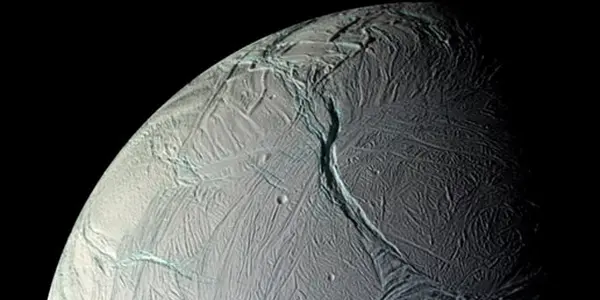
A new study says both the tiger stripes and a subsurface ocean on Saturn's moon Enceladus are the result of the moon's unusual chemical composition and not a hot core, as previously believed.shedding light on the evolution of planets and guiding future space exploration.Dr Dave Stegman, a Centenary Research Fellow in the School of Earth Sciences at the University of Melbourne, led the study and says that part of the intrigue with Enceladus is that it was once presumed to be a lifeless, frozen ice ball until a water vapour plume was seen erupting from its surface in 2006.

Australia's top models are going to be on the main stage in Cairns this week but don't get too excited. They're only here to show new ways to understand climate change, improve air safety and enhance agricultural sustainability - the small stuff unless you care about life as we know it. Fortunately, these numerical models understand those things much better than actual supermodels.The gathering is the IMACS/MODSIM Congress and will attract more than 650 experts in modelling and simulation from Australia and overseas to the Cairns Convention Centre from July 13-17, 2009.

Climate science is tricky business because the atmosphere and Mother Earth are an eloborate, complex system no one understands. So how much Earth's climate will warm due to carbon emissions is open to speculation but a new study this week suggests scientists' best predictions about global warming are likely incorrect. Which means they could be high ... but they could also be really low.The study in Nature Geoscience says that climate models explain only about half of the heating that occurred during a well-documented period of rapid global warming in Earth's ancient past.
It will enrage our fellow Californians, who regard the wholesomeness and warmth of the in-home hearth as akin to fratricide, but when it comes down to it, people in the Third World, like the US is becoming economically, are going to respond to the stress of rising natural gas prices in ways that activists in cozy office buildings do not like.How they heat their homes will be at the top of the list for everyone in the upper part of North America this winter - which means out-of-fashion alternative energy options, the kind our ancestors used; wood burning stoves.

Cars that drive themselves? Being cut up by some remote hand that never touches you? It's not a Stephen King novel, it's the latest in robotics and it's coming to a Senate floor near you.Last week the National Science Foundation (NSF) presented took over the Hart Senate Office Building and had a luncheon briefing for Senate members and staff on cyber-physical systems (CPS).
Nicolaus Copernicus (1473-1543) discovered that the Earth orbits the Sun, thus paving the way for our modern view of the world. It took a few hundred years for religion to apologize for the reception his discovery got but luckily the the International Union of Pure and Applied Chemistry (IUPAC) only took a dozen years after the discovery of element 112 to honor him.Element 112 was discovered at the GSI Helmholtzzentrum für Schwerionenforschung (Center for Heavy Ion Research) in Darmstadt.

Ancient nomadic hominids moved from place to place but often how has been subject to speculation. Now researchers think they have one answer, using the dental fossils of animals eaten by Homo heidelbergensis.In the French cave of Arago, an international team of scientists headed by researchers from the Catalan Institute of Human Paleoecology and Social Evolution (IPHES) in Tarragona has analyzed the dental wear of herbivorous animals, the first time that an analytical method has allowed the establishment of the length of human occupations at archaeological sites. The key is the last food that these hominids consumed. This told them some details on the vegetation in the environment and the way of life of Homo heidelbergensis.

Is it a magic trick? A man takes a paper clip and bends it so that it is just a crooked piece of wire, then he throws it into a bowl of hot water and instantly the metal wire returns to the shape of the paper clip.This phenomenon is called the shape memory effect and it can be observed in certain metallic alloys, known as shape memory alloys. These kinds of materials are ideal for many applications. In aerospace technologies, solar sails can unfold in outer space. In cardiology, stents are small tube-shaped, metal grid frameworks folded together and inserted into blood vessels where they expand and prevent the vessels from becoming blocked.