Enzyme USP15 Limits Ovarian Cancer Cells And Boosts Chemotherapy
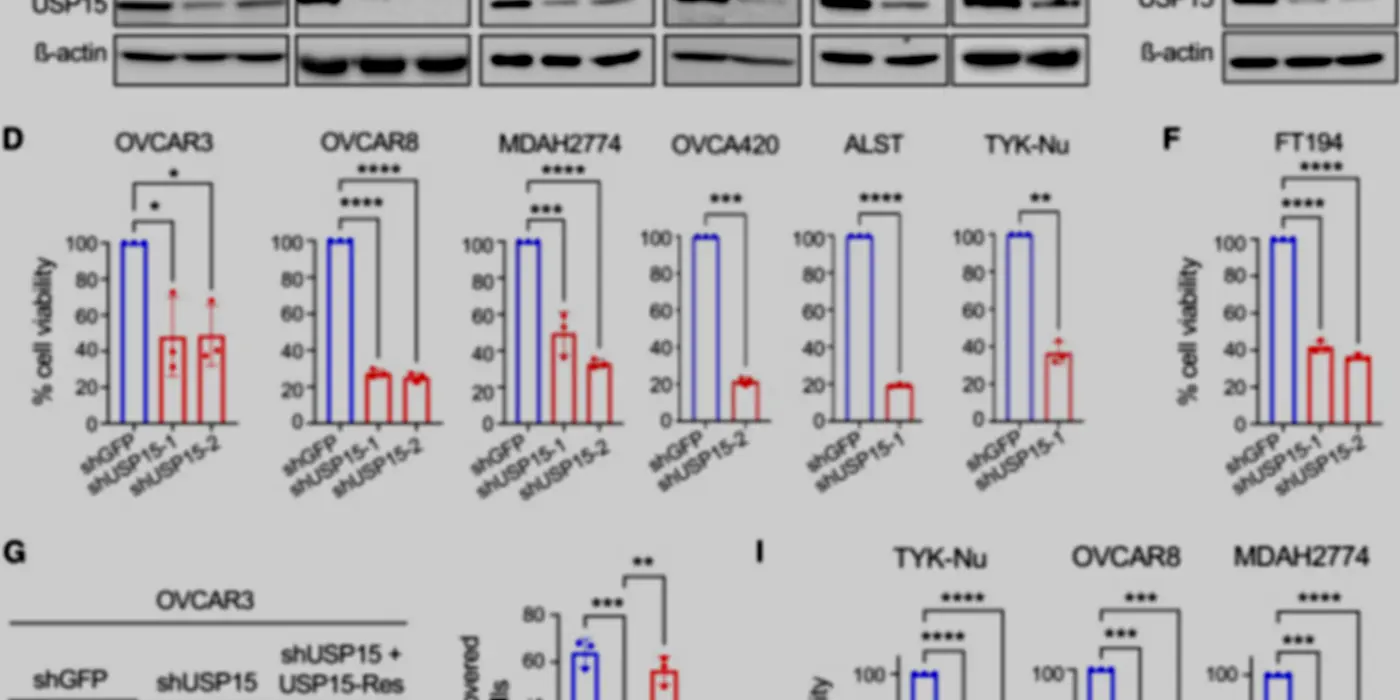
Ovarian cancer is devastating, five-year survival rate under 30%, when detected after it has spread. New basic research may improve that.
Ovarian cancer is devastating, five-year survival rate under 30%, when detected after it has spread. New basic research may improve that.


Human brains have tripled in size over the past 2 million years, growing much faster than those of other mammals.What might the reasons be for such dramatic brain expansion?University of Missouri researchers studied three hypotheses for brain growth: ecological demand, social competition and climate change.Yes, climate change. They're not stupid. An entire presidential cabinet is stuffed with carbon dioxide true believers so it's good diplomacy to at least consider global warming may make us devolve - that would be terrific marketing for a carbon trading scheme. Luckily, the much more likely social competition was determined in their analysis as the major cause of increased cranial capacity.

The largest animals ever to have walked the face of the earth just got a little smaller, according to a paper published today in the Zoological Society of London's Journal of Zoology. Why aren't they as big as previously thought? The researchers say that the original statistical model used to calculate dinosaur mass is flawed, which led to them suggesting dinosaurs have been oversized. Widely cited estimates for the mass of Apatosaurus louisae, one of the largest of the dinosaurs, may be double that of its actual mass instead of the commonly cited 33-38 tons it may be as light as 18 tons.
University of Georgia researchers have developed a successful way to grow molecular wire brushes that conduct electrical charges, a first step in developing biological fuel cells that could power pacemakers, cochlear implants and prosthetic limbs. UGA chemist Jason Locklin and graduate students Nicholas Marshall and Kyle Sontag grew polymer brushes, made up of chains of thiophene and benzene, aromatic molecules sometimes used as solvents, attached to metal surfaces as ultra-thin films.
Stem cell research is a major challenge for medicine. Recently, asymmetric cell division was filmed in vivo in fruit fly germinal stem cells for the first time by the team of Jean-René Huynh at the Institut Jacques Monod (CNRS/Université Paris Diderot), now working at the ‘Génétique du développement et cancer' laboratory (Institut Curie/CNRS/UPMC/Inserm). This paper on stem cell behavior was published in Nature Cell Biology.
When you are concentrating on something, neural "noise" may cause you to miss important changes in your environment, new research indicates, and this binocular rivalry which occurs when the two eyes view radically different images means the brain temporarily rejects, or suppresses, one of those images in favor of the other.The image that commands our visual awareness switches between the two over time. This fluctuation in visual awareness enables cognitive neuroscientists to study the neural correlates of awareness and consciousness.
According to results of a study published in Cancer Prevention Research, men with prostate cancer who consumed the active compounds in green tea demonstrated a significant reduction in serum markers predictive of prostate cancer progression. Green tea is the second most popular drink in the world, and some epidemiological studies have shown health benefits with green tea, including a reduced incidence of prostate cancer, according to Cardelli. However, some human trials have found contradictory results. The few trials conducted to date have evaluated the clinical efficacy of green tea consumption and few studies have evaluated the change in biomarkers, which might predict disease progression.
Sperm bigger than the actual creator of the sperm and phallic mushrooms have been all the rage this week, but immobilized microbes that can break down potentially harmful Phthalic Acid Esters (PAEs), commonly known as phthalates, are big news too, according to researchers writing in the International Journal of Environment and Pollution. So now we get to talk about phthalic symbols.
Plagued by jet lag? If we can send a rocket to the moon why can't we figure out how to fly to different time zones and still be fresh? Researchers at Brigham and Women's Hospital and the University of Michigan say they have developed a software program that prescribes a light exposure regimen for avoiding jet lag.

Renate Matzke-Karasz from Ludwig-Maximilians-Universität Munich has led an international team of scientists who are studying sperm specimens from the London Natural History Museum’s collections. Their research has revealed fossilized evidence for reproduction using giant sperm in a group of small aquatic crustaceans, called ostracods, dating back to 100 million years ago.
The University of Leicester’s School of Management wonders if more religious control of banks might have lessened the impact of the global financial crisis. Buying into the notion that a 'sub-prime' housing market led to the latest global financial crisis, they say developing new practices which can address the issues that led the world to the brink of collapse are a vital part of recovery.Professor Martin Parker, Director of Research for the Management School, thinks a banking system consistent with the principles of Islamic law (Sharia) may be a solution so the university is hosting a conference to consider potential lessons from the Islamic Banking and Finance sector.
Researchers from the University of Pittsburgh and the Buffalo Museum of Science say we've been making a mistake using DNA to contend that humans are most closely related to chimpanzees. The fossil record says otherwise, they report in the Journal of Biogeography.Jeffrey H. Schwartz, professor of anthropology in Pitt's School of Arts and Sciences and president of the World Academy of Art and Science, and John Grehan, director of science at the Buffalo Museum, conducted an analysis of the physical features of living and fossil apes that suggested humans, orangutans, and early apes belong to a group separate from chimpanzees and gorillas.

You've heard legends of snakes that hypnote their prey - Kaa in "The Jungle Book" did it and Disney is renowned for their scientific accuracy - but a tentacled snake from South East Asia has gone hypnosis one better; it startles its prey so that the fish turn toward the snake's head to flee instead of turning away. In addition, the fish's reaction is so predictable that the snake actually aims its strike at the position where the fish's head will be instead of tracking its actual movement.