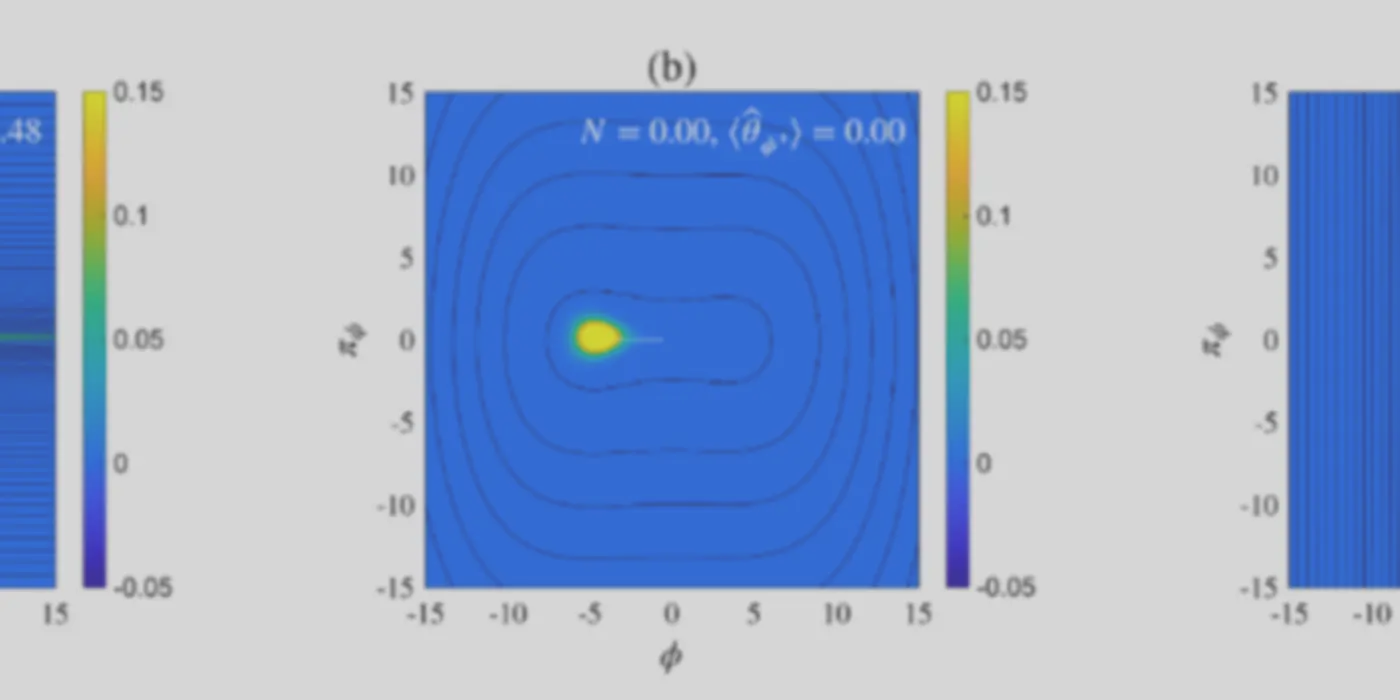
Sorry Higgs, There May Be A New Contender For Low Energy States
If we're trapped in a false vacuum, there's still hope to break free of cosmic lockdown
If we're trapped in a false vacuum, there's still hope to break free of cosmic lockdown


Sometimes studies are done that are common sense but, without them, people would say, about things that are common sense, 'no studies actually show that... so that is why we mention a recent study showing that shade trees on the west and south sides of a house in California can reduce a homeowner's summertime electric bill by about $25.00 a year. The study, conducted last year on 460 single-family homes in Sacramento, is the first large-scale study to use utility billing data to show that trees can reduce energy consumption.

Brown dwarfs, objects that are less massive than stars but larger than planets, just got more elusive, based on a study of 233 nearby multiple-star systems by NASA's Hubble Space Telescope. Hubble found only two brown dwarfs as companions to normal stars. This means the so-called "brown dwarf desert" (the absence of brown dwarfs around solar-type stars) extends to the smallest stars in the universe.The 233 stars surveyed are part of the RECONS (Research Consortium on Nearby Stars) survey meant to understand the nature of the sun's nearest stellar neighbors, both individually and as a population. The current primary goals are to discover and characterize "missing" members of the sample of stars within 32.6 light-years (10 parsecs) of Earth.

Big volcanic eruptions over the past 450 years have temporarily cooled weather in the tropics but suggest that such effects may have been masked in the 20th century by rising global temperatures, say researchers. The paper, which shows that higher latitudes can be even more sensitive to volcanism, appears in the current issue of Nature Geoscience.
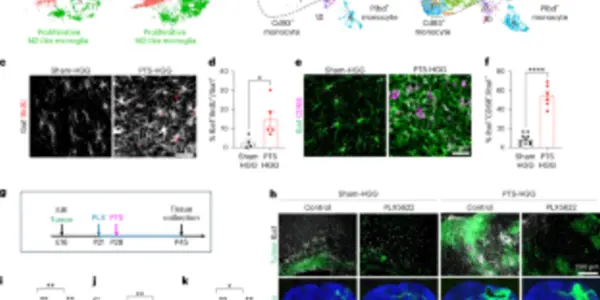
Researchers at the Salk Institute for Biological Studies say they have developed a new mouse model of glioblastoma, the most common and deadly brain cancer in humans, that more closely resembles the development and progression of human brain tumors that arise in people. Trying to mimic randomly occurring mutations that lie at the heart of all tumors, the Salk researchers used modified viruses to shuttle cancer-causing oncogenes into a handful of cells in adult mice. Their strategy, described in Nature Medicine, could prove a useful method to faithfully reproduce different types of tumors.
Researchers have developed a new, highly efficient way to pair up cells so they can be fused together into a hybrid cell. The new technique should make it much easier for scientists to study what happens when two cells are combined. For example, fusing an adult cell and an embryonic stem cell allows researchers to study the genetic reprogramming that occurs in such hybrids.The researchers, led by a collaboration between Joel Voldman, associate professor of electrical engineering and computer science at MIT, and Rudolf Jaenisch, professor of biology and a member of the Whitehead Institute, report the new technique in the Jan. 4 online edition of Nature Methods.
People with a sleep disorder that causes them to kick or cry out during their sleep may be at greater risk of developing dementia or Parkinson’s disease, according to a study published in Neurology. The sleep disorder is called REM sleep behavior disorder. People with the disorder do not have the normal lack of muscle tone that occurs during REM sleep, often known as the dream stage of sleep. Instead, they have excessive muscle activity such as punching, kicking, or crying out, essentially acting out their dreams.
While examining patterns of DNA modification in lung cancer, a team of international researchers has discovered what they say is a surprising new mechanism. They say that "silencing" of a single gene in lung cancer led to a general impairment in genome-wide changes in cells, contributing to cancer development and progression.In the Cancer Research study they also say they found a link between modification of the key gene, MTHFR, and smoking by lung cancer patients – even if the patient had smoked for a short period of time.
Variants of numerous DNA repair genes initially appeared to be statistically significantly associated with cancer risk in epidemiological studies. When the data from individual studies are pooled, however, few DNA repair gene variants appear truly associated with increased cancer risk, according to a field synopsis published in the Journal of the National Cancer Institute.Because DNA damage is associated with cancer development, researchers hypothesized that genes required for DNA repair may influence risk of cancer. Initial reports supported the idea. A comprehensive review of the data has not been available previously.
Recent research by Tel Aviv University finds that young blood does a body good when it comes to fighting cancer.The TAU researchers, led by Prof. Shamgar Ben-Eliyahu from the Department of Psychology's Neuroimmunology Research Unit, discovered that a transfusion of "young" blood –– blood which has been stored for less than 9 days –– increased the odds of survival in animals challenged with two types of cancer. This finding, reported in the journal Anesthesiology, may solve an age-old mystery as to why some blood transfusions during cancer-related surgeries may lead to an increased recurrence of cancer and others do not.

A team of scientists from the New York-based Wildlife Conservation Society (WCS) has reported a rapid recovery of coral reefs in areas of Indonesia, following the tsunami that devastated coastal regions throughout the Indian Ocean four years ago today.The WCS team, working in conjunction with the Australian Research Council Centre of Excellence for Coral Reef Studies (ARCCoERS) along with government, community and non-government partners, has documented high densities of "baby corals" in areas that were severely impacted by the tsunami.
The Centers for Disease Control and Prevention and the American College of Sports Medicine recommends at least 30 minutes of moderate-intensity physical activity on most days of the week in order to maintain and improve optimal health. This recommendation is especially important for older Americans, who can be less likely to fulfill this requirement, yet are more at risk for chronic diseases associated with aging.

From troubled beginnings nearly 18 years ago, the Hubble Space Telescope has revolutionized astronomy and its stunning images have stirred the imaginations of people around the globe.But as the International Year of Astronomy dawns, the renowned telescope is preparing for its final chapter, starting with the scheduled May 12 launch of the space shuttle Atlantis for NASA's fifth and final service mission to the telescope.The repairs will provide Hubble with a future as bright, though perhaps not nearly as long, as its past, said Julianne Dalcanton, a University of Washington associate professor of astronomy who for nearly a decade has used the telescope for a major part of her research.