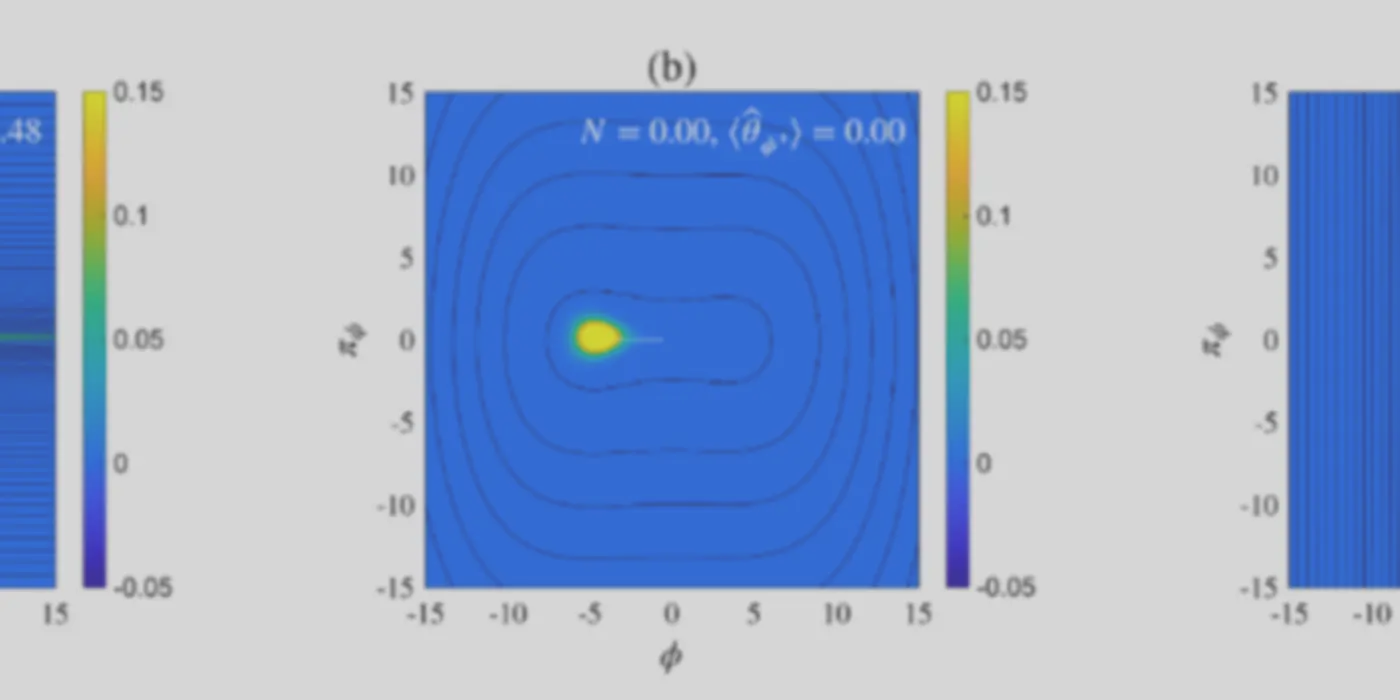
Sorry Higgs, There May Be A New Contender For Low Energy States
If we're trapped in a false vacuum, there's still hope to break free of cosmic lockdown
If we're trapped in a false vacuum, there's still hope to break free of cosmic lockdown


Group exercise programs, treadmill training and horseback riding can be healthy choices for children with developmental disabilities, a new review of studies concludes. With these kinds of activities, children with disorders such as autism, mental retardation and cerebral palsy can improve their coordination and aerobic fitness, according to research analyzed by Connie Johnson, PT, a physical therapist with the Fairfax County Public Schools in Virginia.The findings are encouraging, since studies show that children with developmental disabilities tend to be less fit than their peers. In many cases, the children lack the resources and community support that would encourage them to be more active, Johnson said.
The International Year of Astronomy 2009 (IYA2009) has been launched by the International Astronomical Union (IAU) and the United Nations Educational, Scientific and Cultural Organization (UNESCO) under the theme, “The Universe, yours to discover”. Thousands of IYA2009 events are described on the national websites, as well as on astronomy2009.org, and a few of the global projects are listed here.
Riki Ellison, Chairman of the Missile Defense Advocacy Alliance (MDAA) www.missiledefenseadvocacy.org points out in an Alert to the membership of his organization that the situation in the Middle East between Israel and the Hamas is a real life example of the need for missile defense deployment by Israel. Ellison was in Israel a few months ago and toured many of the cities under attack by Hamas. He has a good understanding of the need for a missile defense system for Israel, and shares this with the MDAA membership. His remarks are as follows:
Across the University of Colorado at Boulder campus students are sharing answers, checking their responses to questions against those of their neighbors and making adjustments to those answers in hopes of earning a better grade.Not surprisingly, the students are getting more answers right. But what may be startling is that professors are encouraging the whole thing.
A team of Johns Hopkins neuroscientists has worked out how some newly discovered light sensors in the eye detect light and communicate with the brain. The report appears online this week in Nature. These light sensors are a small number of nerve cells in the retina that contain melanopsin molecules. Unlike conventional light-sensing cells in the retina—rods and cones—melanopsin-containing cells are not used for seeing images; instead, they monitor light levels to adjust the body's clock and control constriction of the pupils in the eye, among other functions.

The future of the nanotechnology field depends on our ability to reliably and reproducibly assemble nanoparticles into 3D structures we can use to develop new technologies. According to Hao Yan and Yan Liu at Arizona State University, the greatest challenges in this burgeoning field include control over nanoscale 3D structure and imaging these tiny materials."The ability to build predicted structures and provide experimental feedback to current theories is critical to the nanotechnology field," said Yan.One approach to production of nanoscale architecture is creation of nanoparticles that assemble themselves into the desired structure. DNA molecules are an elegant biological example of small particles that self-assemble to form higher order 3D structures.
Abundant tiny particles of diamond dust exist in sediments dating to 12,900 years ago at six North American sites, adding strong evidence for Earth’s impact with a rare swarm of carbon-and-water-rich comets or carbonaceous chondrites, reports a nine-member scientific team.These nanodiamonds, which are produced under high-temperature, high-pressure conditions created by cosmic impacts and have been found in meteorites, are concentrated in similarly aged sediments at Murray Springs, Ariz., Bull Creek, Okla., Gainey, Mich., and Topper, S.C., as well as Lake Hind, Manitoba, and Chobot, Alberta, in Canada. Nanodiamonds can be produced on Earth, but only through high-explosive detonations or chemical vaporization.

Using a beam of light shunted through a tiny silicon channel, researchers have created a nanoscale trap that can stop free floating DNA molecules and nanoparticles in their tracks. By holding the nanoscale material steady while the fluid around it flows freely, the trap may allow researchers to boost the accuracy of biological sensors and create a range of new 'lab on a chip' diagnostic tools.Light has been used to manipulate cells and even nanoscale objects before, but the new technique allows researchers to manipulate the particles more precisely and over longer distances.
Did you make a resolution? Most people do, consciously or not. The end of one year and the beginning of a new one is a built-in time for reflection. You may resolve to go to the gym or learn a musical instrument but often something will come up that interrupts the routine, progress is lost and the resolution loses its ... resolve. John O’Neill, LCSW, LCDC, CSAT, director of Addiction Services for The Menninger Clinic in Houston, says all is not lost if you plan your resolution, including planning for setbacks. And his 5-step program is not just for New Years, you can resolve to make positive changes at any time.

New computer visualization technology developed by the Harvard Initiative in Innovative Computing has helped astrophysicists understand that gravity plays a larger role than previously thought in deep space's vast, star-forming molecular clouds.The insight is being illustrated in Nature's online version through new three-dimensional Portable Document Format (PDF) technology that will allow readers to view the article's key graphics using free PDF software already commonly found on computers.
An extract from grape seeds forces laboratory leukemia cells to commit cell suicide, according to researchers from the University of Kentucky. They found that within 24 hours, 76 percent of leukemia cells had died after being exposed to the extract.The investigators, who report their findings in the January 1, 2009, issue of Clinical Cancer Research, a journal of the American Association for Cancer Research, also teased apart the cell signaling pathway associated with use of grape seed extract that led to cell death, or apoptosis. They found that the extract activates JNK, a protein that regulates the apoptotic pathway.
Antibiotics may be overprescribed in kids because of concern by helicopter parents and worries about malpractice lawsuits, but in at least one instance they are saving a lot of lives - as a preventive measure to patients in intensive care units (ICUs).This from a study involving nearly sixthousand Dutch patients in thirteen hospitals. Researchers at University Medical Center (UMC) Utrecht have published their findings in an article in The New England Journal of Medicine.