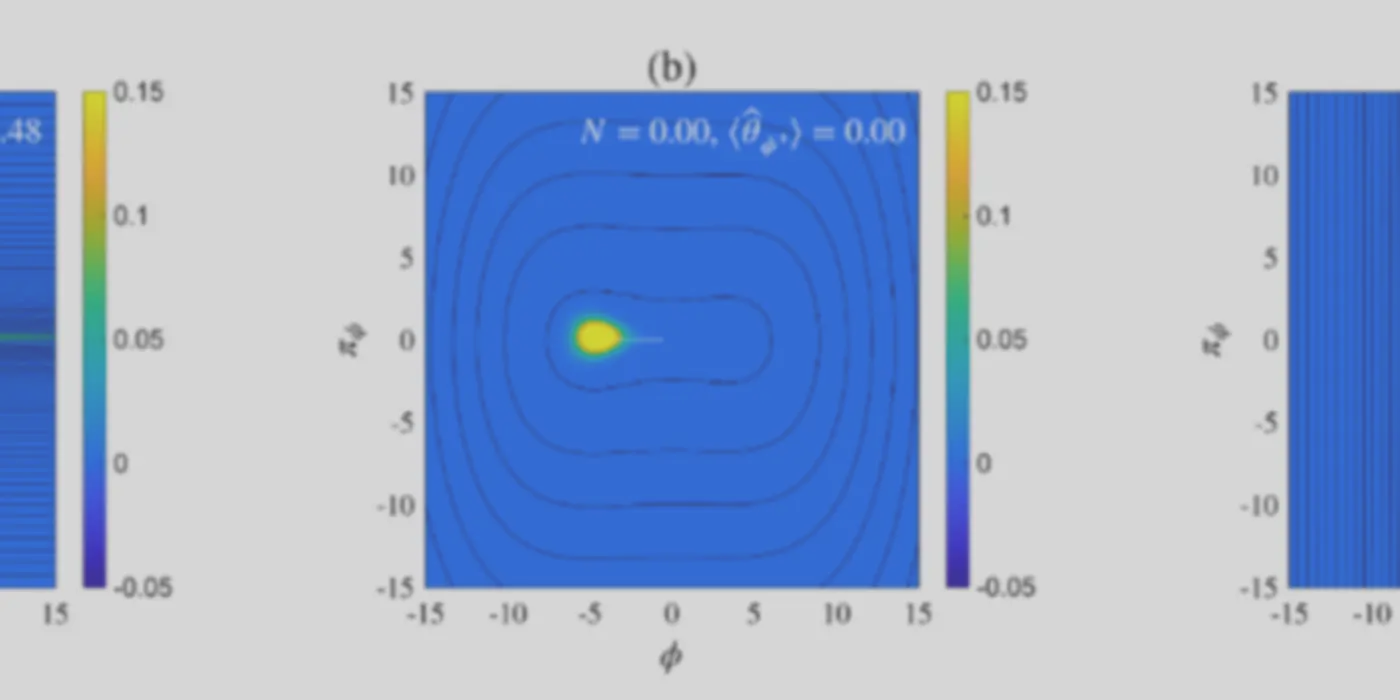
Sorry Higgs, There May Be A New Contender For Low Energy States
If we're trapped in a false vacuum, there's still hope to break free of cosmic lockdown
If we're trapped in a false vacuum, there's still hope to break free of cosmic lockdown


We all know how hard it is to avoid tasty treats such as chocolate and crisps but it is even more challenging over the festive season.
According to the British Heart Foundation, the average person will consume around 7000 calories on Christmas Day alone; the recommended daily intake for a woman is 2000 calories and 2500 for men.
Snacking is one of the biggest causes of overeating but there are ways in which we can combat this over Christmas and beyond. A recent hypothesis by Dr. James Painter of East Illinois University recommends adopting 'The Pistachio Principle'.
Dr Painter states that: "For example, people will eat larger portions when served food on a bigger plate, and will consume more alcohol when drinking from a wider glass.
Scientists at The Babraham Institute have begun to unpick the complex mechanisms underpinning the development of drug resistant cancers. They have identified a novel target that may help to combat the growing problem of therapy resistant cancers and pave the way for innovative therapeutic approaches. Their discovery, reported in the latest edition of the New England Journal of Medicine, centres on the significance of DNA damage for both normal cells and cancer cells. It reveals that a biochemical signalling pathway, that normally ensures damaged cells are diverted towards cellular suicide, is blocked in certain cancers, rendering them resistant to certain types of treatment.

It was Christmas Eve, 1858 when “people who in the streets, on pathways and in the fields saw a magnificent ball of fire appear, which shone with a brilliant, blinding light and all the colors of the rainbow, obscured the light of the moon and descended majestically from the sky.” This was the description of the meteorite that fell that evening, from a report commissioned by Rafael Martínez Fortún, of the town of Molina de Segura in Murcia, whose farm was struck by what is still the largest meteorite recovered in Spain. Since 1863, it has been exhibited in the National Museum of Natural Sciences.
New research by a Rice University psychologist clearly identifies the parts of the brain involved in the process of choosing appropriate words during speech.When speaking, a person must select one word from a competing set of words. For example, if the speaker wants to mention a specific animal, he has to single out "dog" from "cat," "horse" and other possibilities. If he wants to describe someone's temperament, he has to choose whether "happy," "sad," "ecstatic" or some other adjective is more appropriate.Tatiana Schnur, assistant professor of psychology at Rice, wanted to determine whether one particular part of the brain, the left inferior frontal gyrus (LIFG), is necessary for resolving the competition for choosing the correct word.
Researchers at the University of Southern California (USC) have, for the first time in history, derived authentic embryonic stem (ES) cells from rats. This breakthrough finding will enable scientists to create far more effective animal models for the study of a range of human diseases. The finding brings scientists much closer to creating "knockout" rats—animals that are genetically modified to lack one or more genes—for biomedical research. By observing what happens to animals when specific genes are removed, researchers can identify the function of the gene and whether it is linked to a specific disease.
Researchers have what they think may be a basic recipe for capturing and maintaining indefinitely the most fundamental of embryonic stem cells from essentially any mammal, including cows, pigs and even humans. Two new studies reported in Cell, show that a cocktail first demonstrated to work in mice earlier this year, which includes inhibitory chemicals, also can be used to successfully isolate embryonic stem cells from rats.Authentic rat embryonic stem cells had never before been established.
A slow, chronic starvation of the brain as we age appears to be one of the major triggers of a biochemical process that causes some forms of Alzheimer's disease.A new study from Northwestern University's Feinberg School of Medicine has found when the brain doesn't get enough sugar glucose -- as might occur when cardiovascular disease restricts blood flow in arteries to the brain -- a process is launched that ultimately produces the sticky clumps of protein that appear to be a cause of Alzheimer's.
Sports drinks containing protein are better at improving athletes' performance. Research published in BioMed Central's open access Journal of the International Society of Sports Nutrition has shown that drinks containing a mix of carbohydrate and protein are superior to carbohydrate-only drinks in improving cyclists' recovery from exercise.
Fish oil protects against deaths from heart problems, but doesn't provide a clear benefit in heart rhythm problems (arrhythmias), according a study published on bmj.com today.Consuming oily fish at least two to four times a week is recommended for patients after a heart attack. But the evidence for the protective effect of fish oil supplements is based on one large trial from over 10 years ago. More recent trials have showed no beneficial effect of fish oil on patient outcomes.
Deriving plentiful electricity from sunlight at a modest cost is a challenge with immense implications for energy, technology, and climate policy. A paper in a special energy issue of Optics Express, describes a relatively new approach to solar cells: lacing them with nanoscopic metal particles. As the authors describe in the article, this approach has the potential to greatly improve the ability of solar cells to harvest light efficiently.
Women should go for the broccoli when the relish tray comes around during holiday celebrations this season.While it has been known for some time that eating cruciferous vegetables, such as broccoli, cauliflower, and cabbage, can help prevent breast cancer, the mechanism by which the active substances in these vegetables inhibit cell proliferation was unknown — until now.Scientists in the UC Santa Barbara laboratories of Leslie Wilson, professor of biochemistry and pharmacology, and Mary Ann Jordan, adjunct professor in the Department of Molecular, Cellular, and Developmental Biology, have shown how the healing power of these vegetables works at the cellular level. Their research is published in this month's journal Carcinogenesis.
A South Dakota State University study showed that women who began menstruating at an earlier age had a higher percentage of body fat as adults than women who began menstruating later.
But women who began menstruating earlier also had higher bone mineral density in the hip as adult women. They also had greater bone mass and bone density in the femoral neck region of the hip, a common site for hip fracture.
These are among the findings in a study by assistant professor Teresa Binkley at SDSU’s Ethel Austin Martin Program in Human Nutrition. Binkley worked on the project with Courtney Grimsrud, an undergraduate research assistant at the time, and professor Bonny Specker, director of the Ethel Austin Martin Program.