Sorry Higgs, There May Be A New Contender For Low Energy States
If we're trapped in a false vacuum, there's still hope to break free of cosmic lockdown
If we're trapped in a false vacuum, there's still hope to break free of cosmic lockdown


Imagine tiny cracks in your patio table healing by themselves, or the first small scratch on your new car disappearing by itself. This and more may be possible with self-healing coatings being developed at the University of Illinois. The new coatings are designed to better protect materials from the effects of environmental exposure. Applications range from automotive paints and marine varnishes to the thick, rubbery coatings on patio furniture and park benches.
We all know how infants can act up during their terrible twos, but when these behaviors are accompanied by developmental setbacks, they could point to something more serious.Researchers are currently learning more about regressive autistic spectrum disorder (RASD), which describes children who have been diagnosed with autism who demonstrate a history of a regression. The regression refers to a marked loss of previously acquired developmental skills such as language or social ability.
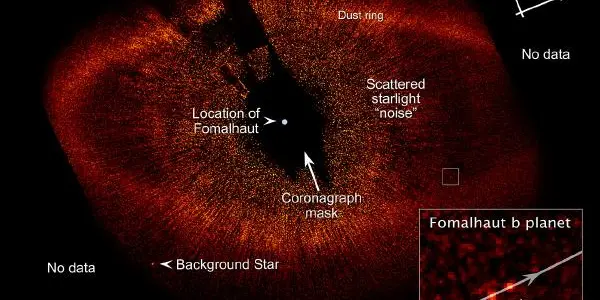
In 2006, astronomer Alice Quillen of the University of Rochester predicted that a planet of a particular size and orbit must lie within the dust of a nearby star. That planet has now been photographed by the Hubble Space Telescope, making it only the second planet ever imaged after an accurate prediction. The only other planet seen after an accurate prediction was Neptune, discovered more than 160 years ago. "It's remarkable," says Eugene Chiang, associate professor of astronomy at the University of California at Berkeley, and part of the team that imaged the new planet. "Alice saw the way the inner edge of the dust ring cut off sharply and recognized that a planet likely orbited just inside. The orbit we found was amazingly close to Alice's prediction."

University of Oregon sociologist Aliya Saperstein and sociologist Andrew M. Penner of the University of California, Irvine have a new twist on race - it isn't just appearance but socioeconomic status, they say. Their new study says that Americans who are unemployed, incarcerated or impoverished today are more likely to be classified and identified as black, by themselves or by others, regardless of how they were seen -- or self identified -- in the past.
With the aid of a straightforward experiment, researchers have provided some clues to one of biology's most complex questions: how ancient organic molecules came together to form the basis of life. Specifically, this study, appearing online this week in JBC, demonstrated how ancient RNA joined together to reach a biologically relevant length.
Have you ever wondered why it seems like the littlest things make people angry? University of Minnesota marketing professor Vladas Griskevicius says he can explain in three words why people may be inclined to make a mountain out of molehill: aggression, status and sex. He makes an unfortunate correlation-causation jump to the colloquial term 'evolution' too, but let's forget that for a moment, because we'd never get any articles written if we stopped every time a non-biologist calls something Evolution.

A key challenge of nanotechnology research is investigating how different materials behave at lengths of merely one-billionth of a meter. When shrunk to such tiny sizes, many everyday materials exhibit interesting and potentially beneficial new properties.Magnetic behavior is one such phenomenon that can change significantly depending on the size of the material. However, the sheer challenge of observing the magnetic properties of nanoscale material has impeded further study of the topic.
Bling, foreclosures, rising credit card debt, bank and auto bailouts, upside down mortgages and perhaps a mid-life crisis new Corvette---all symptoms of compulsive overspending. University of Michigan researcher Daniel Kruger says the answer lies in evolution and mating. He theorizes that men overspend to attract mates.It all boils down, as it has for hundreds of thousands of years, to making babies. Kruger, an assistant research scientist in the School of Public Health, tested his hypothesis in a community sample of adults aged 18-45 and found that the degree of financial consumption was directly related to future mating intentions and past mating success for men but not for women.
In the rainforests of equatorial Asia, a link between drought and deforestation is fueling global warming, finds an international study that includes a UC Irvine scientist.The study, analyzing six years of climate and fire observations from satellites, shows that in dry years, the practice of using fire to clear forests and remove organic soil increases substantially, releasing huge amounts of climate-warming carbon dioxide into the atmosphere.In 2006, the climate on the fast-developing islands of Borneo and Sumatra and in New Guinea and other parts of equatorial Asia was three times drier than in 2000, but carbon emissions from deforestation were 30 times greater – exceeding emissions from fossil fuel burning.
When it comes to the world of the very, very small — nanotechnology — we may have a big problem: Nano and its capacity to alter the fundamentals of nature could be failing the moral litmus test of religion.In a report published today in Nature Nanotechnology, survey results reveal some sharp contrasts in the perception that nanotechnology is morally acceptable. Those views, according to the report, correlate directly with aggregate levels of religious views in each country surveyed.
Scientists from Monash University, Melbourne have shown that infants born prematurely have lower blood pressure during sleep in the first six months of life, compared to healthy, full-term infants. Scientists at the Ritchie Centre for Baby Health Research, Monash Institute of Medical Research, believe this may be one reason premature infants are at an increased risk of Sudden Infant Death Syndrome (SIDS), which causes about 2,500 deaths per year in the United States and thousands more throughout the world..
In the search for life beyond Earth, scientists 'follow the water' to find places that might be hospitable. However, every home gardener knows that plants need more than water, or even sunshine. They also need fertilizer – a mixture of chemical elements that are the building blocks of the molecules of life. Scientists at Arizona State University are studying how the distribution of these elements on Earth – or beyond – shapes the distribution of life, the state of the environment and the course of evolution.