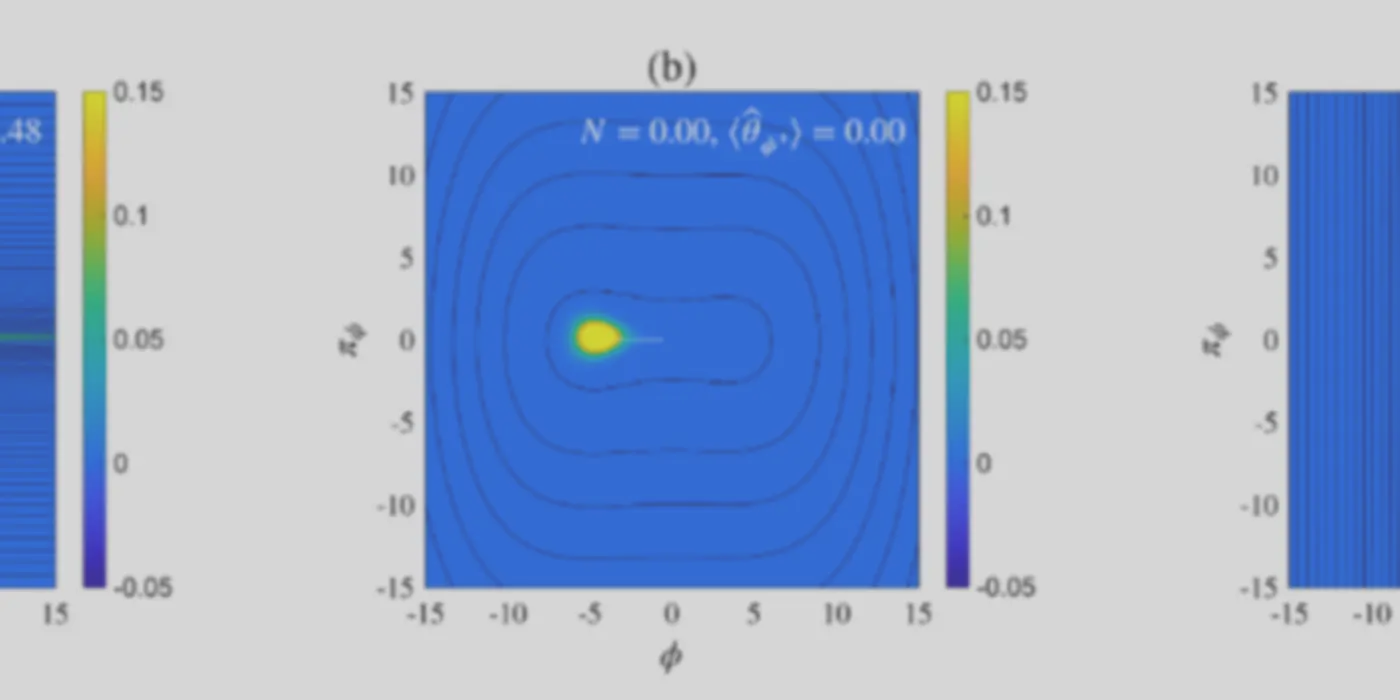
Sorry Higgs, There May Be A New Contender For Low Energy States
If we're trapped in a false vacuum, there's still hope to break free of cosmic lockdown
If we're trapped in a false vacuum, there's still hope to break free of cosmic lockdown


A dual-headed dedicated gamma camera used during molecular breast imaging (MBI) can accurately detect small breast tumors less than 2 cm in size, according to a study performed at the Mayo Clinic in Rochester, MN.One-hundred fifty patients who had suspicious lesions smaller than 2 cm in size were imaged using dual-head molecular breast imaging. “There were 128 cancers confirmed in 88 patients,” according to Carrie B. Hruska, MD, lead author of the study. “The sensitivity rate of dual-head MBI during the study was 90% (115/128)”, she said.
Are consumers under too much pressure to be healthy? Has the global financial crisis sidelined the promotion of sustainable food? And how much do consumers actually know or care about the subject?
A stunning discovery based on epigenetics (the inheritance of propensities acquired in the womb) reveals that consuming choline—a nutrient found in eggs and other foods—during pregnancy may significantly affect breast cancer outcomes for a mother's offspring. This finding by a team of biologists at Boston University is the first to link choline consumption during pregnancy to breast cancer. It also is the first to identify possible choline-related genetic changes that affect breast cancer survival rates."We've known for a long time that some agents taken by pregnant women, such as diethylstibesterol, have adverse consequences for their daughters," said Gerald Weissmann, M.D., Editor-in-Chief of The FASEB Journal. "But there's an upside.
A study published this month in Clinical Immunology, the official journal of the Clinical Immunology Society (CIS), describes a new method that facilitates the induction of a specific type of immune suppressive cells, called 'regulatory T cells' for therapeutic use. These immune suppressive cells show great potential for the treatment of autoimmune diseases and improving transplantation outcomes.
Biologists at The University of Nottingham and University College Dublin have announced a major breakthrough in our understanding of the sex life of a microscopic fungus which is a major cause of death in immune deficient patients and also a cause of severe asthma. The discovery of a sexual cycle in the fungal pathogen Aspergillus fumigatus is highly significant in understanding the biology and evolution of the species and will shed new light on its ability to adapt to new environments and its resistance to antifungal drugs. It is hoped the results of this research will lead to new ways of controlling this deadly disease and improved treatments for patients infected with it.
A super-efficient system that has the potential to power, heat and cool homes across the UK is being developed at Newcastle University.It works by burning vegetable oil to power a generator and provide electricity for the home. The waste heat from this process is then used to provide heating and hot water and is also converted to cool a fridge.At each step, the waste heat that is produced from engine gases and cooling is used elsewhere to recover the maximum amount of energy from the system.
Earth's present day greenhouse scourge, carbon dioxide, may have played a vital role in helping ancient Earth to escape from complete glaciation, say scientists in a paper published online today. In their review for Nature Geoscience, UK scientists claim that the Earth never froze over completely during the Cryogenian Period, about 840 to 635 million years ago. This is contrary to the Snowball Earth hypothesis, which envisages a fully frozen Earth that was locked in ice for many millions of years as a result of a runaway chain reaction that caused the planet to cool.
Keeping tropical rain forests intact is a better way to combat climate change than replacing them with biofuel plantations, according to a new study published in Conservation Biology. The study reveals that it would take at least 75 years for the carbon emissions saved through the use of biofuels to compensate for the carbon lost through forest conversion. And if the original habitat was carbon-rich peatland, the carbon balance would take more than 600 years. On the other hand, planting biofuels on degraded Imperata grasslands instead of tropical rain forests would lead to a net removal of carbon in 10 years, the authors found.

A new picture of the early Earth is emerging, including the surprising finding that plate tectonics may have started more than 4 billion years ago — much earlier than scientists had believed, according to new research by UCLA geochemists. "We are proposing that there was plate-tectonic activity in the first 500 million years of Earth's history," said geochemistry professor Mark Harrison, director of UCLA's Institute of Geophysics and Planetary Physics and co-author of the Nature paper. "We are reporting the first evidence of this phenomenon."
SARS – severe acute respiratory syndrome – alarmed the world five years ago as the first global pandemic of the 21st century. The coronavirus (SARS-CoV) that sickened more than 8,000 people – and killed nearly 800 of them – may have originated in bats, but the actual animal source is not known.
Children whose eyes are misaligned and point outward are at significantly increased risk of developing mental illness by early adulthood, according to findings of a Mayo Clinic study published this month in Pediatrics (http://pediatrics.aappublications.org/cgi/content/full/122/5/1033), the official journal of the American Academy of Pediatrics.
Hormone therapy could accentuate certain pre-existing heart disease risk factors and a heart health evaluation should become the norm when considering estrogen replacement, new research suggests. The research also showed that in women without existing atherosclerosis, hormone therapy use included some positive effects on lipids but also some negative effects related to heart health, said MaryFran Sowers, lead researcher and professor of epidemiology at the University of Michigan School of Public Health.