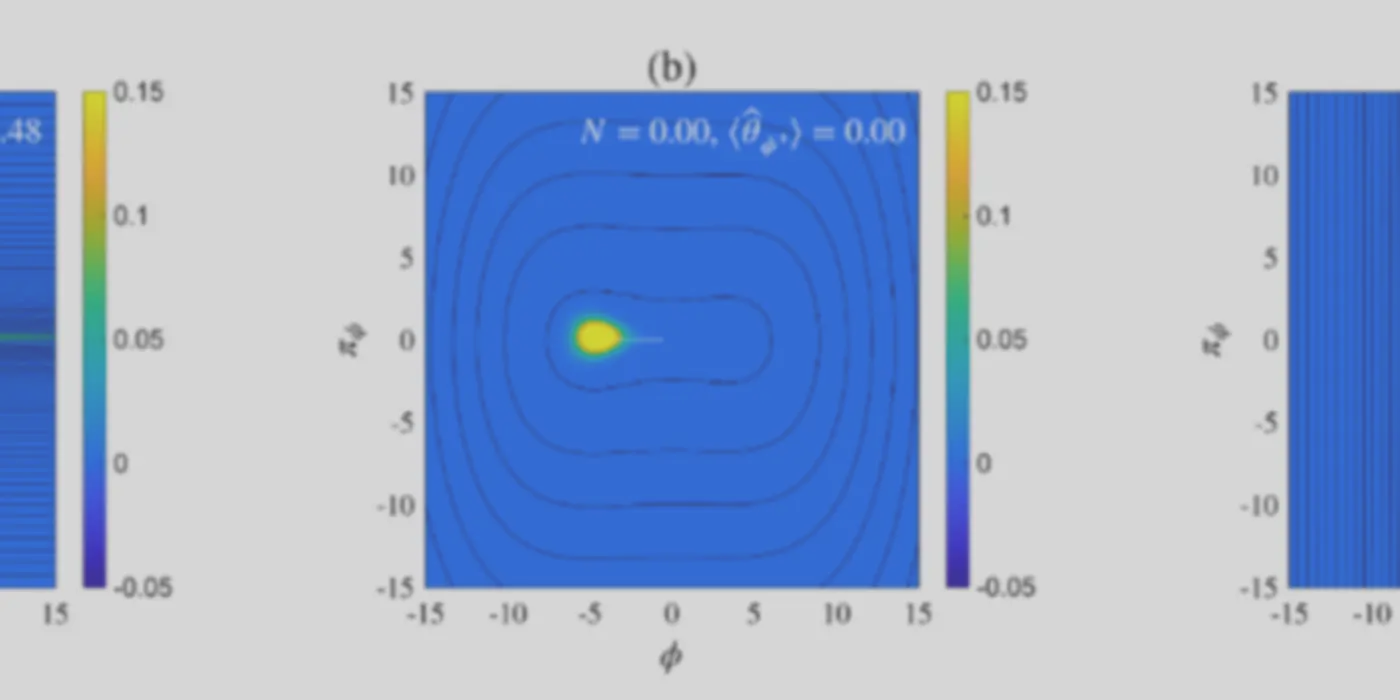
Sorry Higgs, There May Be A New Contender For Low Energy States
If we're trapped in a false vacuum, there's still hope to break free of cosmic lockdown
If we're trapped in a false vacuum, there's still hope to break free of cosmic lockdown


Pasteurization was invented for a good reason and raw milk is illegal in many countries because it can be contaminated with potentially harmful microbes. Contamination can also spoil the milk, making it taste bitter and turn thick and sticky. Now scientists have discovered new species of bacteria that can grow at low temperatures, spoiling raw milk even when it is refrigerated. According to research published in the November issue of the International Journal of Systematic and Evolutionary Microbiology, the microbial population of raw milk is much more complex than previously thought.
Should we worry about a future with no humans? This question and many more will be answered in a public lecture at Keele University looking at new advances in science and technology – and their impact on humanity. Bioethicist Professor John Harris will give the second of Keele University’s 2008/2009 series of public lectures, “Synthetic Sunshine and Synthetic Biology – The Future of Humanity”, on Monday, November 17, at 6.30pm in the University’s Westminster Theatre. He will discuss the radical scientific approaches which could enhance our species – making us live longer and resist disease, for example – and which could result in new and improved successors to humankind.
Asma Elsony led the tuberculosis programme in Sudan at the same time as she took her doctoral degree under the supervision of Professor Gunnar Bjune of the Department of General Practice and Community Medicine, University of Oslo in Norway. During her doctoral degree studies she became President of the International Union against Tuberculosis and Lung Disease as the first African and the first President from south of the globe. During her presidency the Board moved with the DOTs model to other public health lung problems – one of many other achievements.One of the problems – and this applies to very many countries – is that it takes far too long to diagnose tuberculosis.

Marine microorganisms have been found in amber dating from the middle of the Cretaceous period. The fossils were collected in Charente, in France. This completely unexpected discovery will deepen our understanding of these lost marine species as well as providing precious data about the coastal environment of Western France during the Cretaceous.

A scientific team from the John Innes Centre and University of St Andrews has identified a key gene that was transferred from a Sicilian plant into a close relative in Britain, showing how genetic cross-talk between species can be important for evolution. The researchers unravelled the remarkable history of an Italian interloper, a close relative of the common British weed Groundsel, that was first brought to the UK 300 years ago. In an amazing piece of genetic detective work, to be published in Science on Friday, they tracked down a small region of DNA in the British weed that came from its Sicilian relative.
Psychological stress and anxiety have been shown to produce an activation of coagulation and fibrinolysis. Resulting hypercoagulability is a risk factor for cardiovascular diseases, and could therefore contribute to an increased prevalence of coronary artery disease in anxiety patients. However, hemostasis function has not yet been studied in patients with clinically relevant anxiety disorders.
In the November 15th issue of Genes&Development, Dr. Kenneth Dorshkind and colleagues at the David Geffen School of Medicine (UCLA) have identified two genes – p16(Ink4a) and Arf – that sensitize lymphoid progenitor cells to the effects of aging, and confer resistance to leukemogenesis. Hematopoiesis (the development of blood cells) entails two main pathways: myelopoiesis (the formation of the red and white myeloid cells) and lymphopoiesis (the formation of B- and T-cells). While myelopoiesis remains constant throughout life, lymphopoiesis declines with age.
Maybe you have an 85-year-old grandfather who still whips through the newspaper crossword puzzle every morning or a 94-year-old aunt who never forgets a name or a face. They don't seem to suffer the ravages of memory that beset most people as they age. Researchers at Northwestern University's Feinberg School of Medicine wondered if the brains of the elderly with still laser sharp memory -- called "super aged" -- were somehow different than everyone else's.So instead of the usual approach in which scientists explore what goes wrong in a brain when older people lose their memory they investigated what goes right in an aging brain that stays nimble. Here's the preliminary answer:

The name has been around for four decades, but only now is a recognizable photonics community emerging in Europe. A European study has documented a fast-growing sector of more than 2100 companies and 700 research laboratories.In 2005, Europe’s photonics sector earned €43.5 billion and was growing at 12% a year. It employed 246,000 people, accounted for 19% of world production and was already bigger than the semiconductor sector. Yet, at the same time, the industry was hardly recognized in Europe.
A doctoral thesis carried out at the University of Granada has proved that patients with serious anxiety disorders (panic disorder with and without agoraphobia, social anxiety disorder or generalized anxiety disorder) think they suffer more physiological (palpitations, sweating, irregular breathing, shaking of the hands and muscular tension …) than they really have. In other words, although many patients with anxiety disorders have orally reported very intense physiological symptoms in surveys and questionaires, they are hyporeactive when real measures of such symptoms are taken through physiological tests.
A new study by sociologists at the University of Maryland concludes that unhappy people watch more TV, while people who describe themselves as very happy spend more time reading and socializing. The study appears in the December issue of the journal “Social Indicators Research.”Analyzing 30-years worth of national data from time-use studies and a continuing series of social attitude surveys, the Maryland researchers report that spending time watching television may contribute to viewers’ happiness in the moment, with less positive effects in the long run.
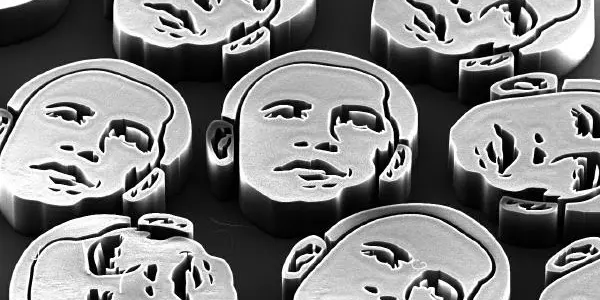
A University of Michigan professor has created 3-D portraits of the president-elect that are smaller than a grain of salt. He calls them "nanobamas."John Hart, an assistant professor in the Department of Mechanical Engineering, made the mini-Barack Obama 'Nanobama' likenesses with his colleagues to raise awareness of nanotechnology and science. Plus, Obama flowed much nicer with 'nano' than McCain would have. And Hart voted for Obama, not that you didn't think so already.Each one contains about 150 million carbon nanotubes stacked vertically like trees in a forest. A carbon nanotube is an extraordinarily strong hollow cylinder about 1/50,000th the width of a human hair.