Sorry Higgs, There May Be A New Contender For Low Energy States
If we're trapped in a false vacuum, there's still hope to break free of cosmic lockdown
If we're trapped in a false vacuum, there's still hope to break free of cosmic lockdown


In the near future it will be possible to customize the food we eat based on the genetic profile of the individual. Dutch researcher Amber Ronteltap suggests that the consumer market is not yet ready for this so-called nutrigenomics. Ronteltap concludes that many obstacles must be overcome before products based on nutrigenomics become a reality. Nutrigenomics is a discipline that investigates the correlation between nutrients and the human genome. This area of science can contribute to public health and disease prevention by providing individuals with advice on specific adaptations in their nutrient regime. This form of personalised nutrition joins the bandwagon of broader marketing trends to develop products more tailored to the individual.
Hydrogen is an ideal solution for cars of the future. The problem remains storage. People have a range they want to go (300 miles) before an automobile enhancement can become commercially acceptable. With hydrogen, that means carrying a tank the size of the car itself or compressing the hydrogen, which has unacceptable safety risks.Dutch-sponsored researcher Robin Gremaud has shown that an alloy of the metals magnesium, titanium and nickel is excellent at absorbing hydrogen. A hydrogen 'tank' using this alloy would have a relative weight that is sixty percent less than a battery pack. In order to find the best alloy Gremaud developed a method which enabled simultaneous testing of thousands of samples of different metals for their capacity to absorb hydrogen.
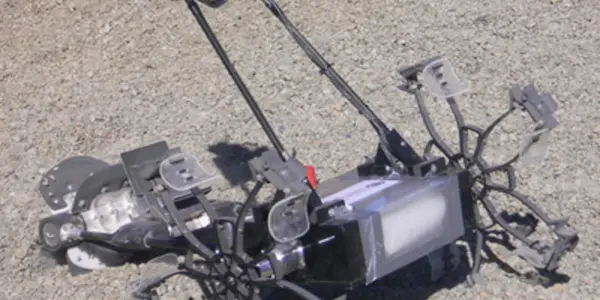
A robot rover designed by a Bremen university team has won an ESA contest to retrieve soil samples from a lunar-style terrestrial crater. Eight student teams fielded rovers during the event, their progress monitored by an advanced 3-D viewer already flight-tested in space and planned for eventual deployment on the Moon. Craters surrounding the Moon's poles are a top 21st Century science target. Lunar researchers believe these craters may be 'cold traps', preserving ancient water ice deposits. Such ice would not only be an invaluable time capsule, it would also support manned lunar settlements. But the only way to verify the ice is there is to go fetch it, which is where rovers come in.
Researchers at the University of Virginia Health System report that a daily single oral dose of an investigational drug, MK-677, increased muscle mass in the arms and legs of healthy older adults without serious side effects, suggesting that it may prove safe and effective in reducing age-related frailty.Published in the November 4, 2008 issue of Annals of Internal Medicine, the study showed that levels of growth hormone (GH) and of insulin-like growth factor I (IGF- I) in seniors who took MK-677 increased to those found in healthy young adults. The drug restored 20 percent of muscle mass loss associated with normal aging.
A Harvard-based study led by Drs. Gottfried Schlaug and Ellen Winner and published in PLoS ONE has found that children who study a musical instrument for at least three years outperform children with no instrumental training on tests measuring verbal ability and visual pattern completion, skills not normally associated with music, along with tests of auditory discrimination and finger dexterity, which are traditionally skills honed by the study of a musical instrument.
A team led by a Montana State University professor has found a fungus that produces a new type of diesel fuel, which they say holds great promise. Calling the fungus' output "myco-diesel," Gary Strobel and his collaborators describe their initial observations in the November issue of Microbiology.The discovery may offer an alternative to fossil fuels, said Strobel, MSU professor of plant sciences and plant pathology. The find is even bigger, he said, than his 1993 discovery of fungus that contained the anticancer drug taxol.
According to the international space agencies, 'space weather' like radiation from the sun and cosmic rays in a solar storm, is the single greatest obstacle to deep space travel. New research out today in Plasma Physics and Controlled Fusion shows how knowledge gained from the pursuit of nuclear fusion research may reduce the threat to acceptable levels, making man's first mission to Mars a much greater possibility.The solar energetic particles, although just part of the 'cosmic rays' spectrum, are of greatest concern because they are the most likely to cause deadly radiation damage to the astronauts.
Take a close look at that cheap piece of scrap iron before you toss it in the trash. Wei-xian Zhang has a good use for it. Someday soon, much of the world might also. Zhang, a professor of civil and environmental engineering, recently concluded a five-year research project in which he and his colleagues at Tongji University in Shanghai used two million pounds of iron to detoxify pollutants in industrial wastewater.
The fight against climate warming has an unexpected ally in mushrooms growing in dry spruce forests covering Alaska, Canada, Scandinavia and other northern regions, a new UC Irvine study finds. When soil in these forests is warmed, fungi that feed on dead plant material dry out and produce significantly less carbon dioxide than fungi in cooler, wetter soil. This came as a surprise to scientists, who expected warmer soil to emit larger amounts of carbon dioxide because extreme cold is believed to slow down the process by which fungi convert soil carbon into carbon dioxide.
Why are some species of plants and animals favored by natural selection? According to a UC Riverside-led research team, the answer lies in the rate of metabolism of a species – how fast a species consumes energy, per unit mass, per unit time. The researchers studied 3006 species, the largest number of species ever analyzed in a single study. The species list encompasses much of the range of biological diversity on Earth – from bacteria to elephants, and algae to sapling trees. To the researchers' surprise, they found the mean metabolic rate of the species at rest fell on a narrow range of values – 0.3 to 9 Watts per kilogram.

Not all enzymes that are assumed to require an RNA component in order to function do actually contain RNA, according to a study that focused on the enzyme RNase P. Contrary to accepted scientific theory, the project team from Vienna has long believed that certain forms of RNase P do not contain any RNA. They say they have now succeeded in proving their point through a series of experiments and the results are published today in the journal CELL.Although ribozymes are not quite living fossils, these enzymes, which function only in the presence of RNA, hail from a long gone age when biochemical processes were still controlled by RNA molecules. It was only later that proteins came onto the molecular scene.

Harvesting energy from the sun makes terrific sense until you factor in the economics of solar technology efficiency and the environmental impact of manufacturing panels and adding new power lines. But solar power is clearly the path to future energy independence once the obstacles have been overcome. Researchers at Rensselaer Polytechnic Institute say they have made progress overcoming two of the major efficiency hurdles; the amount of sunlight captured by solar panels and the inability of solar panels to absorb the entire solar spectrum from nearly any angle.