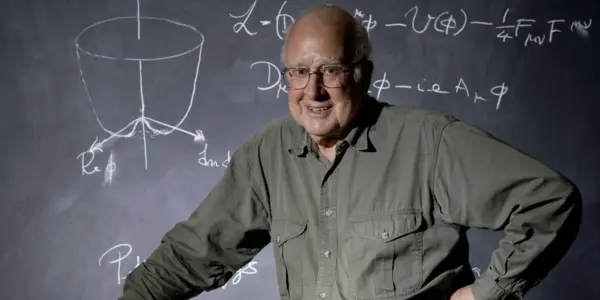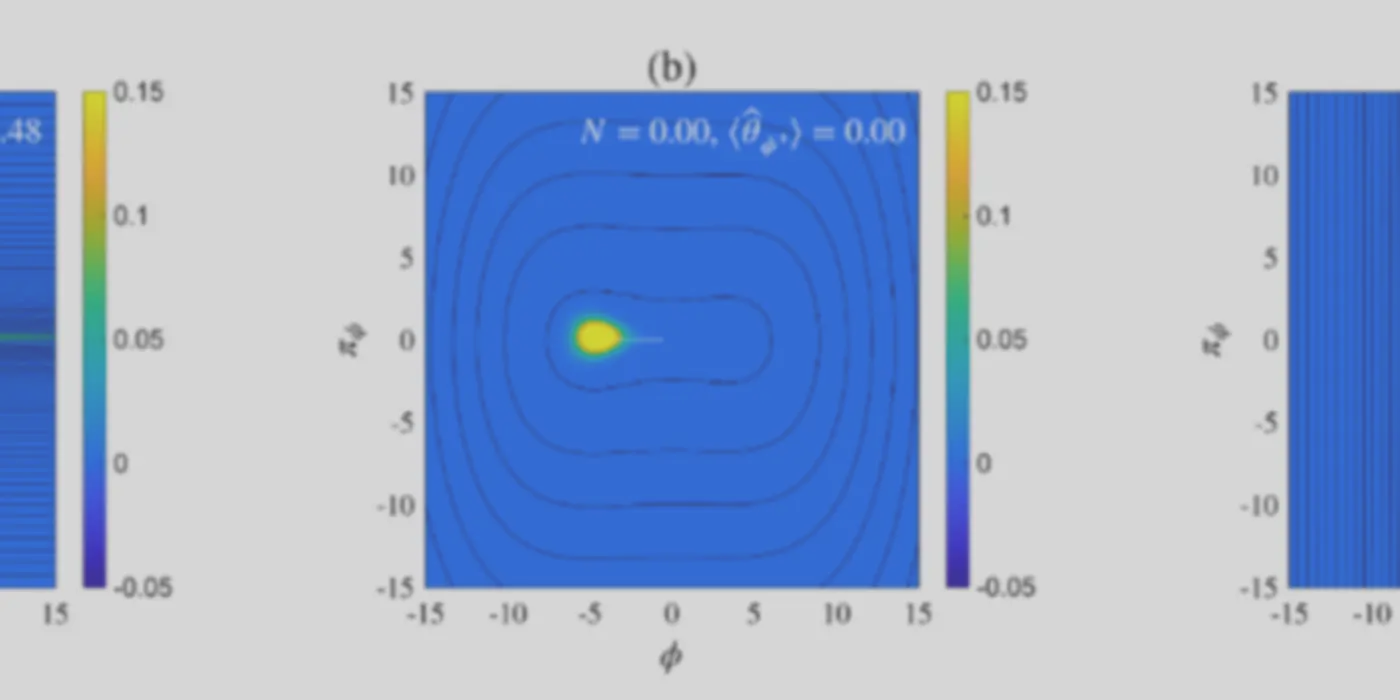
Sorry Higgs, There May Be A New Contender For Low Energy States
If we're trapped in a false vacuum, there's still hope to break free of cosmic lockdown
If we're trapped in a false vacuum, there's still hope to break free of cosmic lockdown


Today there is rapidly growing interest in 'intelligent' computer-based methods that use various classes of measurement signals, from different patient samples, for instance, to create a model for classifying new observations. This type of method is the basis for many technical applications, such as recognition of human speech, images, and fingerprints, and is now also beginning to attract new fields such as health care.
These 'intelligent' computer-based methods for classifying patient samples have been evaluated by Swedish researchers at Uppsala University with the help of two methods that have completely dominated research for 25 years; cross validation and resampling/bootstrapping.
Their conclusion; they're worthless for practical problems.
According to the Center for Disease Control (CDC), osteoarthritis, the most common type of arthritis, is on the rise. A new study published in the August journal of Phytotherapy Research, says that Pycnogenol, bark extract from the French maritime pine tree, reduced overall knee osteoarthritis (OA) symptoms by 20.9 percent and lowered pain by 40.3 percent. To date, this is the third clinical trial on osteoarthritis treatment with Pycnogenol.
This study investigated what happens to joint symptoms after treatment with Pycnogenol is terminated and the results show that no relapse occurred after two weeks. Pycnogenol acts as an anti-inflammatory and the effects found in this study suggest that Pycnogenol may help the joints to recover.
A new study published online today in the British Journal of Nutrition found that timing of dietary protein intake affects feelings of fullness throughout the day. The study concluded that when people ate high-quality protein foods, from sources such as eggs and lean Canadian bacon, for breakfast they had a greater sense of sustained fullness throughout the day compared to when more protein was eaten at lunch or dinner.i
"There is a growing body of research which supports eating high-quality protein foods when dieting to maintain a sense of fullness," said Wayne W. Campbell, PhD, study author and professor of Foods and Nutrition at Purdue University. "This study is particularly unique in that it looked at the timing of protein intake and reveals that when you consume more protein may be a critical piece of the equation."
From the 1933 classic "The Invisible Man" to the more recent Harry Potter series, devices that achieve invisibility have been popular parts of film fantasy. In recent years, scientists using special types of 'meta' materials have shown that fantasy invisibility could one day become reality.

Scientists from Oregon State University and the Natural History Museum in London have announced the discovery of the oldest known fossil of a gecko, with body parts that are forever preserved in life-like form after 100 million years of being entombed in amber.
Due to the remarkable preservative power of being embalmed in amber, the tiny foot of this ancient lizard still shows the tiny “lamellae,” or sticky toe hairs, that to this day give modern geckos their unusual ability to cling to surfaces or run across a ceiling. Research programs around the world have tried to mimic this bizarre adhesive capability, with limited success.
This gecko’s running days are over, however, as only the foot, toes and part of a tail are left in the stone. The rest might have become lunch for a small dinosaur or other predator during an ancient fight in the tropical forests of Myanmar during the Lower Cretaceous Period, from 97 million to 110 million years ago.

Experienced Zen meditators can clear their minds of distractions more quickly than novices, according to a new brain imaging study.

ESO's Wide Field Imager has captured the intricate swirls of the spiral galaxy Messier 83, a smaller look-alike of our own Milky Way. Shining with the light of billions of stars and the ruby red glow of hydrogen gas, it is a beautiful example of a barred spiral galaxy, whose shape has led to it being nicknamed the Southern Pinwheel.
This dramatic image of the galaxy Messier 83 was captured by the Wide Field Imager at ESO's La Silla Observatory, located high in the dry desert mountains of the Chilean Atacama Desert. Messier 83 lies roughly 15 million light-years away towards the huge southern constellation of Hydra (the sea serpent). It stretches over 40 000 light-years, making it roughly 2.5 times smaller than our own Milky Way. However, in some respects, Messier 83 is quite similar to our own galaxy. Both the Milky Way and Messier 83 possess a bar across their galactic nucleus, the dense spherical conglomeration of stars seen at the centre of the galaxies.
Bacteria save energy by producing proteins that moonlight, having different roles at different times, which may also protect the microbes from being killed. The moonlighting activity of one enzyme from the tuberculosis bacterium makes it partially resistant to a family of broad-spectrum antibiotics, according to a paper published in the September issue of the journal Microbiology.
"Glutamate racemase, or MurI, is an enzyme that bacteria use to make the building blocks of cell walls," said Professor Valakunja Nagaraja from the Indian Institute of Science in Bangalore, India. "MurI from Mycobacterium tuberculosis also stops the enzyme DNA gyrase from working, which in turn stops DNA replication and cell division."
The researchers found that the two different functions work independently of one another - the enzyme's ability to make cell wall components does not affect its ability to inhibit DNA gyrase and vice versa.
Scientists know that Salmonella and E. coli O157, a strain of E. coli that can cause serious sickness in humans, can spread to salads and vegetables if they are fertilized with contaminated manure, irrigated with contaminated water, or if they come into contact with contaminated products during cutting, washing, packing and preparation processes. However, until now, scientists did not understand how the pathogens managed to bind to the leaves.
In new research presented today at the 21st International ICFMH Symposium 'Food Micro 2008' conference in Aberdeen, a new study shows how some Salmonella bacteria use the long stringy appendages they normally use to help them 'swim' and move about to attach themselves to salad leaves and other vegetables, causing contamination and a health risk.
A man's height is a marker for risk of prostate cancer development but is more strongly linked to progression of the cancer, say a group of British researchers who conducted their own study and also reviewed 58 other published studies.
In the September issue of Cancer Epidemiology, Biomarkers & Prevention, 12 researchers at four universities in England who studied more than 9,000 men with and without prostate cancer estimated that the risk of developing the disease rises by about six percent for every 10 centimeters (3.9 inches) in height a man is over the shortest group of men in the study.
That means a man who is one foot taller than the shortest person in the study would have a 19 percent increased risk of developing the disease.
Seriously.

Stanford computer scientists have developed an artificial intelligence system that enables robotic helicopters to teach themselves to fly difficult stunts by watching other helicopters perform the same maneuvers.
The result is an autonomous helicopter than can perform a complete airshow of complex tricks on its own.
The stunts are "by far the most difficult aerobatic maneuvers flown by any computer controlled helicopter," said Andrew Ng, the professor directing the research of graduate students Pieter Abbeel, Adam Coates, Timothy Hunter and Morgan Quigley.

Researchers using two abundant and relatively inexpensive elements, titanium and silicon, have grown wires into a two-dimensional network of branches that resemble flat, rectangular netting, Boston College assistant professor of chemistry Dunwei Wang and his team report in the international edition of the German Chemical Society journal Angewandte Chemie.
By creating nanonets, the team conquered a longstanding engineering challenge in nanotechnology: creating a material that is extremely thin yet maintains its complexity, a structural design large or long enough to efficiently transfer an electrical charge.