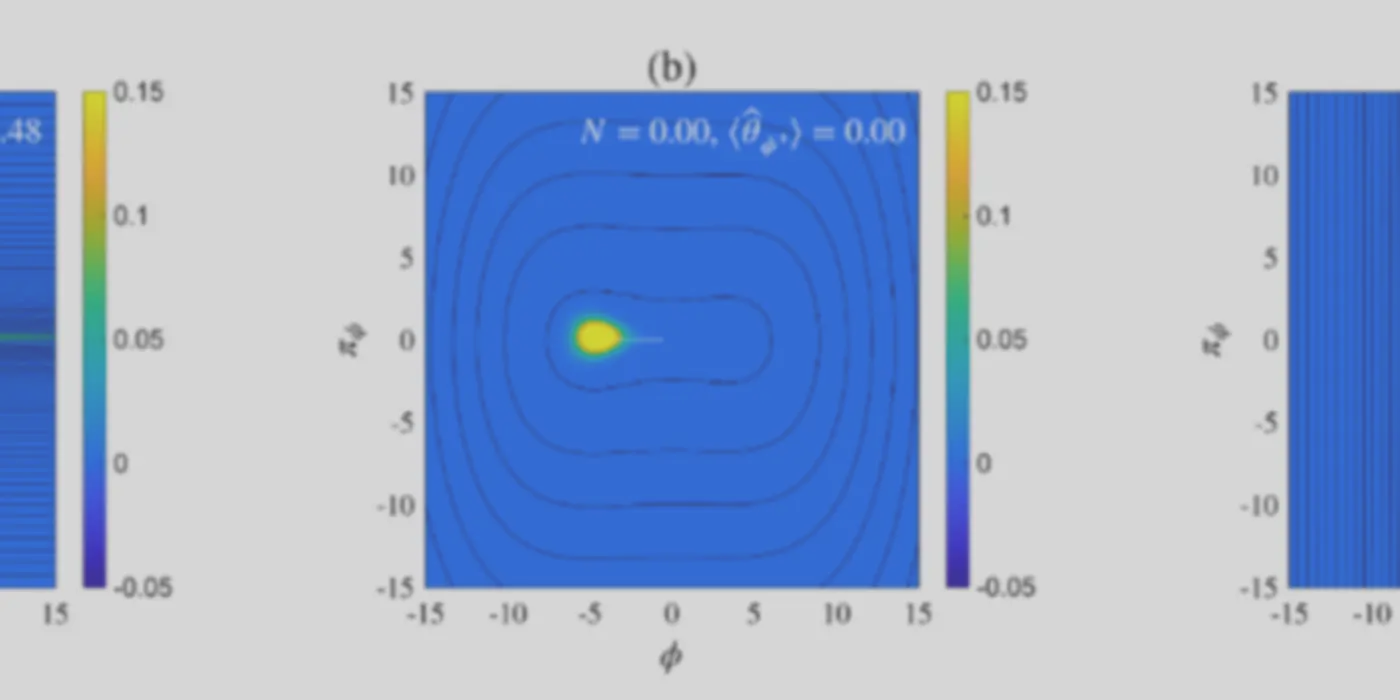
Sorry Higgs, There May Be A New Contender For Low Energy States
If we're trapped in a false vacuum, there's still hope to break free of cosmic lockdown
If we're trapped in a false vacuum, there's still hope to break free of cosmic lockdown


Together with colleagues from the Department of Dermatology and Allergy and the Center for Allergy and Environment (ZAUM) of the Technische Universität München, scientists at the Helmholtz Zentrum München have pinpointed a major gene for allergic diseases. The gene was localized using cutting edge technologies for examining the whole human genome at the Helmholtz Zentrum München.
The newly discovered FCER1A gene encodes the alpha chain of high affinity IgE receptor, which plays a major role in controlling allergic responses. The team of scientists led by Dr. Stephan Weidinger from the Technische Universität München and Dr. Thomas Illig from the Helmholtz Zentrum München found that certain variations of the FCER1A gene decisively influence the production of immunoglobulin E (IgE) antibodies. IgE antibodies are a particular type of antibody that is normally used to protect against parasites. In Western lifestyle countries with less contact, however, elevated IgE levels are associated with allergic disorders.
Students from the University of Maryland attending the Salzburg Academy on Media and Global Change got a special session with academy-award winning actress Vanessa Redgrave August 13.
"One of the problems for us all is that we are not, and cannot often be aware of what's going on that the camera hasn't focused on," she told the students.
During a session with students and faculty from five continents and fifteen countries, Ms. Redgrave drew connections between the responsibilities of an actor and those of journalists.
WADDINXVEEN, The Netherlands, August 22 /PRNewswire/ -- Exactly 40 years after Woodstock, a "Rock for Nature" rock concert will be held in the Schwabisch Hall in Germany from August 22 through 24. The concert's theme will be organic, genetic-manipulation free agriculture. Eosta's sister organization "Soil & More" will fully compensate all CO2 emissions arising from the concert with "carbon credits" obtained through composting projects for organic agriculture.
The concert will feature world-famous artists and bands such as Scorpions, Nena, Joe Cocker and Roger Hodgson (formerly with Supertramp). In addition, there will be a wide range of get-togethers focusing on the main subject of the concert.
LONDON, August 22 /PRNewswire/ -- One in four British women admits to not looking after her teeth, including brushing and flossing, on a daily basis, according to a new survey released today.
The survey asked women how important a good smile was; nearly two thirds (65%) of the women surveyed believe that a good smile results in a more confident individual, followed by 18% who said that someone with a good smile would be more likely to be successful in regards to romance and attracting a partner.
Teeth are clearly important in making an impression, but Brits are still living up to the stereotype of having bad teeth, as over one third of the women surveyed (36%) reported that they are embarrassed by their teeth. When asked what they would improve about their smile 49% of the participants stated 'very white teeth', followed by 29% wanting even and straight teeth.
Households located in poor neighborhoods pay more for the same items than people living in wealthy ones, according to a new study in the Journal of Consumer Research. Author Debabrata Talukdar of Columbia University found that the critical factor in how much a household spends on groceries is whether it has access to a car.
According to the findings, those without access to cars—which are exclusively poor households, but include only 40 percent of poor households— pay higher prices for groceries than households with access to a car (whether wealthy or poor). Lacking mobility means consumers buy from the nearest neighborhood store rather than larger regional or national grocery chains, which have lower prices.
People are more than happy to fool themselves and nothing can make dieters who cheat happier than those `100 calorie' sized snacks.
As a result of that 'it is smaller so I can eat more of them' mentality, chronic dieters tend to consume more calories when foods and packages are smaller, according to a new study in the Journal of Consumer Research. The authors examined consumer behavior regarding "mini-packs," 100-calorie food packages that are marketed to help people control calorie intake.

The systematics of celestial bodies needs to be revised, say researchers at the Argelander Institute of Astronomy of the University of Bonn. Brown dwarfs, to-date merely regarded as stars which were below normal size, may well be stellar ‘miscarriages' and need to be treated as a separate class in addition to stars and planets.
Brown dwarfs (or BDs) are what scientists call objects which populate the galaxies apart from the stars. Unlike the latter, they cannot develop high-yield hydrogen fusion as in the interior of our sun due to their low mass (less than about 8% of the sun’s mass). But in addition to this brown dwarfs and stars also seem to be different in their ‘mating behavior’.

A simple and primitive animal, Trichoplax adhaerens, appears to harbor a far more complex suite of capabilities than meets the eye. The findings, reported Nature, establish a group of organisms as a branching point of animal evolution and identify sets of genes, or a "parts list," employed by organisms that have evolved along particular branches.
Trichoplax adhaerens was first detected in the 1880s clinging to the sides of an aquarium but it just recently got characterized by the U.S. Department of Energy Joint Genome Institute (DOE JGI)and they found that its ancient lineage was matched by its complexity.
According to new research in the Journal of Consumer Research, simply asking people a question about whether they're willing to volunteer their time leads to increases in donations of both time and money.
The researchers conducted three separate studies, which yielded similar results. In the first study, participants completed an online survey and then read a statement about lung cancer and the American Lung Cancer Foundation's mission. Half of the participants were asked how much time they would like to donate to the foundation and half were not asked. Then all were asked how much money they would donate to the foundation. The participants who were asked to donate time eventually pledged more than those who weren't asked: $36.44 versus $24.46.
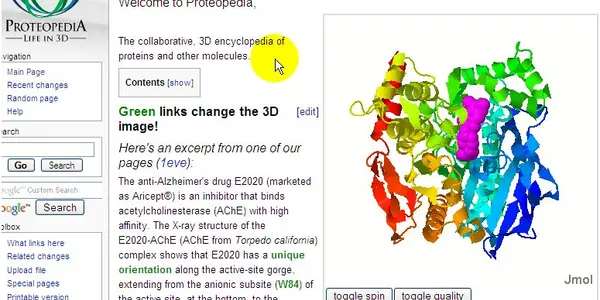
Biologists and biochemists are now able to access 3-D images of biomacromolecules underlying biological functions and disease, thanks to a collaborative website called Proteopedia which provides a new resource by linking written information and three-dimensional structural information.
Rather than relying just on text to provide the understanding of biomacromolecule structures, this wiki web resource, first described in Genome Biology, displays protein structures and other biomacromolecules in interactive format. These interactive images are surrounded by descriptive text containing hyperlinks that change the appearance (such as view, representations, colors or labels) of the adjacent 3D structure to reflect the concept explained in the text.
This makes the complex structural information readily accessible and comprehensible, even to people who are not structural biologists.
We don't need to 'frame' science for the masses, no matter what you may read elsewhere by people who want to manipulate data to achieve their ideological goals.
Informed people who make their own decisions(whether they agree with you or not) and then participate improves the overall quality of federal agencies' decisions about the environment, says a new report from the National Research Council.
More importantly, public involvement increases the legitimacy of decisions in the eyes of those affected by them, which makes it more likely that the decisions will be implemented effectively - something heavy-handed mandates can never accomplish. Agencies should recognize public participation as valuable to their objectives, not just as a formality required by the law, the report says. It details principles and approaches agencies can use to successfully involve the public.
What we see can sometimes depend as much on our ears as on our eyes, according to research led by Dr Elliot Freeman, lecturer in psychology at Brunel University’s School of Social Sciences and published this week in Current Biology.
The study revealed that the perceived direction of motion from a given visual object (in this case, red bars across a screen), depends on minute variations in the timing of an accompanying sound (a sequence of beeps, for example). This provides evidence that the brain’s integration of these visual and audio cues occurs at a very early stage of processing.