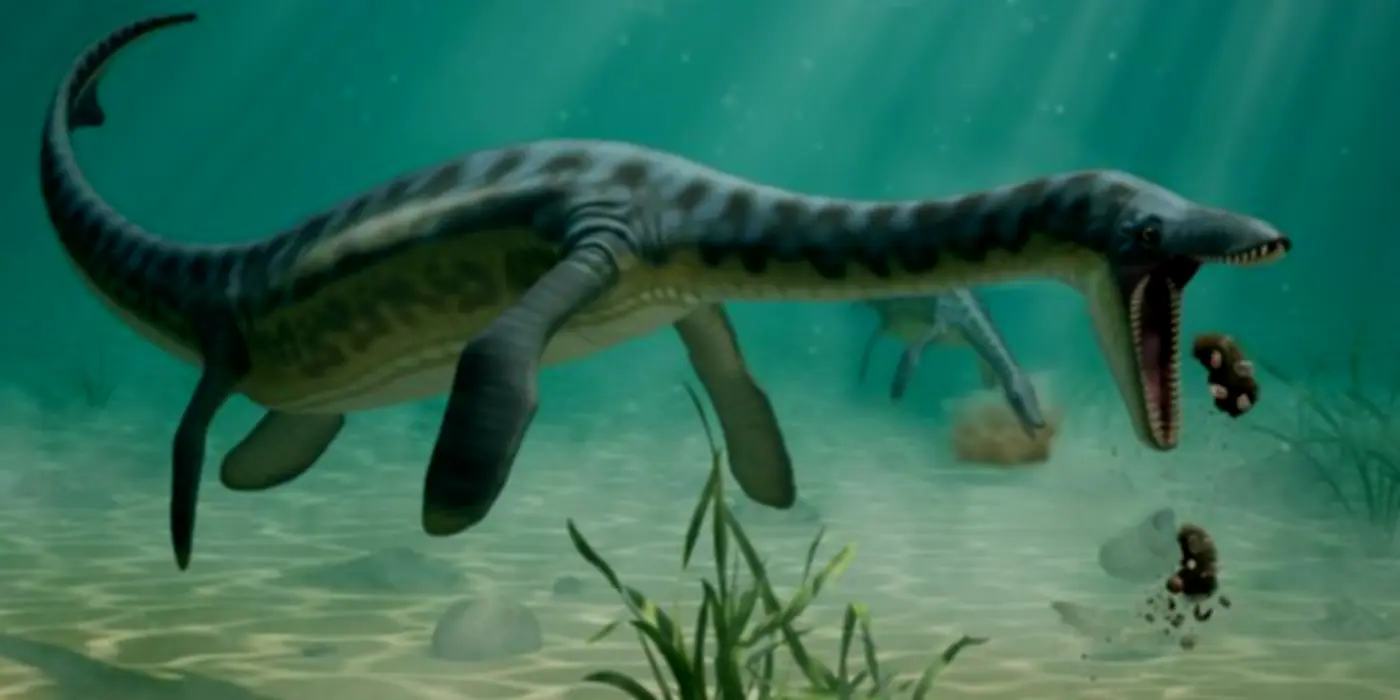
Jurassic Puke: Plesiosaurs Knew Not To Vomit Where They Eat
Jurassic monsters sometimes needed to vomit. When they did, they went to shore.
Jurassic monsters sometimes needed to vomit. When they did, they went to shore.


GOTHENBURG, Sweden, May 26 /PRNewswire/ -- Swedish SEKAB today announced that it is the first company in the world to supply verified sustainable ethanol. This ethanol from Brazilian sugarcane is quality assured from environmental, climate and social perspectives.
"Consumers and other stakeholders need guarantees that the ethanol is verified sustainable," says Anders Fredriksson, EVP of SEKAB BioFuels & Chemicals.
SEKAB has together with progressive Brazilian producers developed criteria that cover the entire lifecycle of ethanol from the sugarcane fields to its use in flexi-fuel (FFV) cars.
The criteria are in line with demands highlighted in the ongoing processes being led by organisations like the UN, EU, ILO and a number of NGOs.

Solar cells provide great opportunities for future large-scale electricity generation. However, there are currently significant limitations, such as the relatively low output of most solar cells (typically fifteen percent) and high manufacturing costs.
One possible improvement could derive from a new type of solar cell made of semiconducting nanocrystals (crystals with dimensions in the nanometre size range). In conventional solar cells, one photon (light particle) can release precisely one electron. The creation of these free electrons ensures that the solar cell works and can provide power. The more electrons released, the higher the output of the solar cell.
In some semiconducting nanocrystals, however, one photon can release two or three electrons, hence the term avalanche effect.
By adding an enzyme to adult stem cells 'in vitro', remarkable results can be booked 'in vivo', say scientists of the University of Twente in The Netherlands. Up to now, so-called mesenchymal stem cells could not succesfully be used to create new bone tissue, e.g. for repair. By adding PKA enzyme to the stem cells beforehand, a substantial amount of bone is grown after implanting the cells.
Hitherto it has been difficult to induce adult human stem cells to produce bone, e.g. in order to repair bone tissue. Researchers at the University of Twente have shown that if the enzyme PKA is previously activated in the stem cells in the lab, following implantation this results in substantial bone formation. This opens up new ways of repairing bone tissue using cell material from the patient.
In animals, ‘adult’ mesenchymal stem cells have already been used successfully to grow fresh bone. Bone formation using human adult stem cells, e.g. from bone marrow, has been less successful, which has hitherto limited the alternatives hospitals can offer for repairing damaged tissue other than spontaneous healing. Activating the PKA enzyme prior to implantation, however, produces a dramatic improvement in ‘in vivo’ bone growth. The cells can be observed maturing into bone cells already in the lab; once sown on a carrier and implanted in a mouse, the bone grows well.

People love Top 10 lists and a Top 10 list of new species is no exception. We love the idea so much we took the 2007 choices from the International Institute for Species Exploration at Arizona State University and an international committee of taxonomists and made them ... funnier.
We know you have other things to read, like a Top 10 list of String Theory jokes, somewhere so we'll get right to it.
10. Tecticornia bibenda. One of two on this list that seems to have made it for no other reason than that press releases gave it a catchy nickname, in this case the "Michelin Man™" plant, and that really appeals to fame-seeking biologists who want to have mass appeal. If this actually looks like the Michelin Man™ to you, you're just being argumentative.
The nomination process for Raytheon's 2008 Math Hero Awards has now opened. These annual awards reward and celebrate teachers and tutors for promoting math achievement to students in a fun and challenging learning environment.
The MathMovesU program grants $1 million annually to students, teachers and schools in scholarships, grants and awards. Based on a nomination process, math teachers and volunteers who work with students are eligible to receive a $2,500 Math Hero award, and their schools or an approved math-related nonprofit organization of their choice receive a $2,500 matching grant.
Math Heroes demonstrate an enthusiastic and creative approach to math, often using new and innovative ideas in working with their students. Parents, students or other teachers are now invited to nominate their Math Hero for 2008. Submissions are due by July 15 and winners will be announced on November 15.
With improved resolution, tissue-specific molecular markers and precise timing, a group of scientists say they have possibly overturned a long-standing assumption about the origin of embryonic cells that give rise to connective and skeletal tissues that form the base of the skull and facial structures in back-boned creatures from fish to humans.
University of Oregon biologist James A. Weston and co-authors from the Max Planck Institute of Immunology in Germany and the French National Scientific Research Centre at the Curie Institute document their potentially textbook-changing case in an article appearing in the Proceedings of the National Academy of Sciences.
The cells in question, they argue, do not come from a portion of embryonic neural epithelium called the neural crest, as widely believed, but rather from a distinct thin layer of epidermal epithelial cells next to it. "Our results," Weston said, "could lead to a better understanding of the etiology of craniofacial defects, as well as the evolution of the head that distinguishes vertebrates from other creatures."

By using a specialized microscope that only illuminates the cell’s surface, a virologist and a biophysicist at Rockefeller University have made history by becoming the first to see, in real time and in plain view, hundreds of thousands of molecules coming together in a living cell to form a single particle of the virus that has, in less than 25 years, claimed more than 25 million lives: HIV.
This work, may not only prove useful in developing treatments for the millions around the globe still living with the lethal virus but the technique created to image its assembly may also change the way scientists think about and approach their own research.
“The use of this technique is almost unlimited,” says Nolwenn Jouvenet, a postdoc who spearheaded this project under the direction of HIV expert Paul Bieniasz and cellular biophysicist Sandy Simon, who has been developing the imaging technique since 1992. “Now that we can actually see a virus being born, it gives us the opportunity to answer previously unanswered questions, not only in virology but in biology in general.”

Until 1992, when California’s magnitude-7.3 Landers earthquake set off small jolts as far away as Yellowstone National Park, scientists did not believe large earthquakes sparked smaller tremors at distant locations. Now, a definitive study shows large earthquakes routinely trigger smaller jolts worldwide, including on the opposite side of the planet and in areas not prone to quakes.
“Previously it was thought seismically active regions or geothermal areas were most vulnerable to large earthquake triggers,” says Kris Pankow, a seismologist at the University of Utah Seismograph Stations and a co-author of the new study.
But Pankow and colleagues analyzed 15 major earthquakes stronger than magnitude-7.0 since 1992, and found that at least 12 of them triggered small quakes hundreds and even thousands of miles away.
NASA's Phoenix spacecraft landed in the northern polar region of Mars Sunday to begin three months of examining a site chosen for its likelihood of having frozen water within reach of the lander's robotic arm.
Radio signals received at 4:53:44 p.m. Pacific Time (7:53:44 p.m. Eastern Time) confirmed the Phoenix Mars Lander had survived its difficult final descent and touchdown 15 minutes earlier. The signals took that long to travel from Mars to Earth at the speed of light.
Mission team members at NASA's Jet Propulsion Laboratory, Pasadena, Calif.; Lockheed Martin Space Systems, Denver; and the University of Arizona, Tucson, cheered confirmation of the landing and eagerly awaited further information from Phoenix later Sunday night.
Maize, commonly called corn in the US, is the third most important cereal in the world. It has a great number of advantages for molecular agriculture such as its capacity to express recombinant proteins in the seeds, its widespread cultivation and its genetic diversity, along with being anti-allergenic and non-toxic.
Now scientists from the Universidad de Lleida (University of Lleida) have published a study (1) confirming that maize seeds are an effective and sure platform within molecular agriculture to alleviate diseases. Over the next few years AIDS could be one of the first diseases to benefit from these results, although regulations for this technology are being developed at the same time as research is being undertaken.
In March, transgenic maize became the first plant to be developed commercially for medical use. The PNAS article (2) published the following findings: a maize seed with genes from the 2G12 antibody (already known for its capacity to neutralise infection from the virus) could produce antibodies against the transmission of HIV. Researchers from the Departamento de Producción Vegetal y Ciencia
When it comes to the original migration to the Islands of Southeast Asia (ISEA - namely, the Philippines, Indonesia and Malaysian Borneo), the prevailing theory has been the "out of Taiwan" model - a Neolithic expansion from Taiwan driven by rice agriculture about 4,000 years ago.
Researchers say they have discovered genetic evidence that overturns that theory and takes the timeline back by nearly 10,000 years.
The international research team, led by the UK’s first Professor of Archaeogenetics, Martin Richards, has shown that a substantial fraction of their mitochondrial DNA lineages (inherited down the female line of descent), have been evolving within ISEA for a much longer period, possibly since modern humans arrived some 50,000 years ago.

Biologists have discovered that a fundamental building block in the cells of flowering plants evolved independently, yet almost identically, on a separate branch of the evolutionary tree--in an ancient plant group called lycophytes that originated at least 420 million years ago.
Researchers believe that flowering plants evolved from gymnosperms, the group that includes conifers, ginkgos and related plants. This group split from lycophytes hundreds of millions of years before flowering plants appeared.
The building block, called syringyl lignin, is a critical part of the plants' scaffolding and water-transport systems. It apparently emerged separately in the two plant groups, much like flight arose separately in both bats and birds.