Jurassic Puke: Plesiosaurs Knew Not To Vomit Where They Eat
Jurassic monsters sometimes needed to vomit. When they did, they went to shore.
Jurassic monsters sometimes needed to vomit. When they did, they went to shore.


Women who breast feed for longer have a smaller chance of getting rheumatoid arthritis, suggests a study published online ahead of print in the Annals of the Rheumatic Diseases.
The study also found that taking oral contraceptives, which are suspected to protect against the disease because they contain hormones that are raised in pregnancy, did not have the same effect. Also, simply having children and not breast feeding also did not seem to be protective.
The researchers compared 136 women with rheumatoid arthritis with 544 women of a similar age without the disease. They found that that those who had breast fed for longer were much less likely to get rheumatoid arthritis.
A goal that remained elusive for 25 years has now allowed astronomers to obtain the most precise measurement of the cosmic temperature at an incredible distance; in a well-hidden galaxy whose light has taken almost 11 billion years to reach us - about 80% of the age of the universe.
The only way this galaxy can be seen is through the imprint its interstellar gas leaves on the spectrum of an even more remote quasar [1]. “Quasars are here only used as a beacon in the very distant Universe. Interstellar clouds of gas in galaxies, located between the quasars and us on the same line of sight, absorb parts of the light emitted by the quasars. The resulting spectrum consequently presents dark ‘valleys’ that can be attributed to well-known elements and possibly molecules,” explains Raghunathan Srianand (Pune, India), who led the team making the observations.
600 million years of evolution has taken two unlikely distant cousins, turkeys and scallops, down very different physical paths from their common ancestor but a motor protein, myosin 2, remains structurally identical in both creatures.
Myosin molecules generate tension in smooth muscle by adhering to form a filament, which grabs hold of a neighbouring filament, and relaxes by letting go. When the muscle is in a relaxed state, myosin molecule folds itself up into a compact structure.
The discovery suggests that the tiny motor protein is much more important than previously thought – and for humans it may even hold a key to understanding potentially fatal conditions such as aneurisms.
A University of Leicester space scientist has worked out that sending texts via mobile phones works out to be far more expensive than downloading data from the Hubble Space Telescope. Dr. Nigel Bannister’s calculations were used for the Channel 4 Dispatches program “The Mobile Phone Rip-Off.”
He worked out the cost of obtaining a megabyte of data from Hubble – and compared that with the 5p cost of sending a text.

In the Cerrado region of Brazil, four dogs trained to detect animal feces by scent are helping researchers monitor rare and threatened wildlife such as jaguar, tapir, giant anteater and maned wolf in and around Emas National Park, a protected area with the largest concentration of threatened species in Brazil.
The researchers analyze feces found by the dogs to learn about where and how the threatened mammals live. Data such as numbers, range, diet, hormonal stress, parasites and even genetic identity contribute to a study of how the mammals use environments inside and outside the park, especially on privately owned lands of the region.
The information helps develop conservation and development strategies that meet the needs of both the animals and local farmers. The dogs are rewarded for their good work with tennis balls to chase and chomp.
According to the National Institute of Mental Health, social anxiety disorder affects approximately 15 million American adults and is the third most common mental disorder in the United States, after depression and alcohol dependence.
The essential feature of the disorder is the fear of being evaluated by others, with the expectation that such an assessment will be negative and embarrassing. It tends to run a chronic and unremitting course and often leads to the development of alcoholism and depression. The disorder most often surfaces in adolescence or early adulthood, but it can occur at any time, including childhood.
Using single-photon emission computed tomography (SPECT), researchers in The Netherlands were able to detect biochemical differences in the brains of individuals with generalized social anxiety disorder (also known as social phobia), providing evidence of a long-suspected biological cause for the dysfunction.
A new study of possible links between climate and geophysics on Earth and similar planets finds that prolonged heating of the atmosphere can shut down plate tectonics and cause a planet's crust to become locked in place.
"The heat required goes far beyond anything we expect from human-induced climate change, but things like volcanic activity and changes in the sun's luminosity could lead to this level of heating," said lead author Adrian Lenardic, associate professor of Earth science at Rice University. "Our goal was to establish an upper limit of naturally generated climate variation beyond which the entire solid planet would respond."
Lenardic said the research team wanted to better understand the differences between the Earth and Venus and establish the potential range of conditions that could exist on Earth-like planets beyond the solar system.
There exists much ethical controversy brought about by advances in biology and medicine and the relationship to religion. In a new essay in The Journal of Law, Medicine & Ethics, Laurie Zoloth takes an approach to medical ethics that draws upon Jewish texts, traditions, and philosophy to show how acting to change the world is indicative of this faith tradition.
Genetic explanations for how the natural world functions and why humans behave as we do can challenge what has historically been the moral province of religion: the questions of befalleness, suffering, healing. A question to be explored then is whether genetic enhancement of human capabilities, in addition to in their use in curing disease, is also a legitimate goal for biomedical science and technology.
Insects have provided the inspiration for a team of European researchers seeking to improve the functionality of robots and robotic tools.
The research furthers the development of more intelligent robots, which can then be used by industry, and by emergency and security services, among others. Smarter robots would be better able to find humans buried beneath the rubble of a collapsed building, for example.
The EU-funded SPARK project set out to develop a new robot control architecture for roving robots inspired by the principles governing the behavior of living systems and based on the concept of self-organization.

Most female frogs don’t call; most lack or have only rudimentary vocal cords. A typical female selects a mate from a chorus of males and then –silently – signals her beau. But the female concave-eared torrent frog, Odorrana tormota, has a more direct method of declaring her interest:
She emits a high-pitched chirp that to the human ear sounds like that of a bird.
O. tormota lives in a noisy environment on the brushy edge of streams in the Huangshan Hot Springs, in central China, where waterfalls and rushing water provide a steady din. The frog has a recessed eardrum, said Albert Feng, a professor of molecular and integrative physiology at the University of Illinois and team leader on the new study.
In the world we know of only two species – the other one in southeast Asia – that have the concave ear,” Feng said. “The others all have eardrums on the body surface.”
Obesity is increasing in epidemic proportions in most countries and poses a public health problem by enhancing the risks for cardiovascular diseases and metabolic disorders such as type 2 diabetes. According to the Centers for Disease Control and Prevention, the prevalence of overweight and obesity has increased sharply for both adults and children since the 1970s. Data from two National Health and Nutrition Examination surveys show that among adults aged 20-74 years the prevalence of obesity increased from 15 percent (in the 1976-80 survey) to 32.9 percent (in the 2003-04 survey).
The two surveys also show increases in overweight children and teens. For children aged 2-5 years, the prevalence increased from 5 percent to 13.9 percent; for those aged 6-11 years, prevalence increased from 6.5 percent to 18.8 percent; and for those aged 12-19 years, prevalence increased from 5 percent to 17.4 percent.
In a new study discussed in Nature, a team has found that there is a direct correlation between the measures of fat mass (measured from body mass index (BMI) and fat cell volume in subcutaneous fat, which represents about 80 percent of all fat, and visceral fat.
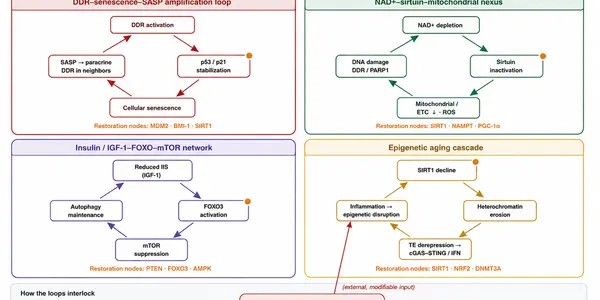
Working at the University of Oxford and The Open University, Dr Lynne Cox and Dr Robert Saunders say they have found a fast and effective way to investigate important aspects of human aging.
Their discovery of a gene in fruit flies means they can now be used to study the effects aging has on DNA. The researchers demonstrate the value of this model in helping us to understand the critical aspects of human aging at cellular, genetic and biochemical levels.
Dr Lynne Cox from the University of Oxford said: "We study a premature human ageing disease called Werner syndrome to help us understand normal aging. The key to this disease is that changes in a single gene (called WRN) mean that patients age very quickly. Scientists have made great progress in working out what this gene does in the test tube, but until now we haven’t been able to investigate the gene to look at its effect on development and the whole body. By working on this gene in fruit flies, we can model human aging in a powerful experimental system."