Jurassic Puke: Plesiosaurs Knew Not To Vomit Where They Eat
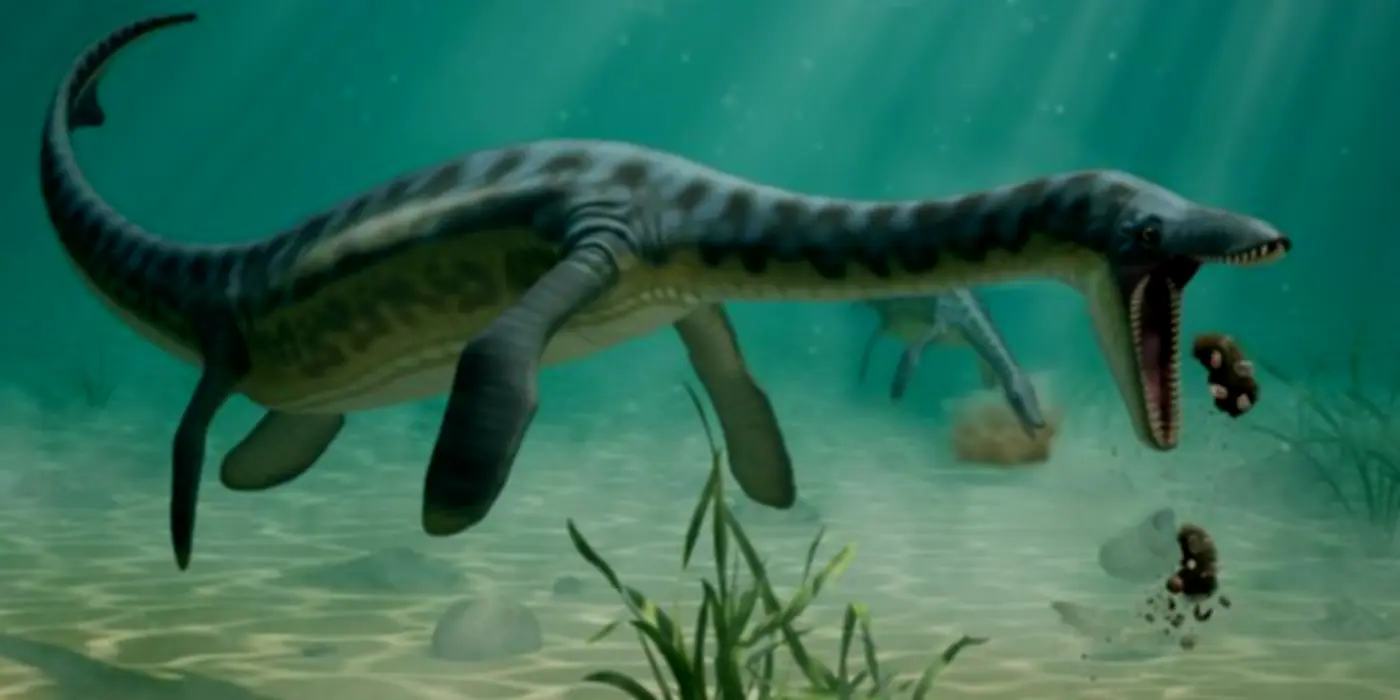
Jurassic monsters sometimes needed to vomit. When they did, they went to shore.
Jurassic monsters sometimes needed to vomit. When they did, they went to shore.


At first, fruit flies eat like horses. Hatching inside over-ripe fruit where they were laid, they feed wildly in the sugar-rich environment until nature sends them an offer they can’t refuse. To survive, they must leave the fruit, wander off and burrow into the earth where they avoid food as if it were poison. Only then can the larvae grow and hatch into flies that will take wing to lay their own eggs.
Now, a team of researchers from the University of Georgia has discovered for the first time that the important developmental switch from food attraction to aversion in the fruit fly larva is controlled by a timing mechanism in the brain and its sensory system. The study shows how this important avoidance mechanism has been recruited into evolutionary processes to promote development and could one day lead to new methods of controlling pain in humans and other animals.
Fruit flies can’t really stay in the rotting fruit where they are laid. Not only do they risk drowning in the ripening fluid, they are increasingly exposed to harmful microorganisms that can kill them. To escape, the larvae “wander” out and burrow into the ground.
In a paper recently published in Cortex, Jan Lonnemann (RWTH Aachen University, Germany) and colleagues report that many children at the age of 8-9 years seem to represent numbers spatially. Interestingly, boys using this kind of representation tended to have better calculation abilities, while girls who represent numbers spatially tended to show poorer calculation abilities.
The authors assume that these differences may be due to gender-specific thinking styles: for boys, who may prefer visual-spatial thinking styles, it seems to be helpful to represent numbers spatially when being confronted with calculation problems, whereas for girls preferring verbal thinking styles it may be even detrimental.
Evidence for a connection between number and space processing comes from behavioral, patient, and brain imaging data, but only a few studies have addressed this issue in children.
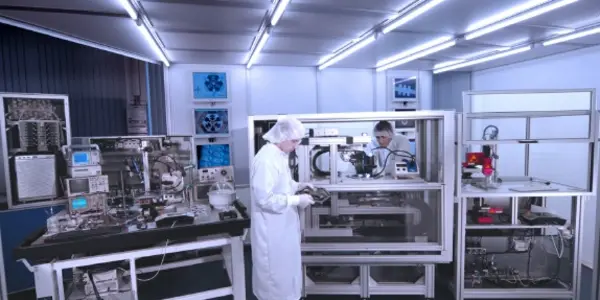
Stem cells, the body's wonder tool, are extremely versatile. They can develop in 220 different ways, transforming themselves into a correspondingly diverse range of specialized body cells.
Biologists and medical scientists plan to make use of this differentiation ability to selectively harvest cardiac, skin or nerve cells for the treatment of different diseases. However, the stem cell culture techniques practiced today are not very efficient. What proportion of a mass of stem cells is transformed into which body cells? And in what conditions?
“We need devices that keep doing the same thing and thus deliver statistically reliable data,” says Professor Günter Fuhr, director of the Fraunhofer Institute for Biomedical Engineering IBMT in St. Ingbert.
Being obese can increase the risk of Alzheimer’s Disease by as much as 80 percent, according to a study in the May issue of Obesity Reviews. But it's not just weight gain that poses a risk. People who are underweight also have an elevated risk of dementia, unlike people who are normal weight or overweight.
US researchers carried out a detailed review of 10 international studies published since 1995, covering just over 37,000 people, including 2,534 with various forms of dementia. Subjects were aged between 40 and 80 years when the studies started, with follow-up periods ranging from three to 36 years.
The review, which included studies from the USA, France, Finland, Sweden and Japan, also included a sophisticated meta-analysis of seven of the studies, published between 2003 and 2007 with a follow-up period of at least five years.

The Antennae Galaxies, located in the constellation of Corvus (the Crow), are among the closest known merging galaxies. The two galaxies, also known as NGC 4038 and NGC 4039, began interacting a few hundred million years ago, creating one of the most impressive sights in the night sky. They are considered by scientists as the archetypal merging galaxy system and are used as a standard against which to validate theories about galaxy evolution.
Scientists using Hubble’s Advanced Camera for Surveys and Wide Field Planetary Camera 2 to observe individual stars spawned by the colossal cosmic collision in the Antennae Galaxies have reached a surprising conclusion - the Antennae are much closer than previously believed, 45 million light-years instead of the previous best estimate of 65 million light-years.

Photosynthesis is of great interest outside biology, specifically in the energy industry. Using photosynthesis, green plants are able to harvest energy from sunlight and convert it to chemical energy at an energy transfer efficiency rate of approximately 97 percent and if scientists can create artificial versions of photosynthesis, the dream of solar power as the ultimate green and renewable source of electrical energy could be realized.
However, a potential pitfall for any sunlight-harvesting system is that if the system becomes overloaded with absorbed solar energy, it most likely will suffer some form of damage. Plants solve this problem on a daily basis with a photo-protective mechanism called energy-quenching. Excess energy, detected by changes in pH levels, is safely dissipated from one molecular system to another, where it can then be routed down relatively harmless chemical reaction pathways.
In a study of the molecular mechanisms by which plants protect themselves from oxidation damage should they absorb too much sunlight during photosynthesis, a team of researchers has discovered a molecular “dimmer switch” that helps control the flow of solar energy moving through the system of light harvesting proteins. This discovery holds important implications for the future design of artificial photosynthesis systems that could provide the world with a sustainable and secure source of energy.
An international study has discovered 10 new genes related to human growth.
This meta-analysis, published in the latest issue of Nature Genetics, is based on data from more than 26,000 study participants. It verifies two already known genes, but also discovered ten new genes. Altogether they explain a difference in body size of about 3.5 centimeters.
The analysis produced some biologically insightful findings. Several of the identified genes are targeted by the microRNA let-7, which affects the regulation of other genes. This connection was completely unknown until now. Several other SNPs may affect the structure of chromatin, the chromosome-surrounding proteins. Moreover, the results could have relevance for patients with inherited growth problems, or with problems in bone development, because some of the newly discovered genes have rare mutations, known to be associated with anomalous skeletal growth. Further functional studies are necessary to completely elucidate the biological mechanisms behind this growing list of genes related to height.
A protein that is indispensable for passing on an accurate copy of the genome from mother to daughter cells can be compared to a cowboy’s lasso, say scientists at the The FIRC Institute of Molecular Oncology Foundation (IFOM).
It 'catches' chromosomes and ties them to a transitory structure assembled during cell division. Once they have been neatly tied up, the chromosomes await the end of replication to be equally distributed between the two daughter cells. But if the lasso doesn’t catch them, chromosomes end up being randomly scattered, with potentially disastrous genetic effects: should cells survive this, they receive the wrong genetic inheritance, with dire consequences.
This study opens up new avenues of research to reduce the toxicity of chemotherapy in the treatment of cancer.
Socrates (470-399 BC) may have lived centuries ago but the methods connected with him never go out of date.
Socratic methods(1) have developed independently in various countries. They all describe similar methodological steps - an opening question is answered by all participants and followed by cooperative, critical analysis. Finally, the new ideas are connected to the everyday life experience of the participants.
This formal structure helps participants to try new, bold ideas that they might otherwise not have tested. By cooperating when examining the ideas they also seem to learn a way to address problems on their own without teacher intervention.
Martin Fischer, University of Dundee, Scotland, recently reported results showing that the majority of adults prefer to start counting on their left hand, regardless of whether they are left- or right-handed. In a subsequent odd-even task, the left-starters had more consistent spatial-numerical associations than the right-starters.
Simple numerical tasks, such as classifying digits as odd or even by pressing left or right buttons reveal that we like to associate small numbers with left space. Where does this preference come from?
Designer labels aren't just cool to pretentious New York women - they're also the dream of nuclear physicists.
Designer isotopes, the relatively new power scientists have to make specific rare isotopes to solve scientific problems and open doors to new technologies, will compete with nanotechnology for big breakthroughs, according to Bradley Sherrill, a University Distinguished Professor of physics and associate director for research at the National Superconducting Cyclotron Laboratory at Michigan State University.
Isotopes are the different versions of an element. Their nuclei have different numbers of neutrons, and thus give them different properties. Rare isotopes don’t always exist in nature – they must be coaxed out with high-energy collisions created by special machines, like those in MSU’s Coupled Cyclotron facility. As technology advances, newer equipment is needed.

A team of scientists has provided, for the first time, a detailed map of how the building blocks of chromosomes, the cellular structures that contain genes, are organized in the fruit fly Drosophila melanogaster. The work identifies a critical stop sign for transcription, the first step in gene expression, and has implications for understanding how the AIDS virus regulates its genes.
The scientists found that nucleosomes--chromosomal building blocks made up of proteins around which DNA is coiled--occur at precise locations along genes that are actively undergoing transcription. They also showed that RNA polymerase--the enzyme that reads genes as the first step in making proteins--is stopped at the first nucleosome, where it remains idle until it is directed to continue moving forward.