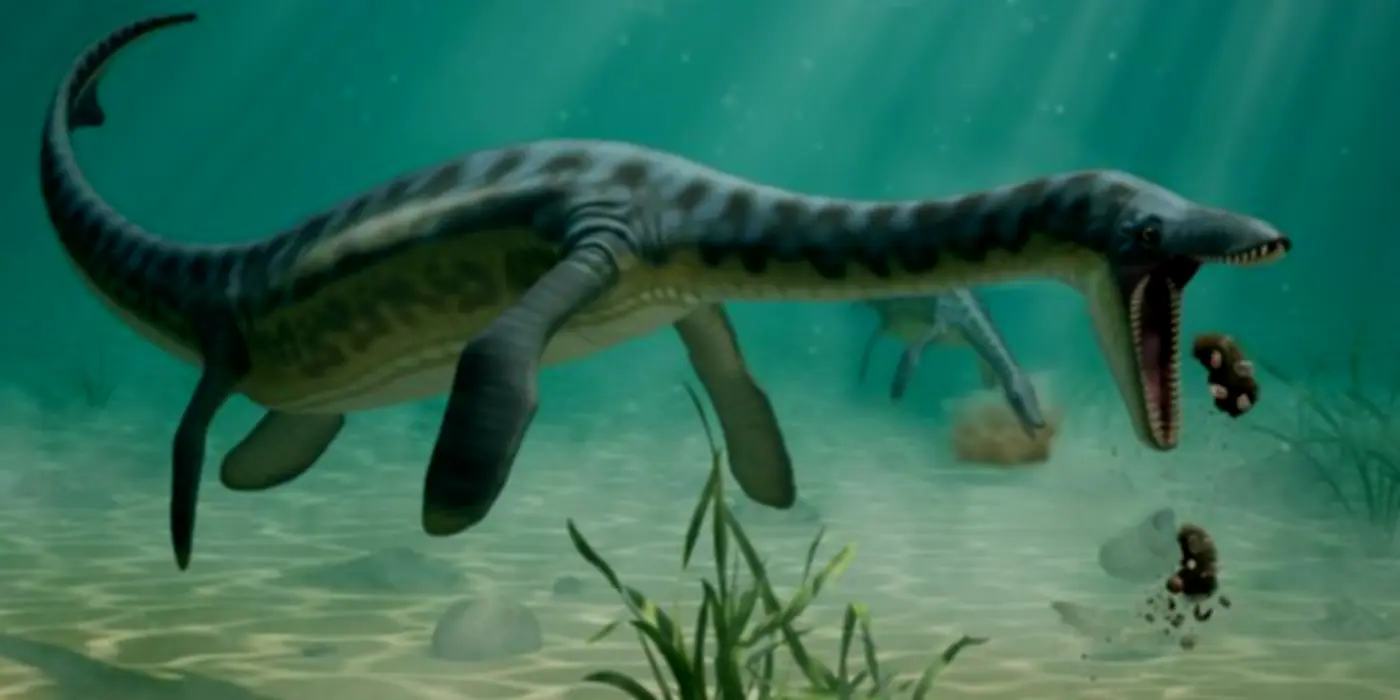
Jurassic Puke: Plesiosaurs Knew Not To Vomit Where They Eat
Jurassic monsters sometimes needed to vomit. When they did, they went to shore.
Jurassic monsters sometimes needed to vomit. When they did, they went to shore.


The climatic event El Niño, literally “the Baby Jesus”, was given its name because it generally occurs at Christmas time along the Peruvian coasts.
This expression of climatic variability, also called El Niño Southern Oscillation (ENSO), results from a series of interactions between the atmosphere and the tropical ocean. It induces drought in areas that normally receive abundant rain and, conversely, heavy rainfall and floods in usually arid desert zones.
Scientists term this phenomenon a “quasi-cyclic” variation because its periodicity, which varies from 2 to 7 years, shows no regular time pattern. Research conducted over the past 25 years, by oceanographers, climatologists and meteorologists has much improved knowledge on the mechanisms generating an El Niño event.
In 2007, researchers were dazzled by the degree to which genomes differ from one human to another and began to understand the role of these variations in disease and personal traits. Science and its publisher, AAAS, the nonprofit science society, recognize “Human Genetic Variation” as the Breakthrough of the Year, and identify nine other of the year’s most significant scientific accomplishments in the 21 December issue.
“For years we've been hearing about how similar people are to one another and even to other apes,” said Robert Coontz, deputy news editor for physical sciences who managed the selection process. “In 2007, advances on several fronts drove home for the first time how much DNA differs from person to person, too.

By working in synergy with a ground-based telescope array, the joint Japanese Aerospace Exploration Agency (JAXA)/NASA Suzaku X-ray observatory is shedding new light on some of the most energetic objects in our galaxy, but objects that remain shrouded in mystery.
These cosmic powerhouses pour out vast amounts of energy, and they accelerate particles to almost the speed of light. But very little is known about these sources because they were discovered only recently. "Understanding these objects is one of the most intriguing problems in astrophysics," says Takayasu Anada of the Institute for Space and Astronautical Science in Kanagawa, Japan.
Scientists have found an explanation for runners who struggle to increase their pace, cyclists who can’t pedal any faster and swimmers who can’t speed up their strokes. Researchers from the University of Exeter and Kansas State University have discovered the dramatic changes that occur in our muscles when we push ourselves during exercise.
We all have a sustainable level of exercise intensity, known as the ‘critical power’. This level can increase as we get fitter, but will always involve us working at around 75-80% of our maximal capacity.
Published in the American Journal of Physiology: Regulatory, Integrative and Comparative Physiology, this research shows why, when we go beyond this level, we have to slow down or stop altogether.
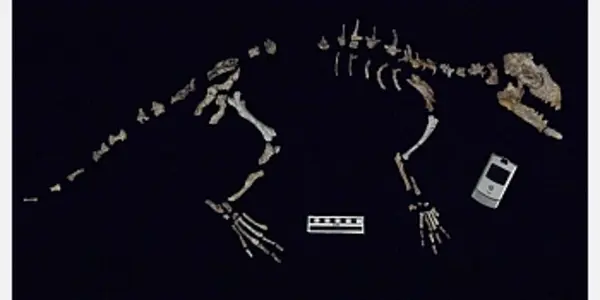
Scientists since Darwin have known that whales are mammals whose ancestors walked on land. In the past 15 years, researchers led by Hans Thewissen of the Northeastern Ohio Universities Colleges of Medicine and Pharmacy (NEOUCOM) have identified a series of intermediate fossils documenting whale's dramatic evolutionary transition from land to sea.
But one step was missing: The identity of the land ancestors of whales.
The African Mousedeer (also called Chevrotain), for example, is known to jump in water when in danger and move around at the bottom, but it is not closely related to whales.
Global warming and other human-caused ecological changes are outpacing the ability of species to adapt, resulting in greater threats of disease, reduced diversity in plant and animal communities, and an overall loss of natural heritage, according to research presented in the Jan. 3, 2008, edition of Molecular Ecology.
The Special Issue includes 38 peer-reviewed articles and is dedicated to research presented at the conference – “Evolutionary Change in Human-altered Environments” – sponsored by the UCLA Institute of the Environment.
Tufts University researchers have updated their Food Guide Pyramid for Older Adults to correspond with the USDA food pyramid, now known as MyPyramid. The Tufts version is specifically designed for older adults and has changed in appearance and content.
The Modified MyPyramid for Older Adults continues to emphasize nutrient-dense food choices and the importance of fluid balance, but has added additional guidance about forms of foods that could best meet the unique needs of older adults and about the importance of regular physical activity.
“Adults over the age of 70 have unique dietary needs,” says first author Alice H. Lichtenstein, D.Sc., director of the Cardiovascular Nutrition Laboratory at the Jean Mayer USDA Human Nutrition Research Center on Aging at Tufts (USDA HNRCA).
Researchers at Stanford University report in Genome Biology a new approach to computationally predicting the locations and structures of protein-coding genes in a genome.
Gene finding remains an important problem in biology as scientists are still far from fully mapping the set of human genes. Furthermore, gene maps for other vertebrates, including important model organisms such as mouse, are much more incomplete than the human annotation. The new technique, known as CONTRAST (CONditionally TRAined Search for Transcripts), works by comparing a genome of interest to the genomes of several related species.
What could be a greater test of the limits of human physiology than the Olympics? To mark the 2008 games in Beijing, the Journal of Physiology present a special issue focusing on the science behind human athleticism and endurance.
This unique collection of original research and in-depth reviews examines the genes that make a champion, the physiology of elite athletes, limits to performance and how they might be overcome.
Excess body heat is a barrier to performance in many sports, and a novel study by Romain Meeusen et al.1 shows that both the neurotransmitter systems have an important impact on the control and perception of thermoregulation.
Using observations from ESO’s VLT, astronomers were able for the first time to reconstruct the site of a flare on a solar-like star located 150 light years away - about ten million times further away from us than the Sun is. The study of this young star, BO Microscopii, will help scientists better understand the youth of our own star.
BO Microscopii is a young star with a mass about 90% of the mass of our Sun. It is located 150 light years away towards the Microscope constellation. 'Speedy Mic', as it is called, got its name because of its very fast rotation. The object rotates 66 times as fast as our Sun, which results in much stronger magnetic fields than ours.
Researchers at MIT's Picower Institute for Learning and Memory have corrected key symptoms of mental retardation and autism in mice.
The report in Neuron also indicates that a certain class of drugs could have the same effect. These drugs are not yet approved by the FDA, but will soon be entering into human clinical trials.
Fragile X syndrome (FXS), affecting 100,000 Americans, is the most common inherited cause of mental retardation and autism. The MIT researchers corrected FXS in mice modeling the disease. “These findings have major therapeutic implications for fragile X syndrome and autism,” said study lead author Mark F. Bear, director of the Picower Institute and Picower Professor of Neuroscience at MIT.
The seemingly inefficient way our bodies replace worn-out cells is a defense against cancer, according to new research.
Having the neighboring cell just split into two identical daughter cells would seem to be the simplest way to keep bodies from falling apart.
However that would be a recipe for uncontrolled growth, said John W. Pepper of The University of Arizona in Tucson. We wrote of the paper by Pepper and his colleagues,, "Animal Cell Differentiation Patterns Suppress Somatic Evolution", last week.
"If there were only one cell type in the group, it would act like an evolving population of cells.