You Feel Colder As You Age: The Science Reason Why
Older people report feeling colder, enough that it is clearly happening, but why has been a mystery. Until now.
Older people report feeling colder, enough that it is clearly happening, but why has been a mystery. Until now.


For mice, carbon dioxide often means danger — too many animals breathing in too small a space or a hungry predator exhaling nearby. Mice have a way of detecting carbon dioxide, and new research from Rockefeller University shows that a special set of olfactory neurons is involved, a finding that may have implications for how predicted increases in atmospheric carbon dioxide may affect animal behavior.
Most olfactory sensory neurons express odorant receptor molecules that detect odors and reside within the lining of the nasal cavity. But a small subset express an enzyme called guanylyl cyclase-D (GC-D). Peter Mombaerts, professor and head of the Laboratory of Developmental Biology and Neurogenetics at Rockefeller, and Andreas Walz, a research associate in Mombaerts’s CO2 detector.

Astronomers have discovered a chaotic scene unlike any witnessed before in a cosmic “train wreck” between giant galaxy clusters. NASA’s Chandra X-ray Observatory and optical telescopes revealed a dark matter core that was mostly devoid of galaxies, which may pose problems for current theories of dark matter behavior.
"These results challenge our understanding of the way clusters merge," said Dr. Andisheh Mahdavi of the University of Victoria, British Columbia.
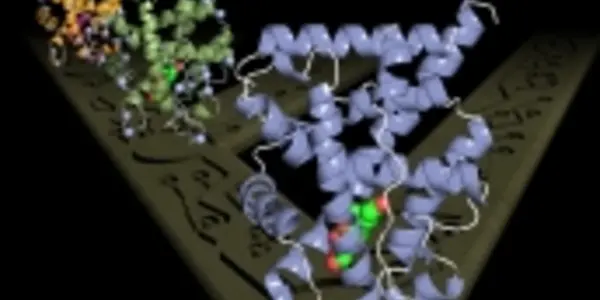
Scientists have determined for the first time the atomic structure of an ancient protein, revealing in unprecedented detail how genes evolved their functions.
"Never before have we seen so clearly, so far back in time," said project leader Joe Thornton, an evolutionary biologist at the University of Oregon. "We were able to see the precise mechanisms by which evolution molded a tiny molecular machine at the atomic level, and to reconstruct the order of events by which history unfolded."
A detailed understanding of how proteins – the workhorses of every cell – have evolved has long eluded evolutionary biologists, in large part because ancient proteins have not been available for direct study.

Wastewater treatment plants are designed primarily to eliminate nutrients. However, attention is increasingly being focused on micropollutants, since even low concentrations of these substances can have adverse impacts on aquatic ecosystems. Ozonation of wastewater appears to be a promising option for removing micropollutants at treatment plants.
Ozone, which consists of three oxygen atoms, is a reactive gas. It is a powerful oxidizing agent and forms hydroxyl radicals in contact with water. While ozone itself only oxidizes certain substances, the hydroxyl radicals attack a wide range of substances. Ozonation thus leads to the breakdown of various complex compounds, making substances much more susceptible to subsequent biological degradation.

Pressures and temperatures at the Earth’s core are stupendous – more than 3.5 Mbar and 7000K – and currently it is impossible to recreate these conditions in the laboratory. Our information about the core comes from observing the way that seismic waves travel through the core, extrapolating from experimental studies and studying iron rich meteorites.
As a result we know that the core is mostly iron, but that it also must contain some light impurities such as oxygen, silicon, sulphur, hydrogen and magnesium (because the density of the core is too low to be pure iron). The most significant impurity is thought to be nickel, which makes up between 5 and 15% of the composition.
Most studies on the Earth’s core have approximated the composition to be pure iron.
Prof. Yadin Dudai, Head of the Weizmann Institute’s Neurobiology Department, and his colleagues recently discovered that the process of storing long-term memories is much more dynamic than previously thought, involving a miniature molecular machine that must run constantly to keep memories going. They also found that jamming the machine briefly can erase long-term memories. Their findings may pave the way to future treatments for memory problems.
Dudai and research student Reut Shema, together with Todd Sacktor of the SUNY Downstate Medical Center, trained rats to avoid certain tastes. They then injected a drug to block a specific protein into the taste cortex – an area of the brain associated with taste memory.
Most modern attempts to decipher how portions of genetic code are translated into physical characteristics are akin to a first-grader trying to sound out a word letter by letter — or, in this case, base pair by base pair.
But University of Florida researchers have developed a computational method that’s more like reading whole words at a time.
In a world where science’s ability to transcribe an organism’s genetic code is growing faster every day, the technique could offer much needed efficiency in translating the seemingly endless string of characters into information that can cure disease or create new crops.
Natural selection has driven two closely related species of fish in Lake Malawi down different evolutionary paths - even though they live side by side.
An international team of scientists from Canada (Université Laval), the U.K. (University of Hull, Cardiff University) and Spain (Doòana Biological Station), have discovered that a pair of closely related species of East African cichlid fishes – a group of fish whose diversity comprising hundreds of species has puzzled evolutionary biologists for decades – evolved divergent immune gene adaptations which might explain why they do not interbreed, despite their closeness.

A team of researchers investigating cholesterol and lipid transport has performed experiments that cast serious doubt on the dominant hypothesis of how the body rids its cells of "bad" cholesterol (LDL) and increases "good" cholesterol (HDL).
A protein called ABCA1 is critical for producing "good" cholesterol: patients who lack the gene for this protein produce no HDL, and as a result, suffer from heart attacks at an early age. An important question is what ABCA1 does that is so important for producing HDL.
The most popular hypothesis was put forth in 2000 by Giovanna Chimini, Group Leader of a laboratory in the Centre d'Immunologie Marseille-Luminy in France, and colleagues.

Most people understand how liquids freeze as solid crystals when temperatures become cold enough, like water droplets crystallizing into snowflakes or molten glass hardening into solid glass.
Latter 20th-century physicists realized that at low enough temperatures, most liquids that exist in nature become energetically unstable as they solidify. Scientists discovered solids that don't have the commonly known, regular crystalline and glass phases - things like liquid crystals, quasi-crystals and charge-density waves. Charge-density waves are systems that display interesting physics, such as metals becoming insulators.
Research from The University of Nottingham sheds new light on a fascinating phenomenon of the natural world — the ability of some species to reproduce sexually without a partner.
Scientists have been trying to determine how individuals of a key fungus, Aspergillus nidulans, are able to have sex without the need for a partner.
In new findings they reveal that the fungus has evolved to incorporate the two different sexes into the same individual.
In their search for the cellular and molecular causes of multiple sclerosis, an Italian-German research team has identified a subgroup of protective immune cells (suppressor cells) which are strikingly reduced in number in patients with this nervous system disorder.
These suppressor cells are characterized by a specific surface marker, called CD39, and degrade ATP, an energy carrier released from damaged tissues. By this means, suppressor cells appear to be able to curb inflammation occurring in the central nervous system in the course of the disease.
With CD39, Dr. Giovanna Borsellino (Laboratory for Neuroimmunology of the Fondazione Santa Lucia in Rome, Italy) in collaboration with Dr. Olaf Rötzschke and Dr.