Brain Circuit Linked To Pregnancy Food Cravings Identified
Pregnant women have experienced exotic food cravings since recorded history began. This may be why.
Pregnant women have experienced exotic food cravings since recorded history began. This may be why.


Genetics tests could help provide cystic fibrosis (CF) patients with targeted treatment in future, pilot study authors suggest. Results from a French clinical trial published today in BMC Medicine show how a small percentage of CF sufferers with a rare genetic stop mutation responded positively to gentamicin treatment.
Aleksander Edelman and Isabelle Sermet-Gaudelus of Faculté de Médicine Necker in Paris led collaborators from several French institutions studying how the antibiotic gentamicin affected CF patients with a stop mutation. The team used a dual reporter gene assay first in vitro and then in CF patients.
A new report published in the prestigious New England Journal of Medicine (NEJM) shows that patients treated with bronchial thermoplasty, the first non-drug treatment for asthma, demonstrated an overall improvement in asthma control.
Co-Principal Investigators, Dr. Gerard Cox, respirologist at St. Joseph’s Healthcare Hamilton’s Firestone Institute for Respiratory Health, and Professor at McMaster University, and Dr. John Miller, Division Head of Thoracic Surgery at St. Joseph’s Healthcare Hamilton and McMaster University authored the study. The study revealed improved asthma control at one year following the bronchial thermoplasty procedure.
Picture the flow of water over a rock. At very low speeds, the water looks like a smooth sheet skimming the rock's surface. As the water rushes faster, the flow turns into turbulent, roiling whitewater that can overturn your raft.
Turbulence is important in virtually all phenomena involving fluid flow, such as air and gas mixing in an engine, ocean waves breaking on a cliff and air whipping across the surface of a vehicle. However, a comprehensive description of turbulent fluid motion remains one of physics' major unsolved problems.
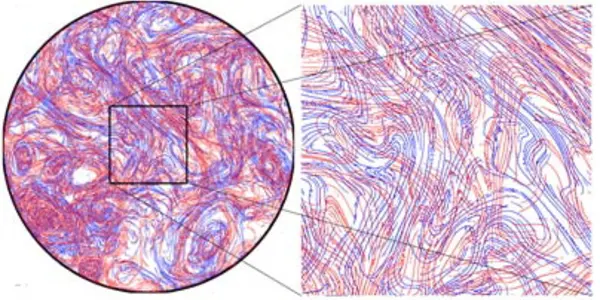
MIT visualization of the chaotic tangle underlying turbulence. Area in black box represents a blown-up portion of the fluid showing the self-similarity of the tangle.
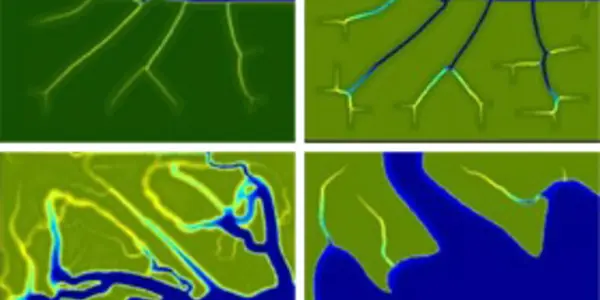
Tidal marshes, which nurture marine life and reduce storm damage along many coastlines, should be able to adjust to rising sea levels and avoid being inundated and lost, if their vegetation isn't damaged and their supplies of upstream sediment aren't reduced, a new Duke University study suggests.
Such marshes "offer great value as buffers of coastal storms in cities such as New Orleans, which is separated from the Gulf of Mexico by marshlands," Matthew Kirwan and A.
New calculations show that sensitivity of Earth's climate to changes in the greenhouse gas carbon dioxide (CO2) has been consistent for the last 420 million years, according to an article in Nature by geologists at Yale and Wesleyan Universities.
A popular predictor of future climate sensitivity is the change in global temperature produced by each doubling of CO2 in the atmosphere. This study confirms that in the Earth's past 420 million years, each doubling of atmospheric CO2 translates to an average global temperature increase of about 3° Celsius, or 5° Fahrenheit.
It is a natural history tale that every third grader knows: The dinosaurs ruled the Earth for hundreds of millions of years, until an asteroid struck the Yucatan Peninsula and triggered a mass extinction that allowed the ancestors of today’s mammals to thrive.
The asteroid part of the story may still hold true, but a new study challenges the notion that a mass extinction of dinosaurs 65 million years ago played a major role in the dominance of today’s mammals.
A new, complete 'tree of life' tracing the history of all 4,500 mammals on Earth shows that they did not diversify as a result of the death of the dinosaurs, says new research published in Nature today.
The study was undertaken in the UK by scientists at Imperial College London and the Zoological Society of London (ZSL). It contradicts the previously accepted theory that the Mass Extinction Event (MEE) that wiped out the dinosaurs 65 million years ago prompted the rapid rise of the mammals we see on the earth today.
Tailor-made dietary fiber may be able to flush artery-clogging cholesterol from the body and lower the risk of heart disease, according to a new study by University of Guelph researchers.
The study found that a fiber-rich plant extract from a legume grown in India can reduce cholesterol in pigs. The results were published in the March issue of the Journal of Nutrition.

An interdisciplinary team of researchers at Vanderbilt University has analyzed the simplest known biological clock and figured out what makes it tick. The results of their analysis are published in the March 27 issue of the journal Public Library of Science Biology.
Biological clocks are microscopic pacemakers. They are found in everything from pond scum to human beings and appear to help organize a dizzying array of biochemical processes. A traveler experiences jet lag when his or her internal clock becomes out of synch with the environment. Seasonal Affective Disorder, some types of depression, sleep disorders and problems adjusting to changes in work cycles all can occur when an individual's biological clock acts up.

Using measurements of the four ESA's Cluster satellites, a study published this week in Nature Physics shows pioneering experimental evidence of magnetic reconnection also in turbulent 'plasma' around Earth.
This image provides a model of magnetic fields at the Sun's surface using SOHO data, showing irregular magnetic fields (the ‘magnetic carpet’) in the solar corona (top layer of the Sun's atmosphere). Small-scale current sheets are likely to form in such turbulent environment and reconnection may occur in similar fashion as in Earth's magnetosheath. Credits: Stanford-Lockheed Inst. for Space Research/NASA GSFC
Given the huge shortage of donor organs, researchers have been trying to find ways to transplant animal organs across different species (known as "xenotransplantation"), with the eventual aim of transplanting animal organs into humans. The major stumbling block, says Dr Muhammad Mohiuddin (US National Heart, Lung, and Blood Institute) in a paper in PLoS Medicine, is that the immune system in the animal receiving the organ tends to reject the transplant.
Nevertheless, the recent development of genetically modified pigs that are more compatible with humans, "has reinstated hope for the success of xenotransplantation," he says.
Biology and chemistry researchers from Virginia Tech are creating molecular complexes to bind to and disrupt the DNA of diseased tissues, such as tumors or viruses. Testing the activity of each of the therapeutic molecule designs has been a time-consuming process. But a student’s invention now provides rapid screening to accelerate discovery of promising new drugs.
Aaron J. (A.J.) Prussin II of Blacksburg, Va., a second year student at Virginia Tech who is majoring in biochemistry and biology, with a minor in chemistry, has created an LED system that glows a beautiful shade of blue when the special molecules successfully bind to DNA.