You Feel Colder As You Age: The Science Reason Why
Older people report feeling colder, enough that it is clearly happening, but why has been a mystery. Until now.
Older people report feeling colder, enough that it is clearly happening, but why has been a mystery. Until now.


When a jogger sets out on his evening run, the active movements of his arms and legs are accompanied by involuntary changes in the position of the head relative to the rest of the body. Yet the jogger does not experience feelings of dizziness like those induced in the passive riders of a rollercoaster, who have no control over the abrupt dips and swoops to which they are exposed.
The reason for the difference lies in the vestibular organ (VO) located in the inner ear, which controls balance and posture. The VO senses ongoing self-motion and ensures that, while running, the jogger unconsciously compensates for the accompanying changes in the orientation of the head.
With all of the recent controversy about claims that Monsanto funding a plant biologist skewed discussion by scientists in their favor, and claims that organic PR companies strategically used anti-science activists at Mother Jones and the New York Times to keep those readers against GMOs, a public relations study couldn't be more timely.
Americans lead the world in adult science literacy, just like America leads the world in science output, but there are substantial differences among Americans when it comes to knowledge and understanding of science topics.
The details beyond the averages are important and while numerous pundits will lament that everyone does not know everything, that is not realistic. What is important is that as many people as possible have access to knowledge.
Patients with spinal stenosis (SS) experienced good short term benefit, lasting from weeks to months, after receiving epidural steroid injections (ESI).
These findings, which appear in a letter in the journal Pain Medicine, contradict a previously published New England Journal Medicine (NEJM) study that found epidural steroid injections were not helpful in spinal stenosis cases.
New research has uncovered why a particular strain of Staphylococcus aureus -- known as HA-MRSA -- becomes more deadly than other variations. These new findings open up possible new pathways to vaccine development against this bacterium, which the Centers for Disease Control and Preventions says accounts for over 10,000 deaths annually, mostly among hospital patients.
In a series of experiments in mice and in human immune cells in the lab, a team found that the presence or absence of dueling toxins, or bacterial poisons, appears to explain the major difference between HA-MRSA, and its less virulent and more common, community based-based cousin, CA-MRSA, the two main types of MRSA infection.
As you all know, the ecosystem is like a giant human anti-lung - it breathes in the CO2 we exhale and helps produce oxygen.
It turns out that the Southern Ocean seasonally absorbs significantly more CO2 than they release, higher than previous estimates. Most importantly, these seas remove a large part of the CO2 that human activities emit into the atmosphere, thereby slowing down the growth of this greenhouse gas in the atmosphere, which has been lessening the rate of climate change.

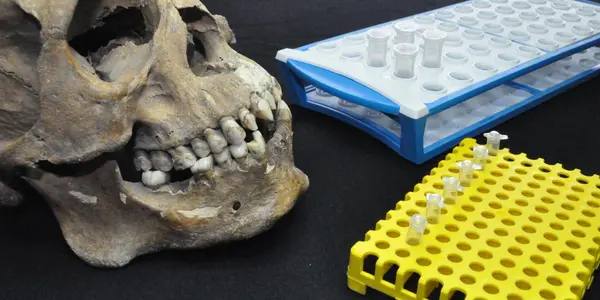
Working in a cave complex deep beneath South Africa's Malmani dolomites, an international team of scientists has brought to light an unprecedented trove of hominin fossils -- more than 1,500 well-preserved bones and teeth -- representing the largest, most complete set of such remains found to date in Africa.
The discovery of the fossils, cached in a barely accessible chamber in a subterranean labyrinth not far from Johannesburg, adds a new branch to the human family tree, a creature dubbed Homo naledi.
The remains, scientists believe, could only have been deliberately placed in the cave.
Are black voters more likely to vote for black candidates, regardless of political party affiliation? Not according to a paper by a scholar from the University of Cincinnati.
In the game of wheat genetics, Jorge Dubcovsky's laboratory at UC Davis has hit a grand slam, unveiling for the fourth time in a dozen years a gene that governs wheat vernalization, the biological process requiring cold temperatures to trigger flower formation.
Identification of the newly characterized VRN-D4 gene and its three counterpart genes is crucial for understanding the vernalization process and developing improved varieties of wheat, which provides about one-fifth of the calories and proteins that we humans consume globally.
The new study, reported online in the Proceedings of the National Academy of Sciences, also shows how the spring growth habit in some wheat varieties traces back to ancient wheat that grew in what is now Pakistan and India.
The commonly prescribed antidepressant sertraline, a selective serotonin reuptake inhibitor (SSRI) marketed as Zoloft, may alter brain structures in depressed and non-depressed individuals in very different ways, according to new research conducted in monkeys. It significantly increased the volume of one brain region in depressed subjects but decreased the volume of two brain areas in non-depressed subjects.
In the study, 41 middle-aged female monkeys were fed a diet formulated to replicate that consumed by many Americans for 18 months, during which time depressive behavior in the animals was recorded. Female monkeys were chosen for this study because depression is nearly twice as common in women as men and the use of antidepressants is most common in women ages 40 to 59.
As we grow older, we lose strength and muscle mass. However, the cause of age-related muscle weakness and atrophy has remained a mystery.
Scientists at the University of Iowa have discovered the first example of a protein that causes muscle weakness and loss during aging. The protein, ATF4, is a transcription factor that alters gene expression in skeletal muscle, causing reduction of muscle protein synthesis, strength, and mass. The UI study also identifies two natural compounds, one found in apples and one found in green tomatoes, which reduce ATF4 activity in aged skeletal muscle. The findings, which were published online Sept. 3 in the Journal of Biological Chemistry, could lead to new therapies for age-related muscle weakness and atrophy.
The misery of motion sickness could be ended within five to ten years thanks to a new treatment being developed by scientists.
The cause of motion sickness is still a mystery but a popular theory among scientists says it is to do with confusing messages received by our brains from both our ears and eyes, when we are moving. It is a very common complaint and has the potential to affect all of us, meaning we get a bit queasy on boats or rollercoasters. However, around three in ten people experience hard-to-bear motion sickness symptoms, such as dizziness, severe nausea, cold sweats, and more.