News Articles

News Account

News Account

News Releases From All Over The World, Right To You
RSS Feed
Origin Of The Spin Seebeck Effect Discovered?

Origin Of The Spin Seebeck Effect Discovered?

The recovery of waste heat in all kinds of processes will lead to making established processes more energy-efficient and more environmentally friendly. The Spin Seebeck effect (SSE) is a rudimentarily understood effect which allows for the conversion of a heat flux into electrical energy, even in electrically non-conducting materials. A team of physicists at Johannes Gutenberg University Mainz (JGU), the University of Konstanz, TU Kaiserslautern, and the Massachusetts Institute of Technology (MIT) have now succeeded in identifying the origin of the Spin Seebeck effect.

Naps Linked To Reduced Blood Pressure And Fewer Medications

Naps Linked To Reduced Blood Pressure And Fewer Medications

Midday naps are associated with reduced blood pressure levels and prescription of fewer antihypertensive medications, according to research presented at ESC Congress today by Dr Manolis Kallistratos, a cardiologist at Asklepieion Voula General Hospital in Athens, Greece.

Poor Women Twice As Likely To Develop Clinical Anxiety As Poor Men

Poor Women Twice As Likely To Develop Clinical Anxiety As Poor Men

Women living in poor areas in the UK are almost twice as likely to develop clinical anxiety as women in richer areas. However, whether men lived in poorer or richer areas made no difference to their levels of generalized anxiety disorder (GAD). These are amongst the main findings of a major survey on how socio-economic factors affect mental health in the UK.
The study was part of the much larger EPIC program, which looked at the relationship between chronic diseases and the way people live their lives. The Cambridge group followed up the health of 11,422 women and 8,878 men resident in Norfolk, UK. Using detailed health and lifestyle questionnaires, they were able to unpick some of the factors which contributed to poor health over the 15-year period of the study.

Disruption Of A Crucial Cellular Machine May Kill The Engine Of Deadly Cancers

Disruption Of A Crucial Cellular Machine May Kill The Engine Of Deadly Cancers

In a way, cancer resembles a runaway car with a gas pedal stuck to the floor, hurling out of control. Most new targeted cancer therapies seek to fix the gas pedal itself, and thus thwart the aggressive behavior of the tumor. But for many types of cancers, the pedal simply cannot be repaired, so new alternatives are desperately needed. A team at Baylor College of Medicine has discovered a way to step on the brakes of some of the deadliest cancers.

Estimate Claims Plastic In 99 Percent Of Seabirds By 2050 - But Accuracy Of The Baseline Is Unclear

Estimate Claims Plastic In 99 Percent Of Seabirds By 2050 - But Accuracy Of The Baseline Is Unclear

Researchers from CSIRO and Imperial College London have assessed how widespread the threat of plastic is for the world's seabirds, including albatrosses, shearwaters and penguins, and found the majority of seabird species have plastic in their gut.
The study, led by Dr Chris Wilcox with co-authors Dr Denise Hardesty and Dr Erik van Sebille and published today in the journal PNAS, found that nearly 60 per cent of all seabird species have plastic in their gut.
Based on analysis of published studies since the early 1960s, the researchers found that plastic is increasingly common in seabird's stomachs.
In 1960, plastic was found in the stomach of less than 5 per cent of individual seabirds, rising to 80 per cent by 2010.

In Europe, Smoking Prevalence Stays The Same But People Who Want To Quit Are Up

In Europe, Smoking Prevalence Stays The Same But People Who Want To Quit Are Up

Europeans love to smoke but the good news is that the people who at least say they want to quit has risen in the last seven years, according to results from the latest EUROASPIRE surveys.
EUROASPIRE is a series of cross sectional surveys of the practice of preventive cardiology in patients with coronary heart disease (CHD) and people at high risk of developing cardiovascular disease (CVD) across Europe. Four EUROASPIRE surveys have been conducted under the ESC's EORP initiative. EUROASPIRE III, conducted in 2006 to 2008, included for the first time people at high risk of developing CVD in general practice from 12 countries. The primary care arm of EUROASPIRE IV was carried out in 2014 to 2015 in 14 countries.

Magnetic Fields Provide A New Way To Communicate Wirelessly

Magnetic Fields Provide A New Way To Communicate Wirelessly

Electrical engineers at the University of California, San Diego demonstrated a new wireless communication technique that works by sending magnetic signals through the human body. The new technology could offer a lower power and more secure way to communicate information between wearable electronic devices, providing an improved alternative to existing wireless communication systems, researchers said. They presented their findings Aug. 26 at the 37th Annual International Conference of the IEEE Engineering in Medicine and Biology Society in Milan, Italy.

New Mechanism Discovered Behind Infant Epilepsy

New Mechanism Discovered Behind Infant Epilepsy

Scientists at Karolinska Institutet and Karolinska University Hospital in Sweden have discovered a new explanation for severe early infant epilepsy. Mutations in the gene encoding the protein KCC2 can cause the disease, hereby confirming an earlier theory. The findings are being published in the journal Nature Communications.

Four Stages Of Evolution For Human Body, Says Anthropologist

Four Stages Of Evolution For Human Body, Says Anthropologist

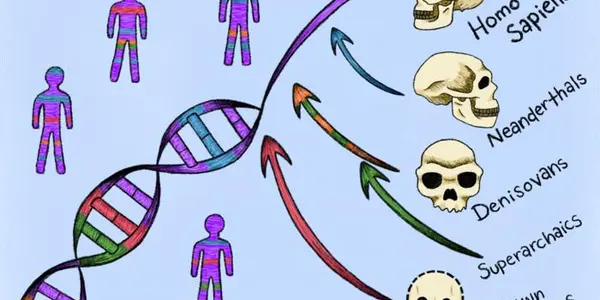
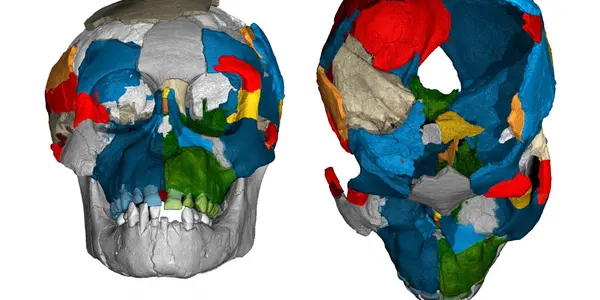
Research into 430,000-year-old fossils collected in northern Spain found that the evolution of the human body's size and shape has gone through four main stages, according to a recent paper. 
A large international research team including Binghamton University anthropologist Rolf Quam studied the body size and shape in the human fossil collection from the site of the Sima de los Huesos in the Sierra de Atapuerca in northern Spain.
Dated to around 430,000 years ago, this site preserves the largest collection of human fossils found to date anywhere in the world. The researchers found that the Atapuerca individuals were relatively tall, with wide, muscular bodies and less brain mass relative to body mass compared to Neanderthals.

Depression, Blood Pressure Extremes Predict Highest Rates Of Vascular Events

Depression, Blood Pressure Extremes Predict Highest Rates Of Vascular Events

Depressive symptoms and extremes of blood pressure predict the highest rates of harmful vascular events in patients with existing heart disease, diabetes or stroke, according to research presented at ESC Congress by Dr Bhautesh Jani, clinical academic fellow in the Institute of Health and Wellbeing, University of Glasgow. 
The study in more than 35 000 patients found that the risk of further stroke or heart attack, heart failure or dying due to heart disease at four years was 83% higher in depressed patients with high blood pressure and 36% higher in depressed patients with low blood pressure, compared to those with normal blood pressure and no depressive symptoms.

Ancient Maya Ruined Their Environment - And They're Still Being Blamed Today

Ancient Maya Ruined Their Environment - And They're Still Being Blamed Today

Evidence from the tropical lowlands of Central America reveals how Maya activity more than 2,000 years ago not only contributed to the decline of their environment but continues to influence today's environmental conditions, according to researchers at The University of Texas at Austin.
Synthesizing old and new data, researchers were the first to show the full extent of the "Mayacene" as a microcosm of the early anthropocene -- a period when human activity began greatly affecting environmental conditions.

Not Just Behavior: Girls And Boys With Autism Differ In Brain Structure Also

Not Just Behavior: Girls And Boys With Autism Differ In Brain Structure Also

Girls with autism display less repetitive and restricted behavior than boys do, according to a study by researchers at the Stanford University School of Medicine.
The study also found that brain differences between boys and girls with autism help explain this discrepancy.
The study, which will be published online Sept. 3 in Molecular Autism, gives the best evidence to date that boys and girls exhibit the developmental disorder differently.