Kids Helping Kids Is Universal - But Cultures Help Differently
A simple game reveals a universal instinct in kids
A simple game reveals a universal instinct in kids

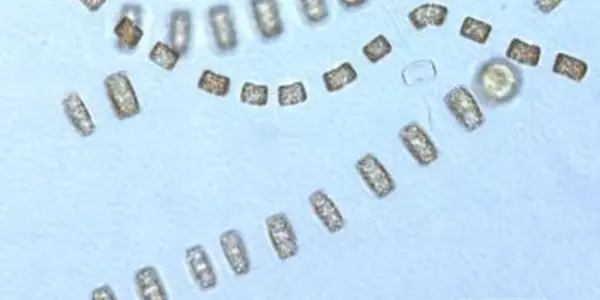
Just as crocus and daffodil blossoms signal the start of a warmer season on land, a similar "greening" event--a massive bloom of microscopic plants, or phytoplankton--unfolds each spring in the North Atlantic Ocean from Bermuda to the Arctic.

Epidemiologists believe they have identified a unique pattern of immune molecules in the cerebrospinal fluid of people with myalgic encephalomyelitis/chronic fatigue syndrome (ME/CFS) that provides insights into the basis for cognitive dysfunction--frequently described by patients as "brain fog"--as well as new hope for improvements in diagnosis and treatment.
Even during a good year, soybean farmers nationwide are, in essence, taking a loss. That's because changes in weather patterns have been eating into their profits and taking quite a bite: $11 billion over the past 20 years.
This massive loss has been hidden, in effect, by the impressive annual growth seen in soybean yields thanks to other factors. But that growth could have been 30 percent higher if weather variations resulting from climate change had not occurred, according to a study by University of Wisconsin-Madison agronomists published last month in Nature Plants.

Researchers have discovered that the inherent 'handedness' of molecular structures directs the behavior of individual cells and confers them the ability to sense the difference between left and right.
Our bodies are made up of hundreds of different types of cells, each of which performs a unique and highly specialized task. Traditionally, the ability of cells to specialize in a given function was attributed to its genetic code. However, it is becoming increasingly clear that cells do not simply live by a set of inherited or pre-determined instructions. Instead, 'cellular decisions' are made dynamically, much like humans make decisions based on the information provided to us by our senses.

Astronomers have determined the pre-explosion mass of a white dwarf star that blew up thousands of years ago and the measurement strongly suggests the explosion involved only a single white dwarf, ruling out a well-established alternative scenario involving a pair of merging white dwarfs.

In 2005, scientists studying tiny sac-like creatures called sea squirts found bacteria containing two types of chlorophyll (a and b) in cavities inside the squirts' tissues. Those two pigments were soaking up most of the sunlight - the violets, indigos, blues, green, yellows and oranges - and all that filtered through the squirts was deep red light. On the underside of the squirts was a film of photosynthesizing microbes and they turned out to be full of chlorophyll d, a rare variant of the chlorophyll molecule that absorbs near-infrared light.
A new paper suggests that when brains are organized into modules they are better at learning - without having to replace old knowledge. The authors believe the findings will accelerate attempts to create artificial intelligence (AI) though they would also have value in understanding the evolution of intelligence in natural animals. Kai Olav Ellefsen of Norwegian University of Science and Technology, Jean-Baptiste Mouret of Pierre&Marie Curie University and Jeff Clune of the University of Wyoming used simulations of evolving computational brain models - artificial neural networks - to show that more modular brains learn the most and forget the least.
Just a month after getting a cease and desist letter from New York State Attorney General Eric T. Schneiderman, GNC has become the first vitamin and supplement retailer to implement new standards in authenticating herbal supplements, ensuring their purity, and educating consumers about their chemical content.
The little voice inside your head telling you to eat that whole bag of Doritos is actually a cluster of about 10,000 specialized brain cells.
But there may be help in eating just one - the discovery of tiny 'triggers' inside those cells that give rise to this "voice", and keep it speaking throughout life.
You'll have to take personal responsibility for a little while longer, the study was done in fish and mice, but it reveals how tiny bits of DNA can have a big influence on how the body regulates appetite and weight. It's the first documentation of exactly how a brain cell gene involved in weight regulation is controlled.
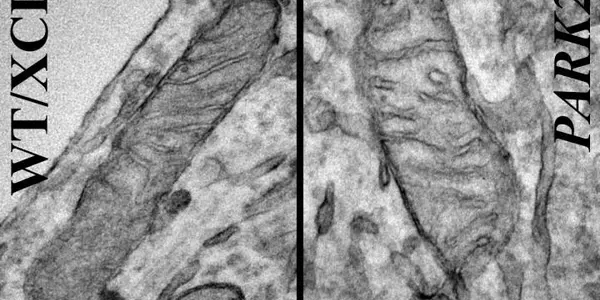
A new study using stem cells derived from patients who have Parkinson's disease (PD) has confirmed for the first time what scientists have long suspected - that the most common mutation linked to both sporadic and familial Parkinson's disease (PD) wreaks its havoc by altering the function of mitochondria in neurons that produce the neurotransmitter dopamine.
Mitochondria are energy-producing organelles found in large numbers in most cells and are necessary for life. Zeng says the Park2 mutation altered mitochondrial structure and function in dopamine producing neurons, causing them to die. Dopamine is an essential neurotransmitter which regulates movement and emotion.

If you want babies to learn faster, forget those "Baby Einstein" videos and defy their expectations a little. A new study has found that babies learn new things by leveraging the core information they are born with. When something surprises a baby, like an object not behaving the way a baby expects it to, the baby not only focuses on that object, but ultimately learns more about it than from a similar yet predictable object.
Multiple studies have indicated a link between high consumption of dairy products and a reduced risk of type 2 diabetes but a new study goes a step farther and finds
that it is high-fat dairy products specifically that are associated with reduced risk. Those who ate the most high-fat dairy products had a 23 percent lower risk of developing type 2 diabetes than those who ate the least, according to the paper in the American Journal of Clinical Nutrition. That will make the National Dairy Council happy but the National Cattlemen's Beef Association won't be happy reading that high meat consumption was linked to an increased risk of type 2 diabetes regardless of the fat content of the meat.