Kids Helping Kids Is Universal - But Cultures Help Differently
A simple game reveals a universal instinct in kids
A simple game reveals a universal instinct in kids


Using a mouse model of rheumatoid arthritis, scientists have discovered that a form of cellular immunotherapy by intravenous administration of monocytic myeloid-derived suppressor cells, or M-MDSCs, might be an effective treatment for the disease in humans. In a report published in the March 2015 issue of the Journal of Leukocyte Biology, researchers show that M-MDSCs are capable of inhibiting T cell proliferation, as well as B cell proliferation and antibody production. As a result, the arthritic mice experienced improvements in their symptoms.

The molecular complex that guides an important class of proteins to correct locations in cell membranes does so by forming a dimeric structure with a protective pocket, according to a new report. This structure shields tail-anchored membrane proteins - which have roles in a wide variety of cellular functions from neurotransmitter release to insulin production - from harmful aggregation or misfolding as they move through the inner environment of a cell. The findings clarify the mechanism behind a fundamental biological process.
Abaloparatide-SC, an injectable drug being studied for the treatment of postmenopausal osteoporosis, reduces the rate of new spinal fractures by a statistically significant 86 percent and as well as statistically significant reductions in the fracture rate at other parts of the body, a phase 3 clinical trial finds. Results of the ACTIVE fracture prevention trial will be described in a late-breaking oral presentation Thursday at the Endocrine Society's 97th annual meeting in San Diego.
In patients with advanced thyroid cancer, sunitinib, a drug approved for treatment of several other cancers, showed significant cancer-fighting activity t, a new phase 2 clinical trial has found. Results of the single-center study will be presented Sunday at the Endocrine Society's 97th annual meeting in San Diego.
"Sunitinib can potentially be used as an effective adjunctive treatment in patients with advanced differentiated thyroid cancer," said Principal Investigator Kenneth Burman, MD, Chief of Endocrine at MedStar Washington Hospital Center, Washington, D.C.
Males that mate more often are more insecure about their social status than those mating less, according to new research on the behaviour of burying beetles.
The study provides new evidence that the social sensitivity of male behavior is linked to how often male beetles mate.
Male burying beetles actively compete with each other for access to breeding resources such as dead mice, and when they find a suitable carcass will emit pheromones as a signal to attract females. But the emission of pheromones may also attract other males, leading to competition. Success in competition is determined by size: the larger you are compared to your rival, the more likely you will win out.
Researchers from Manchester, working with scientists in California, have found that certain molecules long thought to promote cancer growth, in fact suppress tumours, suggesting that therapeutic approaches should aim to restore, rather than block, their activity.
The protein kinase C (PKC) family of molecules are enzymes that facilitate a range of cellular processes, including cell survival, proliferation, migration and death. In the 1980s it was found that PKCs were activated by cancer-causing phorbol esters, and led to the conclusion that PKCs themselves induced the development of tumours.
Nearly three out of four Chinese adults have poor cardiovascular health, with poor diet and growing rates of obesity compounding the risks associated with continuing high rates of smoking, according to a new survey published in the Journal of the American College of Cardiology.
The 2010 China Noncommunicable Disease Surveillance Group collected cardiovascular health data from a nationally representative sample of more than 96,000 men and women in the general Chinese population. According to estimates derived from the survey results, just 0.2 percent of Chinese men and women enjoy "ideal" cardiovascular health as defined by the American Heart Association's seven health behaviors/health factors.
In an analysis of about 2,600 hospitalizations for severe sepsis, readmissions within 90 days were common, and approximately 40 percent occurred for diagnoses that could potentially be prevented or treated early to avoid hospitalization, according to a study in the March 10 issue of JAMA.
The prevalence of type 2 diabetes among 25,000 patients with familial hypercholesterolemia (a genetic disorder characterized by high low-density lipoprotein [LDL] cholesterol levels) was significantly lower than among unaffected relatives, with the prevalence varying by the type of gene mutation, according to a study in the March 10 issue of JAMA.
Computers that function like the human brain could soon become a reality thanks to new research using optical fibres made of speciality glass.
The research, published in Advanced Optical Materials, has the potential to allow faster and smarter optical computers capable of learning and evolving.
Researchers from the Optoelectronics Research Centre (ORC) at the University of Southampton, UK, and Centre for Disruptive Photonic Technologies (CDPT) at the Nanyang Technological University (NTU), Singapore, have demonstrated how neural networks and synapses in the brain can be reproduced, with optical pulses as information carriers, using special fibres made from glasses that are sensitive to light, known as chalcogenides.
The increased use of engineered nanoparticles (ENMs) in commercial and industrial applications is raising concern over the environmental and health effects of nanoparticles released into the water supply. A study that analyzes the ability of typical water pretreatment methods to remove titanium dioxide, the most commonly used ENM, is published in Environmental Engineering Science.
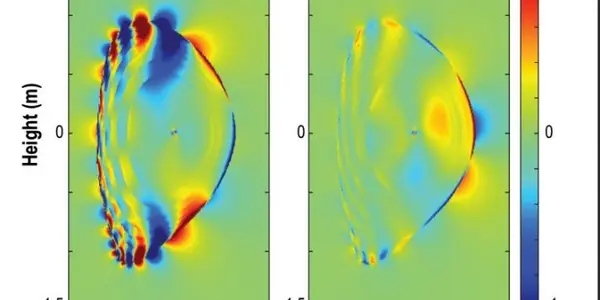
General Atomics, which operates the DIII-D National Fusion Facility for the U.S. Department of Energy, and the Department of Energy's Princeton Plasma Physics Laboratory (PPPL) have made a breakthrough in understanding how potentially damaging heat bursts inside a fusion reactor can be controlled. The experiments with the DIII-D Fusion Facility, a tokamak in San Diego, represent a key step in predicting how to control heat bursts in future fusion facilities. Researchers have found that tiny magnetic fields applied to the device can create two distinct kinds of response, rather than just one response as previously thought.