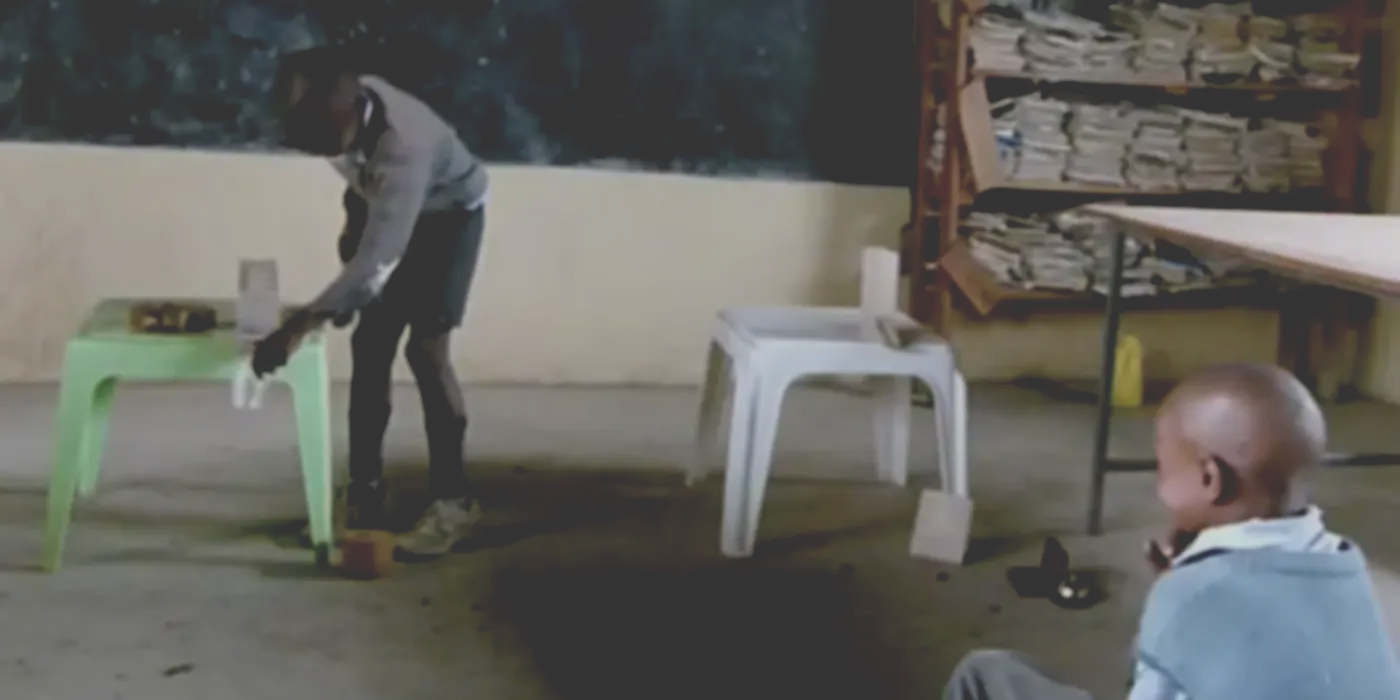
Kids Helping Kids Is Universal - But Cultures Help Differently
A simple game reveals a universal instinct in kids
A simple game reveals a universal instinct in kids


The push to boost food production in East Africa that is accelerating the conversion of natural lands into croplands may be significantly increasing the risk of plague according to a new study in the American Journal of Tropical Medicine and Hygiene.
In the past decade, the H1N1 virus and Ebola are just two of the diseases whose spread was spurred by international airline travel. Screening passengers at airports, therefore, could be one key method for slowing the global spread of infectious diseases.
A team lead by UCLA researchers has found that airport screening misses at least half of infected travelers but the scientists say that rate could be improved. Their research was published in eLife. The life scientists used a mathematical model to analyze screening for six viruses: the SARS coronavirus, the Ebola virus, the Middle East respiratory syndrome coronavirus, the Marburg virus, Influenza H1N1 and Influenza H7N9.
Changes in pension and employment policies are making it increasingly necessary for older people in the UK to work beyond the age of 65. However, new research from the University of Surrey finds significant differences in the likelihood of employment and income levels of people beyond 65, depending on their gender and health.
Years of healthy life expectancy and the likelihood of disability in older age vary significantly, and as a result particular groups are going to find it hard to keep working beyond 65 and are more likely to be disadvantaged by a rise in the state pension age, than others.
Centrality and nodes are an important concept in the theory of social networks. Centrality of an individual - a "node" in network theory - measures its relative importance within a network, and a recent paper in Scientific Reports studies the problem of dynamics and evolution of node's centrality. Nitesh Chawla, Associate Professor of Computer Science at the University of Notre Dame, and doctoral students Yang Yang and Yuxiao Dong point out that social networks are dynamic and evolve over time when new individuals (nodes) join a network, or new links form between nodes or old links diminish between nodes. A node's centrality may change over time.
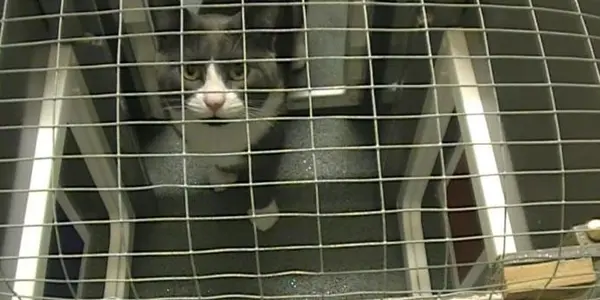
Cats seem to use their eyes rather than follow their nose when it comes to finding the location of food, according to a new paper by animal behaviorists.Felines have keen smell and vision, so a small study investigated which sense they prefer to use under test conditions – and suggests sight may be more important than smell.A group of six cats were placed in a maze which had ‘decision’ points – and the cats had to choose which avenue they took based on their preference for using images or smell. They were simultaneously presented with two squares of paper, each containing a different visual and odour cue. One combination of stimuli indicated they would receive a food reward, whereas the other led to no reward.
In the most comprehensive review to date addressing the relative safety of hormone therapy for transgender persons, researchers from Boston University School of Medicine (BUSM) have found that hormone therapy in transgender adults is safe. The findings, which appear in the Journal of Clinical and Translational Endocrinology, may help reduce the barriers for transgender individuals to receive medical care.

The world's national parks and nature reserves receive around eight billion visits every year, according to the first study into the global scale of nature-based tourism in protected areas. The paper, by researchers in Cambridge, UK, Princeton, New Jersey, and Washington, DC, published in the open access journal PLOS Biology, is the first global-scale attempt to answer the question of how many visits protected areas receive, and what they might be worth in terms of tourist dollars.
The authors of the study say that this number of visits could generate as much as US$600 billion of tourism expenditure annually - a huge economic benefit which vastly exceeds the less than US$10 billion spent safeguarding these sites each year.
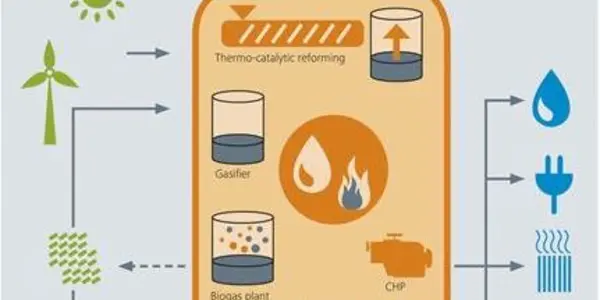
Sewage sludge, green waste, even animal excrement can be utilized for energy recovery with the biobattery modular concept. Biogas plants are an important element for decentralized energy supply. They produce electricity from renewable resources and can compensate for highly fluctuating wind and solar energy. There are already 8,000 plants in operation in Germany with an electrical output of 3.75 gigawatts in total, that is the equivalent to roughly three nuclear power plants. However, the plants have several disadvantages too: they only process a limited range of organic substances and are in competition with the cultivation of food plants.
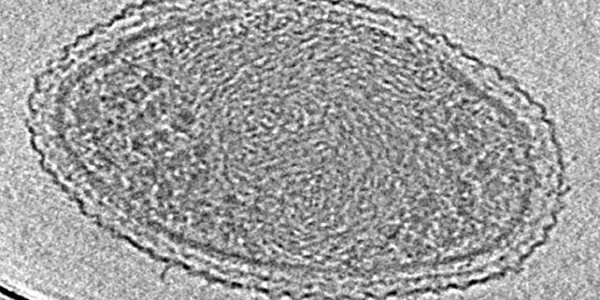
There is microbiology and then there is micro-micro-microbiology.The existence of ultra-small bacteria has been debated for decades, but now there is comprehensive electron microscopy and DNA-based evidence of the elusive microbes that are about as small as life can get. The cells have an average volume of 0.009 cubic microns (a micron is one millionth of a meter). About 150 of these bacteria could fit inside an Escherichia coli cell and more than 150,000 cells could fit onto the tip of a human hair.
The Intrexon synthetic biology company announced today that it is acquiring Okanagan Specialty Fruits, the science start-up behind the non-browning Arctic apple, for $31 million in Intrexon common stock and $10 million in cash.
New transcriptome data for underutilized legumes means underappreciated crops could soon become valuable tools in agriculture. Thousands of species belong to the legume family, the Fabaceae, yet only a few of them are used in mainstream agriculture. Dozens more are underutilized. Unlike soybean, peanut, chickpea, and other chart toppers, the underutilized species can grow in areas of very poor soil with limited water availability. This is because they are equipped with unique variations in plant growth genes that have been lost from mainstream crops through years of breeding.
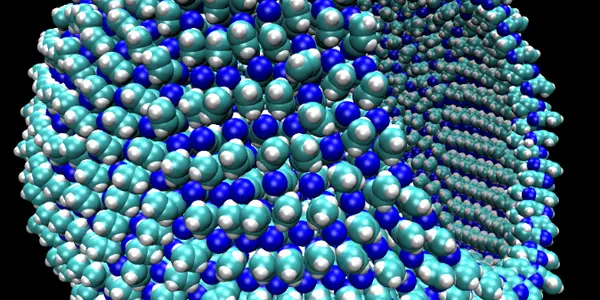
A new type of methane-based, oxygen-free life form can metabolize and reproduce similar to life on Earth.This hypothetical cell membrane, modeled by a team of researchers, is composed of small organic nitrogen compounds and capable of functioning in liquid methane temperatures of 292 degrees below zero - necessary for a harsh, cold world - specifically Titan, the giant moon of Saturn, a planetary body awash with seas not of water, but of liquid methane, Titan could harbor methane-based, oxygen-free cells.