Kids Helping Kids Is Universal - But Cultures Help Differently
A simple game reveals a universal instinct in kids
A simple game reveals a universal instinct in kids


If you liked it, then you should have put a ring on it, said cultural pundit Beyoncé Knowles about women and fingers - but that does not mean women should accept.
First, they should look at the fingers on men. Men with short index fingers and long ring fingers are on average nicer towards women, which researchers at McGill University say stems from the hormones these men have been exposed to in their mother's womb.
That link between a biological event in fetal life and adult behavior might also explain why these men tend to have more children, the authors write in Personality and Individual Differences.

Drinking coffee may lower risk of developing multiple sclerosis (MS), according to a new paper out todayFor the study, researchers looked at a Swedish study of 1,629 people with MS and 2,807 healthy people, and a U.S. study of 1,159 people with MS and 1,172 healthy people. The studies characterized coffee consumption among persons with MS one and five years before MS symptoms began (as well as 10 years before MS symptoms began in the Swedish study) and compared it to coffee consumption of people who did not have MS at similar time periods. The study also accounted for other factors such as age, sex, smoking, body mass index, and sun exposure habits.
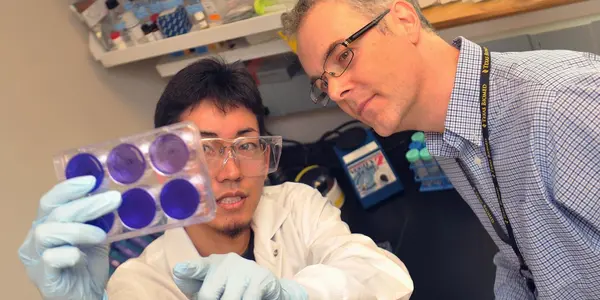
The latest outbreak of Ebola virus disease has caused the deaths of more than 9,400 people worldwide and created an international outcry so loud even the National Institutes of Health decided to start funding work on it again.
Parents of kids with severe autism are willing to try anything - unfortunately, a lot of people who claim to be experts in psychology and communication disorders don't understand science and may continue to try things long after they have been debunked. Hope and desperation among parents, along with cluelessness among people trying to help, make the autism community especially vulnerable to interventions and "therapies" that have been thoroughly discredited. Yet they persist.
A connection between persistent insomnia and increased inflammation and mortality from all causes has been identified by a group of researchers in The American Journal of Medicine. The results apply to those with persistent insomnia, not intermittent insomnia. Persistent (chronic) insomnia affects up to 10 percent of U.S. adults.
In the first U.S. study of urinary arsenic in babies, Dartmouth College researchers found that formula-fed infants had higher arsenic levels than breast-fed infants, and that breast milk itself contained very low arsenic concentrations.
The findings appear Feb. 23 online in the journal Environmental Health Perspectives. A PDF is available on request.
The researchers measured arsenic in home tap water, urine from 72 six-week-old infants and breast milk from nine women in New Hampshire. Urinary arsenic was 7.5 times lower for breast-fed than formula-fed infants. The highest tap water arsenic concentrations far exceeded the arsenic concentrations in powdered formulas, but for the majority of the study's participants, both the powder and water contributed to exposure.
A new film, Surviving Terminal Cancer (www.survivingterminalcancer.com) by director/writer Dominic Hill, had its premiere at Lincoln Center February 18, 2015. Through the personal stories of Ben Williams and a remarkable wave of other long-term glioblastoma survivors following in his path, the film offers for the first time some hope for an alternative to the certain death offered by the current medical establishment for what is ordinarily considered to be an invariably fatal disease.
Each year millions of infants, toddlers and preschool children require anesthesia or sedation for various procedures and a new review suggest caution about their use.A team of anesthesiology investigators and toxicologists writing in the New England Journal of Medicine reviewed existing animal and human studies for the impact of anesthetics on developing brains. Observational studies of children have been weak, but they still suggested a correlation between children who had received anesthetics and long-term cognitive impairments such as learning disabilities. Children between the ages of one and three appeared to be at a higher risk of adverse effects.
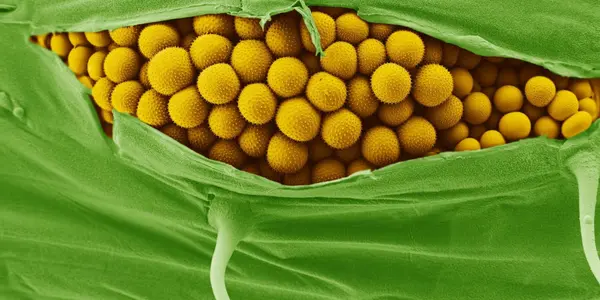
Wheat is a critical staple crop that provides 20% of the calories and over 25% of the protein consumed by humans. 'Yellow rust' caused by the fungus Puccinia striiformis f. sp. tritici (PST) is one of the plant's major diseases and is found throughout the major wheat-producing areas of the world. Infections lead to significant reductions in both grain quality and yield, with some rare events leading to the loss of an entire crop. New strains of the fungus have recently emerged that adapt to warmer temperatures.

The MUSE instrument on ESO's Very Large Telescope has given astronomers the best ever 3-D view of the deep Universe - in just 27 hours.By taking very long exposure pictures of regions of the sky, astronomers have created many deep fields that have revealed much about the early Universe. The most famous of these was the original Hubble Deep Field, taken by the NASA/ESA Hubble Space Telescope over several days in late 1995. This spectacular and iconic picture rapidly transformed our understanding of the content of the Universe when it was young. It was followed two years later by a similar view in the southern sky -- the Hubble Deep Field South.
A pre-clinical study of ANAVEX 2-73 found that it prevents mitochondrial dysfunction and blocks resulting oxidative stress and apoptosis (cell death) in a nontransgenic mouse model of Alzheimer's disease (AD). Mitochondrial damages have been consistently reported as an early cause of
Alzheimer's disease
and appear before amyloid-beta plaques and memory decline in Alzheimer's patients and transgenic mice. If so, by preserving mitochondrial functionality and reducing other key
Alzheimer's disease
hallmarks, it has the potential to prevent, stop, slow or reverse the disease, in addition to treating its symptoms.
The use of animals in experimental research has soared at US laboratories, according to People for the Ethical Treatment of Animals (PETA), and taxpayer-funded scientists are the culprits. The 25 largest recipients of government funding increased animal experimentation 73 percent in 15 years, despite growing public opposition to the practice and mounting evidence that animal studies often do not faithfully translate to people, they write.They also say the data contradict government claims of reduced animal use and are at odds with government policies designed to curb and replace the use of animals in experiments.