Kids Helping Kids Is Universal - But Cultures Help Differently
A simple game reveals a universal instinct in kids
A simple game reveals a universal instinct in kids


It's no secret that a happy worker is a productive worker and a new analysis by scholars at The University of Texas at Dallas finds that family-friendly policies are beneficial for increasing productivity of employees. Yet the benefit for employers is unclear, since that may be offset by the same turnover rates.
A multi-center, non-randomized phase-Ib clinical trial designed to evaluate the safety, tolerability and antitumor activity of bi-weekly infusions of pembrolizumab (MK-3475, marketed as Keytruda®) found that infusion of pembrolizumab produced durable responses in almost one out of five patients.
Patients with metastatic triple-negative breast cancer--a disease with no approved targeted therapies.
In a presentation at the 2014 San Antonio Breast Cancer Symposium., the researchers discussed the study of 27 patients, aged 29 to 72 years, who had metastatic triple-negative breast cancer that either relapsed after treatment for early stage disease or progressed on therapy for advanced disease.
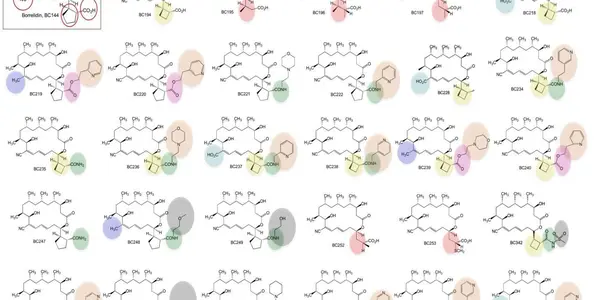
Malaria is one of the most serious health problems worldwide, registering 200 million clinical cases and more than 600,000 attributable deaths per year, according to information from the World Health Organization in 2013.
Given the emerging resistance to the standard treatment most widely used throughout the world, which is based on artemisinin and its analogs, there is a need for new antimalarial compounds.
Do you have a right to high-speed Internet or can Internet Service Providers (ISPs) create different tiers for different customers?
In Florida and in Pennsylvania, there are toll roads. People pay the fee and get to a destination along the toll road quicker. Yet when it comes to pricing Internet connections, there is belief that everyone should have the same high-speed video streaming, regardless of what they pay. Can customers get something for nothing?
In modern times, it seems a little strange to read claims in Europe and in U.S. cities like San Francisco that cell phone radiation is harmful to humans - but their reasoning is based on work in the 1970s which found an epidemiological association between increased risk of childhood leukemia and living near overhead power lines.
Like most epidemiology claims that find two curves going the same way and garner media attention, some skepticism is warranted, and later studies were unable to find the same connection, but the perception has held. Regardless, groups like the International Agency for Research on Cancer have categorized low frequency magnetic fields as "possibly carcinogenic" even though a mechanism for this association has never been found.
There are too many factors and combinations of genetic traits to have any definitive cause of autism today, along with a wide range of diagnoses that add to the pool, but a new analysis has found that the autopsied brains of people who had autism share a pattern of ramped-up immune responses.
Targeted therapy with radiopharmaceuticals - radioactive compounds used in nuclear medicine for diagnosis or treatment - has a lot of potential to more effectively kill cancer cells that have migrated from primary tumors to lymph nodes and secondary organs such as bone marrow.
Disseminated tumor cells can be difficult to treat with a single targeting agent because there are dramatic differences in the number of targetable receptors in each cell.
When a large protein unfolds in a cell, it slows down and can get stuck in traffic. University of Illinois chemists now can watch the way the unfolded protein diffuses, which could provide great insight into protein-misfolding diseases such as Alzheimer's and Huntington's.
Researchers have hypothesized that an unfolded protein moves more slowly through the cell, because it would be a big, stringy mess rather than a tightly wrapped package. The team devised a way to measure how diffusion slows down when a protein unfolds using a fluorescence microscope, then used three-dimensional diffusion models to connect the protein's unfolding to its motion.
The $105 billion organic food industry is not terribly worried about yields. Their customers are primarily wealthy and concerned more about the perception of benefit than they are cost.
But to the real evangelists, who insist that the organic process can feed the world, yield differences are a substantial hurdle to overcome. The low hanging fruit in food has already been picked, as it were, wealthy people educated by advertising are already buying organic food, and the rest of the marketplace thinks about price. So yields are a killer.

E-cigarettes appear to be less addictive than cigarettes for former smokers - and this could assist in efforts to understand how to curb cigarette smoking, according to researchers.
The popularity of e-cigarettes, which typically deliver nicotine, propylene glycol, glycerin and flavorings through inhaled vapor, has increased in the past five years. There are currently more than 400 brands of "e-cigs" available. E-cigarettes contain far fewer cancer-causing and other toxic substances than cigarettes, however their long-term effects on health and nicotine dependence are unknown.
When it comes to math, people mis-characterize themselves quite often. About 20 percent of the people who say they are bad at math score in the top half of tests while about 33 percent of people who say they are good at math score in the bottom half.

Yeast cells can sometimes reverse the protein misfolding and clumping associated with diseases such as Alzheimer's, according to new research which contradicts the idea that once prion proteins have changed into the shape that aggregates, the change is irreversible.
Prions are proteins that change into a shape that triggers their neighbors to change, also. In that new form, the proteins cluster. The aggregates, called amyloids, are associated with diseases including Alzheimer's, Huntington's and Parkinson's. For yeast, having clumps of amyloid is not fatal. In a new study, researchers exposed amyloid-containing cells of baker's yeast to 104 F (40 C), a temperature that would be a high fever in a human.