You Feel Colder As You Age: The Science Reason Why
Older people report feeling colder, enough that it is clearly happening, but why has been a mystery. Until now.
Older people report feeling colder, enough that it is clearly happening, but why has been a mystery. Until now.


Big data may be taking over the fashion industry's runways, according to an analysis of relevant words and phrases from fashion reviews.
At the Workshop of Information Technology and Systems in Auckland, researchers analyzed 6,629 runway reviews of 816 designers from Style.com, covering 30 fashion 'seasons' from 2000 to 2014, and have able to identify a network of influence among major designers and track how those style trends moved through the industry, said Heng Xu, associate professor of information sciences and technology, Penn State.
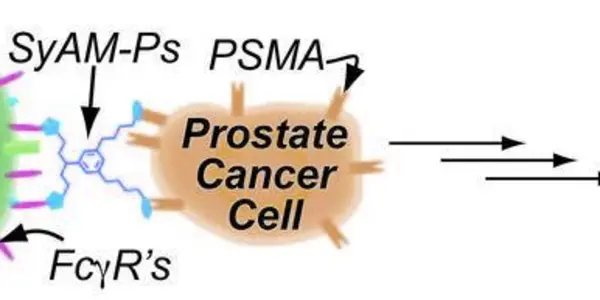
New molecules known as synthetic antibody mimics (SyAMs) attach themselves simultaneously to disease cells and disease-fighting cells. The result is a highly targeted immune response, similar to the action of natural human antibodies; with both the targeting and response functions.

Mistletoe wasn't always for annoying co-workers at office parties, and it wasn't always just desperate men who think it has magical powers. In previous times, it was held in high regard because it was rootless, green and thriving when the tree it was on looked dead. Celtic druids latched onto it as some sort of supernatural fertility symbol - everything was a fertility symbol to druids - and it crept into popular culture from there.
Today we know it is simply a parasite, which isn't extending its use at office Christmas parties too far.

Gun ownership in the United States has gone way up yet murders have plummeted. Though high-profile tragedies get mainstream media attention, the gun ban contingent has lost a lot of ground in culture.
Lots of people say they care about their weight, and there is no end to weight-loss schemes available on websites, but if you ask nutritionists, personal trainers and even some doctors where fat goes when people lose weight, they can't tell you the right answer.
Caveat emptor.
The most common misconception is that the missing mass has been converted into energy or heat. It's physics, after all. Except it isn't, not in the way they think it is. To lose 10 kilograms of fat requires 29 kilograms of oxygen for the body and that metabolic process produces 28 kilograms of carbon dioxide and 11 kilograms of water. It didn't convert to energy, you didn't "burn" fat.
A desire to be part of the 'in crowd' could damage our ability to make the right decisions, according to a paper in the
journal Interface which claims that individuals have evolved to be overly influenced by their neighbors, rather than rely on their own instinct.
As a result, they believe, groups become less responsive to changes in their natural environment. So much for the wisdom of crowds.
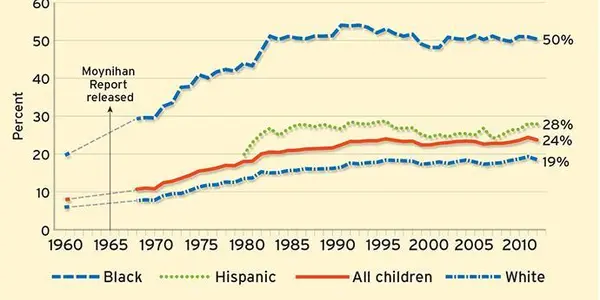
Divorce rates have gone down; the oft-cited 1970s statistic that 'half of all marriages end in divorce' was never really correct, but the belief that it was made divorce much more common.
More young people today are also avoiding divorce by avoiding marriage. As a result, more than half of all American children will have an unmarried mother - and regardless of all of the cultural whitewashing and rationalizations that cultural apologists engage in, the absence of a biological father increases the likelihood that a child will exhibit antisocial behaviors like aggression, rule-breaking and delinquency. Young boys in that environment are 40 percent less likely to finish high school or attend college, regardless of race.
Illegal aliens who have been deported from the United States are more than 2.5 times more likely to be rearrested after leaving jail, and are likely to be rearrested much more frequently than those who have never been removed, according to a new RAND Corporation analysis.
The new work bolsters federal immigration plans to focus immigration enforcement efforts on immigrants who previously have been removed, because they pose a bigger criminal threat.
The analysts looked at long-term recidivism rates among two groups of removable immigrants who had been released from the Los Angeles County jail: men who previously had been removed from the United States and men who had never been removed from the nation.
Current carbon capture schemes are not really ready for prime time, plagued by toxicity, corrosiveness and inefficiency, but a team of chemists have invented low-toxicity, highly effective carbon-trapping "sponges" that could lead to increased use of the technology.
Used in natural gas and coal-burning plants, the most common carbon capture method today is called amine scrubbing, in which post-combustion, carbon dioxide-containing flue gas passes through liquid vats of amino compounds, or amines, which absorb most of the carbon dioxide. The carbon-rich gas is then pumped away - sequestered - or reused. The amine solution is extremely corrosive and requires capital-intensive containment.
The Paleolithic diet, eating like our ancient ancestors, is a diet fad that seeks to emulate the diet of early humans during the Stone Age. But what does that mean? Almost anything people want because ancestral diets differed substantially over time and geography, notes a paper in The Quarterly Review of Biology.
The review examines anatomical, paleoenvironmental and chemical evidence, as well as the feeding behavior of living animals. While early hominids were not great hunters, and their dentition was not great for exploiting many specific categories of plant food, they were most likely dietary "jacks-of-all-trades."

Leading conservationists from around the world have called for environmental lobbyists to stop blocking nuclear energy in defiance of the science consensus. It's clean, it's green, and it's needed to mitigate climate change and protect biodiversity.
In an open letter to environmentalists, over 60 scientists ask the environmental community to "weigh up the pros and cons of different energy sources using objective evidence and pragmatic trade-offs, rather than simply relying on idealistic perceptions of what is 'green'".
Organized by ecologists Professor Barry Brook and Professor Corey Bradshaw from the University of Adelaide's Environment Institute, the letter supports their recent article (DOI: 10.1111/cobi.12433) in Conservation Biology.
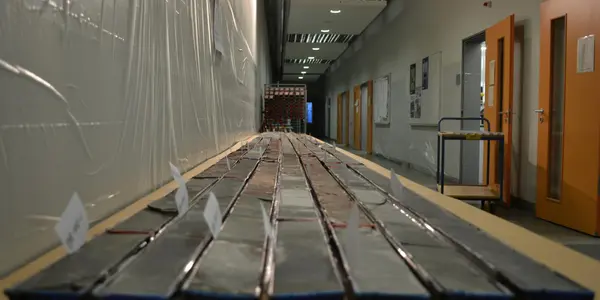
The rate at which carbon emissions might be warm Earth's climate today are a lot like the past. 56 million years in the past.
The authors of a new paper believe the Paleocene-Eocene thermal maximum, or PETM, can provide clues to the future of modern climate change. The good news: Earth and most species survived warming that was a lot more pronounced - up to 15 degrees Fahrenheit - than even the most dour predictions being made now. The bad news: It took 200,000 years to get back to what we now consider normal.