Kids Helping Kids Is Universal - But Cultures Help Differently
A simple game reveals a universal instinct in kids
A simple game reveals a universal instinct in kids


Although prostate cancer will affect over 23,000 U.S. men next year, the individual genes that initiate prostate cancer formation are poorly understood, but finding an enzyme that regulates this process could provide excellent new prevention approaches for the malignancy.
Sirtuin enzymes have been implicated in neurodegeneration, obesity, heart disease, and cancer and a new paper in The American Journal of Pathology finds that the loss of SIRT1 drives the formation of early prostate cancer (prostatic intraepithelial neoplasia) in mouse models of the disease.
Over the past decade, ocean acidification has started to receive recognition outside science, though primarily as another weapon in the 'carbon dioxide' culture war on the modern world, similar to methane being discussed this year.
Politics aside, it is a vital area for study and a new article outlines three major challenges to understanding the real issues and effects: It needs to expand from single to multiple drivers, from single species to communities and ecosystems, and from evaluating acclimation to understanding adaptation.

If you think of quantum physics in terms of information about a system, it is a lot less complicated, according to a new paper. In that context, features of the quantum world previously considered distinct - wave-particle duality and the quantum uncertainty principle - are different manifestations of the same thing.
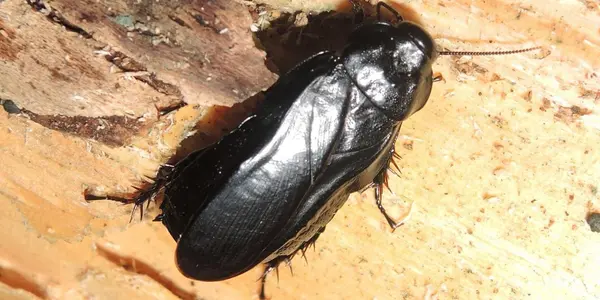
Cockroaches are most often though of as infecting human homes but a new species and a new subspecies discovered in China prefer to live a hermit life, drilling logs far away from crowds and houses.
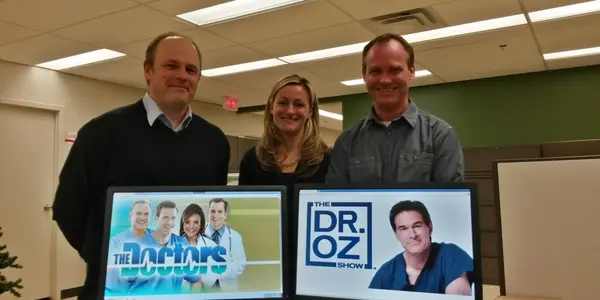
Televisiom programs such as "The Dr. Oz Show" and "The Doctors" have attracted massive followings, primarily due to having charismatic hosts who clearly mean well, coupled with a public desire to know the science basis for how we function.
But in the quest to have new content so often each week, the perception among the science community is that they will run with any claims about the latest health miracle or scary chemical. That doesn't help the public, it just promotes suspect alternatives to medicine or an anti-science mentality among the people who would most benefit from an evidence basis for decision-making.
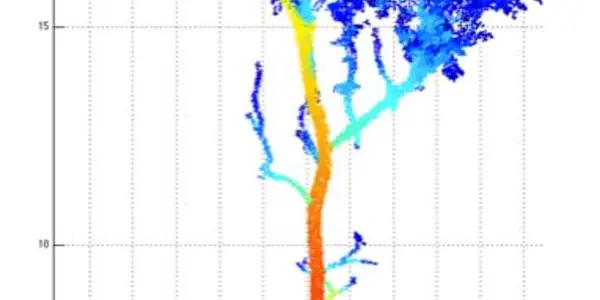
A terrestrial laser scanning technique that allows the structure of vegetation to be 3D-mapped to the millimeter is more accurate in determining the biomass of trees and carbon stocks in forests than current methods, according to a paper in Methods in Ecology and Evolution. The study authors believe it could be used in monitoring carbon stocks for climate policy. Both above-ground biomass and carbon stocks are important details for UN-REDD, the United Nations initiative on Reducing Emissions from Deforestation and forest Degradation that is striving to keep the destruction of forests in check and thereby preserve the uptake of carbon by trees.
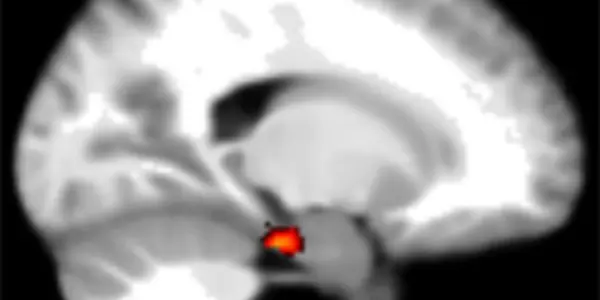
It's no secret that some people are better at navigating than others, but it has been unclear why.
In order to successfully navigate to a destination, you need to know which direction you are currently facing and which direction to travel in. For example, 'I am facing north and want to head east'. It is already known that mammals have brain cells that signal the direction that they are currently facing, a discovery that formed part of the 2014 Nobel Prize in Physiology or Medicine to Professor John O'Keefe.
Though the New York governor recently made a pretense of banning fracking in the state (it was already not allowed) and the California governor said they should do the same thing, they're both being a little hypocritical. New York would have brown-outs without the energy they buy from Pennsylvania fracking and California has no fracking and 50 percent higher utility costs than the rest of the country because they subsidize alternatives and have to buy so heavily on the spot market.
American CO2 levels are down and while some contend it is more due to federal economic mismanagement and unemployment than cleaner natural gas, emissions from coal, the dirtiest energy source, are back at early 1980s, and natural gas gets credit for that.
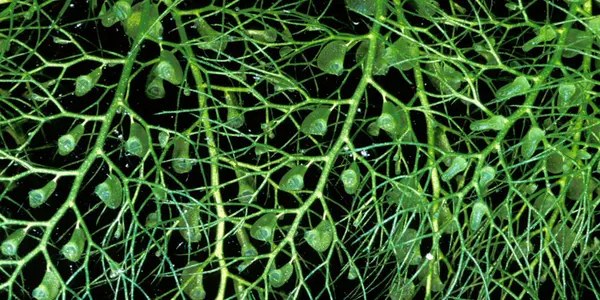
A carnivorous plant is a delight for people because everyone knows plant don't catch and eat animals - except some do. Like us, they need animals for nutrition.
Do carnivorous plants also sometimes shake off nature and become vegetarians?
It seems so. The aquatic carnivorous bladderwort, which can be found in many lakes and ponds worldwide, eats little animals but also mixes it up by consuming algae and pollen grains in aquatic habitats where prey animals are rare, and that leads to increased evolutionary fitness if the animals and algae are caught in a well-balanced diet.
Young children with type 1 diabetes have slower brain growth compared to children without diabetes, finds a new study in Diabetes.
The authors suggest that continued exposure to hyperglycemia, or high blood sugars, may be detrimental to the developing brain. They studied brain development in children ages four to nine years old with
type 1 diabetes
using structural magnetic resonance imaging (MRI) and cognitive tests to determine if abnormal blood glucose levels impact brain structure and function at a young age. Children with
type 1 diabetes
also underwent blood sugar monitoring using continuous glucose sensors.

A European team is working on the world’s first W-band wireless system - millimeter wave technology for high speed wireless mobile and fixed point Internet - as part of a £2.8 million TWEETHER project.Millimeter waves - found in the spectrum between microwaves and infrared waves - are considered the most promising and cost effective solution for the future. The TWEETHER project will result in a powerful and compact transmission hub, based on a traveling wave tube power amplifier and an advanced chipset in a compact terminal, with performance far outweighing any other technology.
Scientists have demonstrated that mobility can be restored in patients with Parkinson's disease, the major degenerative disease of the motor system worldwide. The experiments used stem cells to generate dopaminergic nerve cells and reactivate the production of dopamine in the brains of rats with symptoms of shaking palsy or Parkinson's disease.