You Feel Colder As You Age: The Science Reason Why
Older people report feeling colder, enough that it is clearly happening, but why has been a mystery. Until now.
Older people report feeling colder, enough that it is clearly happening, but why has been a mystery. Until now.


A pleasant or disgusting odor is not always just a preference, in some cases an organism's survival depends on it.
Odors can provide important information about food sources, oviposition sites or suitable mates and can also be signs of lethal hazards.

Recent results released by the National Institute on Drug Abuse finds that use of cigarettes, alcohol, and abuse of prescription pain relievers among teens declined from 2013 while marijuana use rates were stable.
These 2014 results are part of an overall two-decade trend among the nation's youth. The survey measures drug use and attitudes among eighth, 10th, and 12th graders, is funded by NIDA, and is conducted by researchers at the University of Michigan at Ann Arbor. Studies have found that teens have increased use of nicotine patches, e-cigarettes and energy drinks.
Hutchinson-Gilford progeria syndrome is a genetic condition in children that is characterized by dramatic, rapid appearance of aging. Affected children typically look normal at birth and in early infancy but grow more slowly than other children and develop characteristic facial appearances seen in some elderly people, along with hair loss, aged-looking skin and a loss of fat under the skin - subcutaneous fat. First described in 1886, it occurs in about 1 in 4 million newborns worldwide.

There is a disease killing honeybee populations around the world but you won't be surprised to find that environmental groups never mention it.
It's called American foulbrood disease and it doesn't get much attention because groups can't use it in fundraising campaigns due to it being completely natural. Science is setting out to cure it just the same, and researchers have found a toxin released by the pathogen that causes American foulbrood disease -- Paenibacillus larvae (P. larvae) -- and developed a lead-based inhibitor against it.
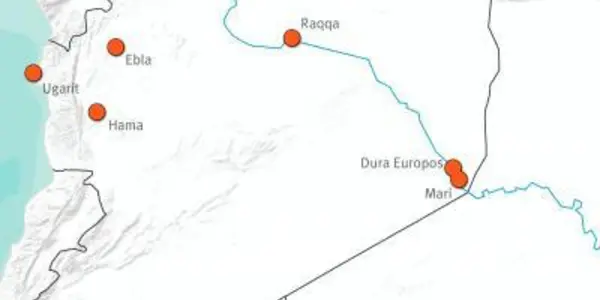
It's no secret that war is tough on innocent buildings so it is no surprise that four of six major archaeological sites in Syria have been heavily looted and damaged, according to an analysis of high-resolution satellite images.
The report analyzes 6 of the 12 sites that Syria has nominated as World Heritage Sites: Dura Europos, Ebla, Hama's Waterwheels, Mari, Raqqa, and Ugarit. Images from 2014 show numerous pits throughout three sites where ancient cities once stood. The pits generally do not appear in similar images from 2011, when the conflict in Syria began.

We don't often think of snakes as flying creatures - a lack of wings does not lend itself to flying imagery - but some snakes can glide as far as 100 feet through the air, jumping off tree branches and rotating their ribs to flatten their bodies and move from side to side.
New research from a George Washington University professor investigates the workings behind the flight and whether they can be applied to mechanical issues.
A nationwide project to study the genetic causes of rare developmental disorders has found 12 causative genes that were unidentified before. The Deciphering Developmental Disorders (DDD) nationwide genome-wide diagnostic sequencing program sequenced DNA and compared the clinical characteristics of over a thousand children to find the genes responsible for conditions that include intellectual disabilities and congenital heart defects, among others.
Bisphosphonates are medications commonly used to treat osteoporosis and other bone conditions but a new analysis suggests that women who use bisphosphonates also have about half the risk of developing endometrial cancer as women who don't use the drugs.
Endometrial cancer, which arises in the lining of the uterus, accounts for nearly 50 percent of gynecologic cancers diagnosed in the United States, and it is the fourth most common malignancy in women and the eighth most common cause of cancer death.
While bisphosphonates are known to prevent bone loss, preclinical studies have shown that the medications also have antitumor effects, including the ability to keep tumor cells from multiplying and from invading normal tissues.
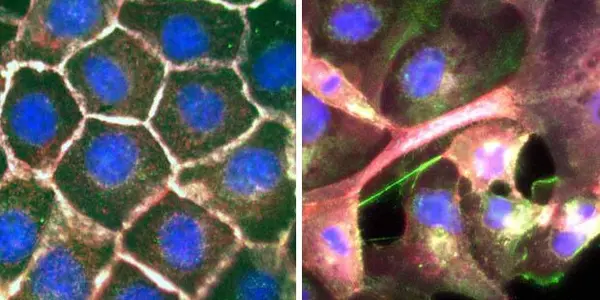
The researchers at the Cancer Research UK Manchester Institute discovered that the ties which lash cells together - controlled by a protein called TIAM1 - are chopped up when cell maintenance work goes wrong.
People who occupy the extreme ends of the political spectrum, be they liberals or conservatives, are less influenced by outside information bias than political moderates, according to psychologists.
The research used a simple estimation task and was conducted by psychologists Mark J. Brandt and Anthony Evans of Tilburg University and Jarret T. Crawford of The College of New Jersey. They hold that because political extremists see their own beliefs as superior to the beliefs of others, they are more resistant to so-called anchor bias, even for non-political information.

In the mid-1960s the Elizabethan morality play space western known as "Star Trek" debuted and series creator Gene Roddenberry was cagey about when exactly it took place (thus the reason to use 'star dates'), but it had to have been in the 23rd century if later writers were getting their information relayed correctly. Regardless of the exact dates of their five year mission, the public was energized by the future - and the gadgets it contained.Portable computers were completely believable and wireless communications already existed. A fax machine was clearly on the horizon, since the teletype had already existed since 1915 and a fax just required a phone line - but medical diagnosis was not even close to "Star Trek"'s future yet.
According to some papers, human echolocation is another "sense," working in tandem with hearing and touch to deliver information to people with visual impairment.
A new paper adds evidence for the vision-like qualities of echolocation in blind echolocators - by wrongly judging how heavy objects of different sizes felt.
The experiment, conducted by psychologist Gavin Buckingham of Heriot-Watt University in Scotland and colleagues at the Brain and Mind Institute at Western University in Canada, demonstrated that echolocators experience a "size-weight illusion" when they use their echolocation to get a sense of how big objects are, in just the same way as sighted people do when using their normal vision.