Kids Helping Kids Is Universal - But Cultures Help Differently
A simple game reveals a universal instinct in kids
A simple game reveals a universal instinct in kids


How might you make a new Earth? Our Terran "test kitchen" has given us a detailed recipe, it just wasn't clear how transposable it was in other areas, the same way a recipe in Los Angeles might not work as well in Denver. Now, astronomers have found evidence that the recipe for Earth also applies to terrestrial exoplanets orbiting distant stars."Our solar system is not as unique as we might have thought," says lead author Courtney Dressing of the Harvard-Smithsonian Center for Astrophysics (CfA). "It looks like rocky exoplanets use the same basic ingredients."

Controlled-release fertilizers are a widely-used method of delivering nutrients to nursery container crops, because they contain encapsulated solid mineral nutrients that dissolve slowly in water, which are then released into substrates over an extended period of time. Although the use of controlled-release fertilizers is a popular and widely-accepted practice, growers and researchers are always looking for ways to get the same results with decreased fertilizer and irrigation expenses - and less nutrient leaching into the environment. A new study contains recommendations for controlled-release fertilizer placement methods that can address these issues.
Cold and damp is bad, no matter what you may have heard recently about it making no difference. The common cold virus reproduces itself more efficiently in the cooler temperatures found inside the nose than at core body temperature, confirming the popular-yet-recently-contested notion that people are more likely to catch a cold in cool, damp conditions. Scientifically it is known that the rhinovirus, the most frequent cause of the common cold, replicates more readily in the slightly cooler environment of the nasal cavity than in the warmer lungs but, the focus of prior studies has been on how body temperature influenced the virus as opposed to the immune system, said study senior author and Yale professor of immunobiology Akiko Iwasaki.
The obesity paradox - where obese people remain quite healthy - defies convenient epidemiological and nutritional thinking. But age catches up to us all.Everyone gets less healthy over time - age is the biggest risk factor for cancer, heart disease and just about everything else - but a new study in the Journal of the American College of Cardiology tracked the health of more than 2,521 men and women for 20 years, aged between the ages of 39 and 62, and found that more than 51 percent of the healthy obese participants became unhealthy obese over the 20-year study period, while only 11 percent lost weight and became healthy non-obese.
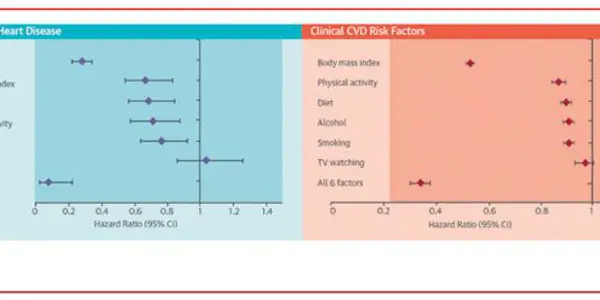
A study that followed participants in a study of nurses established in 1989, which surveyed more than 116,000 participants about their diets and other health habits every two years, resulted in 69,247 women being followed for two decades and concluded that three-quarters of heart attacks in young women could be prevented if women closely followed six healthy lifestyle practices.
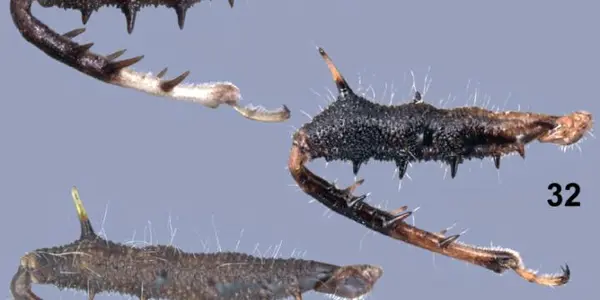
In 2006, Dr. J. E. McPherson, professor emeritus at Southern Illinois University, was working with colleagues on a key to the nymphs of three midwestern species of assassin bug in the genus Sinea (i.e., S. complexa, S. diadema, and S. spinipes).
To test their key for accuracy, they asked several others to check it by comparing it with insects in their collections or laboratories.
All of them found the key to be satisfactory, except for one - Dr. Scott Bundy from New Mexico State University, who found discrepancies in specimens that had been collected in New Mexico and identified as S. complexa.

The village of Nichoria in Messenia was located near the palace of Pylos during the Greek Bronze Age, when Greece was considered a Superpower of the Mediterranean. The region thrived on its trade and economic stability, culture, and art and architecture, including great monuments, palaces and writings. The collapse of the Bronze Age (beginning around 1,200 BC), including the abandonment of cities and the destruction of palaces, is known as the Greek Dark Age.
Nichoria remained through both the Late Bronze Age and the Greek Dark Age, and scholars have suggested that it turned to cattle ranching during the region's collapse. That made sense, the remains of cattle bones are prevalent among bone fragments in the soil.
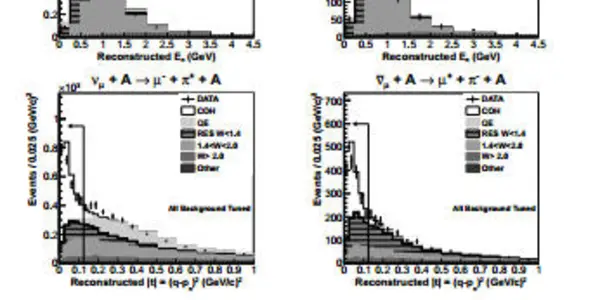
Neutrinos almost never interact, 10,000,000,000,000 neutrinos pass through your hand every second but fewer than one actually makes contact with any of the atoms inside us.
When neutrinos do interact with another particle, it happens at very close distances and involves a high-momentum transfer. Mostly. Physicists have found evidence that these tiny particles might be involved in a weird reaction, even for neutrinos. A paper in Physical Review Letters shows that neutrinos sometimes can also interact with a nucleus but leave it basically untouched - inflicting no more than a "glancing blow" - resulting in a particle being created out of a vacuum.
Humans who eat a lot of red meat are known to be at higher risk for certain cancers but other carnivores are not, which is a bit of an epidemiological puzzle, mostly because cancer rates in animals are not well-known.
In a recent study, University of California, San Diego School of Medicine scientists wanted to investigate the possible tumor-forming role of a sugar called Neu5Gc, which is naturally found in most mammals but not in humans, and found that feeding Neu5Gc to mice engineered to be deficient in the sugar (like humans) significantly promoted spontaneous cancers.
The study did not involve exposure to carcinogens or artificially inducing cancers, further implicating Neu5Gc as a key link between red meat consumption and cancer.

It's commonly said that moderate alcohol consumption is good for people, but no one knew why and the determination of moderate was arbitrary.
A new study of 618 Swedes with coronary heart disease and a control group of 3,000 healthy subjects lent evidence to epidemiological curve-matching. The subjects were assigned to various categories based on the amount of alcohol they consumed and were tested in order to identify a particular genotype (CETP TaqIB) that previous studies suggested played a role in the health benefits of alcohol consumption.
The results showed that moderate consumption of alcohol helps protect people against coronary heart disease
- if they have the genotype.

Ready-to-eat desserts such as cakes, cookies, pies, doughnuts, and pastries add a significant amount of energy, sugar, and saturated fat to Americans' diets, making them a strategic target for cultural pundits and the scholars who arm them with epidemiological papers looking to lay blame for obesity.
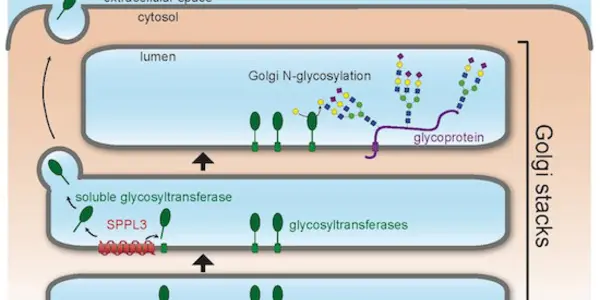
The enzyme signal peptide peptidase-like 3 (SPPL3) is known to 'cut' proteins - they cleave the peptide bonds in the polypeptides that make up proteins - but it turns out that it works to activate T-cells, the immune system's foot soldiers - without cutting proteins.
Because its structure is similar to that of presenilin enzymes, which have been implicated in Alzheimer's disease, the researchers believe their findings could shed more light on presenilin functions, in addition to providing new insight into how the immune system is controlled.