Kids Helping Kids Is Universal - But Cultures Help Differently
A simple game reveals a universal instinct in kids
A simple game reveals a universal instinct in kids

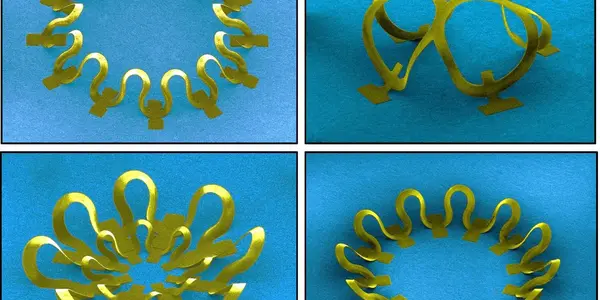
It won't exactly set off a Blu-ray versus HD-DVD cultural firestorm, but there is an alternative to 3-D printing. And it's better in many ways. Pop-up assembly relies on compression buckling. If that sounds like one of children's books, with the little structures that fold out when opened, that's because those are a good analog. Pop-up fabrication starts as a flat two-dimensional structure and 'pops up' into a more complex 3-D structure. Using a variety of advanced materials, including silicon, the researchers behind it have produced more than 40 different geometric designs, including shapes resembling a peacock, flower, starburst, table, basket, tent and starfish.So why is it better than 3-D printing?

Games have been test beds for new ideas in Artificial Intelligence (AI) since computers came on the scene and there have been significant milestones - Deep Blue sort of defeated Kasparov in chess and Watson sort of defeated Jennings and Rutter on Jeopardy! But solving a game is a lot tougher than defeating a player, though researchers in the Computer Poker Research Group at the University of Alberta in Canada say they have essentially solved heads-up limit hold'em poker.
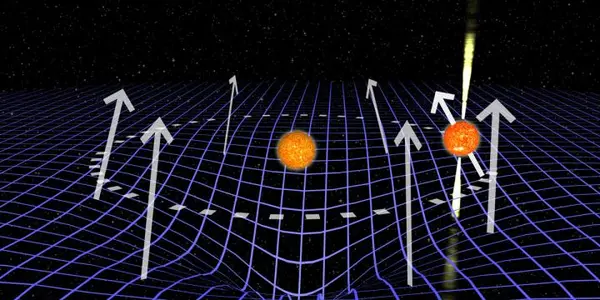
In an interstellar race against time, astronomers measured the space-time warp in the gravity of a binary star and determined the mass of a neutron star just before it vanished from view.The researchers measured the masses of both stars in binary pulsar system J1906. The pulsar spins and emits a lighthouse-like beam of radio waves every 144 milliseconds. It orbits its companion star in a little under four hours. The mass of only a handful of double neutron stars have ever been measured, with J1906 being the youngest. It is located about 25,000 light years from Earth.

80 percent of current coal reserves, 50 percent of gas reserves and 33 percent of oil reserves should remain in the ground by 2050 to avoid the 2°C target established by the Intergovernmental Panel on Climate Change and used as a benchmark by policy makers, according to a new estimate.
So much for that Peak Oil of 1992. We need to worry about Oil Glut instead.
The paper identifies the geographic location of existing reserves that should remain unused - it's no secret that is China, Russia and the United States, along with 260 billion barrels oil reserves in the Middle East. The Middle East should also leave over 60% of its gas reserves in the ground.
A new report by the National Research Council offers guidance to schools on necessary steps for putting the Next Generation Science Standards (NGSS) into practice over the next decade.
Next Generation Science Standards
were drawn from A Framework for K-12 Science Education: Practices, Crosscutting Concepts, and Core Ideas, a 2011 Research Council report. Next Generation Science Standards. The standards are based on the ideas that science and engineering involve both knowing and doing; that developing rich, conceptual understanding is more productive for future learning than simply memorizing discrete facts; and learning experiences should be designed with coherent progressions over multiple years.
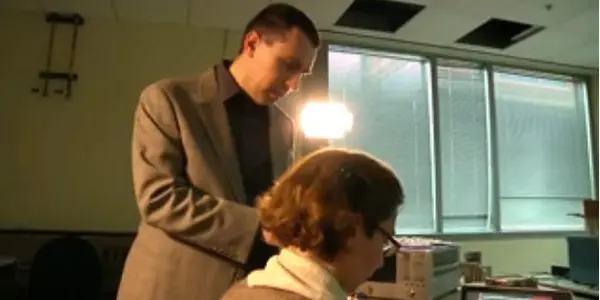
You may feel safe working at the coffee house because you are not using their public Wi-Fi connection. Think again.And that smartphone is even more vulnerable to snooping.The new breed of coffee shop hackers can see what you're doing by analyzing the low-power electronic signals your laptop or smartphone emits - even when it's not connected to the Internet. The race is on to plug these information 'leaks' but the first challenge is finding out where they originate. To help, Georgia Institute of Technology engineers have developed a metric for measuring the strength of the leaks - known technically as "side-channel signal" - to help prioritize security efforts.
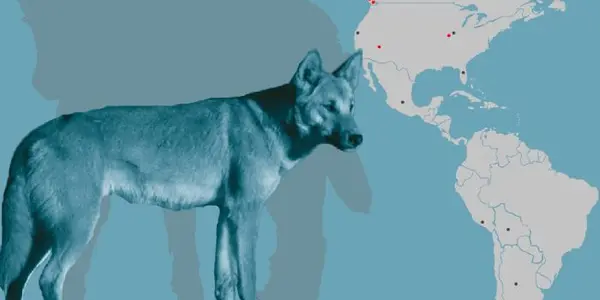
Dogs successfully migrated to the Americas about 10,000 years ago, according to a new study. That's a long time ago but still thousands of years after the first human migrants crossed the land bridge from Siberia to North America. Dogs have been associated with humans in findings from 11,000 to 16,000 years ago.
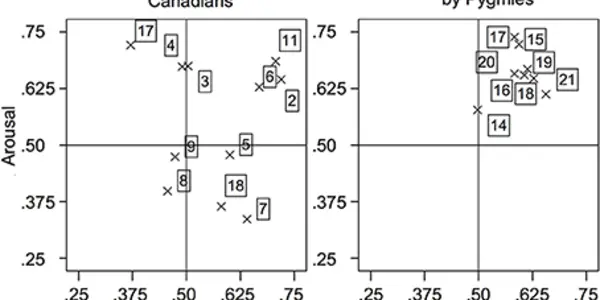
Whether you are a a hipster in Montreal or a Pygmy in the Congolese rainforest, certain aspects of music will touch you the same way.
That applies to scores we associates with very different films, and therefore tones, like Psycho, Star Wars, and Schindler's List, according to a team of scholars who arrived at this conclusion after traveling deep into the rainforest to play music to a very isolated group of people, the Mbenzélé Pygmies, who live without access to radio, television or electricity.

A study of circadian rhythms in skin stem cells finds that this biological clock plays a key role in coordinating daily metabolic cycles and cell division. The paper shows how the body's intrinsic day-night cycles protect and nurture stem cell differentiation and provides insights into a mechanism whereby an out-of-synch circadian clock can contribute to accelerated skin aging and cancers.
Bogi Andersen, professor of biological chemistry and medicine at University of California - Irvine, and Enrico Gratton, professor of biomedical engineering, focused their efforts on the epidermis, the outermost protective layer of the skin that is maintained and healed by long-lived stem cells.
Rock soil droplets formed by heating are part of the evidence used to content that a disastrous cosmic impact 12,900 years ago triggered the Younger Dryas cold period but they most likely instead came from Stone Age house fires, according to new research of soil from Syria.
The Younger Dryas lasted a thousand years and coincided with the extinction of mammoths and other great beasts and the disappearance of the Paleo-Indian Clovis people.
In the 1980s, some researchers put forward the idea that the cool period, which fell between two major glaciations, began when a comet or meteorite struck North America.
Noninvasive brain scans, such as functional magnetic resonance imaging, have led to basic science discoveries about the human brain and have also been wildly misused, claiming to correlate everything from the biology of voting to ideas like that people with messy offices are racist.Though fMRI-based claims get lots of mainstream media attention, along with most weak observational studies, the actual value for society hasn't been there.But it could be, according to a review of other studies in Neuron. They even believe brain imaging can help predict an individual's future learning, criminality, health-related behaviors, and response to drug or behavioral treatments.
The mythology among the people who really care about what is happening on the left or the right is that the people opposite them are uneducated and being exploited by elites.The opposite is true: Polarized people tend to be highly educated. Sorry, Republicans, those Democrats did not register for the wrong party because they are dumb. and sorry, MSNBC viewers, Rush Limbaugh is one of the smartest people in America, whether you like his show or not. But that means some polarization is good. An educated public is a crucial element to a democratic society and educated people will have stronger opinions than those who always waffle and take the middle ground and say it depends on what the definition of something is.