You Feel Colder As You Age: The Science Reason Why
Older people report feeling colder, enough that it is clearly happening, but why has been a mystery. Until now.
Older people report feeling colder, enough that it is clearly happening, but why has been a mystery. Until now.


Internet addiction, an impulse-control problem marked by an inability to inhibit Internet use, can adversely affect a person's life, including their health and interpersonal relationships. The prevalence of Internet addiction varies among regions around the world, as shown by data from more than 89,000 individuals in 31 countries analyzed for a study published in Cyberpsychology, Behavior, and Social Networking.
The distinctive "fecal prints" of microbes could provide a record of how Earth and life have co-evolved over the past 3.5 billion years as the planet's temperature, oxygen levels, and greenhouse gases have changed but it's been difficult to decipher much of the information contained in this record. A new project sheds light on the mysterious digestive processes of microbes, opening the way towards a better understanding of how life and the planet have changed over time. Using a new technique, researchers focused on the microbes that live on the ocean floor where the microbes consume the sulfate found in seawater because oxygen is in short supply.
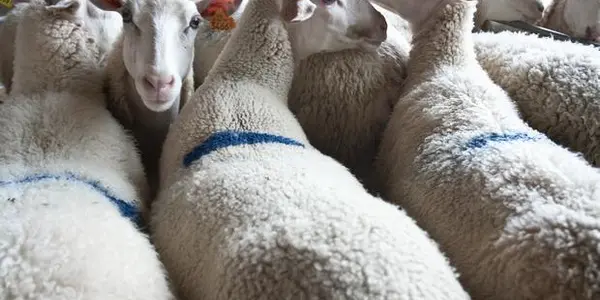
Scrapie is a neurodegenerative disease that has been known for centuries and which affects sheep and goats. Similar to Bovine Spongiform Encephalopathy (BSE) or mad cow disease, scrapie is caused by a transmissible pathogen protein called prion.A new study finds that the pathogens responsible for scrapie in small ruminants (prions) have the potential to convert the human prion protein from a healthy state to a pathological state. In mice models reproducing the human species barrier, this prion induces a disease similar to Creutzfeldt-Jakob disease.
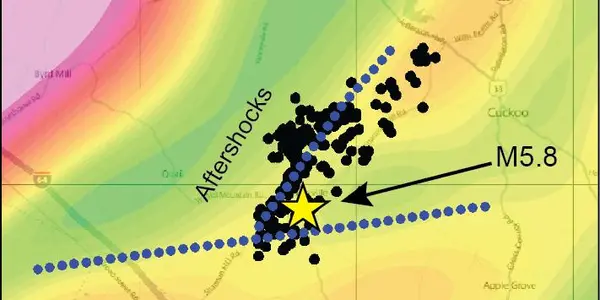
The 2011 east coast earthquake felt by people from Georgia to Canada likely originated from a fault “junction” just outside of Mineral, Virginia, according to new U.S. Geological Survey research published in the Geological Society of America’s Special Papers.
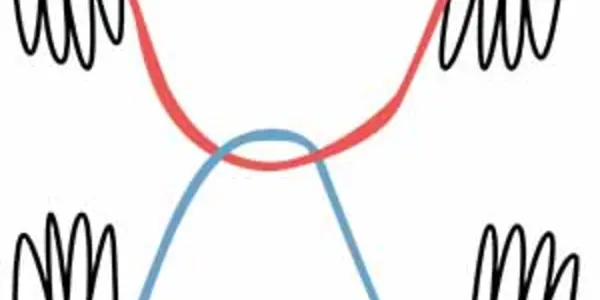
A young boy sits on the carpet, his feet disappearing into a giant pair of sweatpants he put on over his own clothes before loosely tying his ankles together. He has taken the sweatpants off and is now trying to put them back on inside out without removing the ankle cuffs. Yes, it can be done.Holly Bernstein, who earned a PhD in mathematics at Washington University in St. Louis in 1999, watches him struggle for a bit and then says, “Remember the pants have more than one hole. You don’t necessarily have to put them back on the way you put them on in the first place.”
Lost memories can be restored, which offers some hope for patients in the early stages of Alzheimer's disease.
The belief has been that memories are stored at the synapses -- the connections between brain cells, or neurons -- which are destroyed by Alzheimer's disease. The new study provides evidence contradicting the idea that long-term memory is stored at synapses.
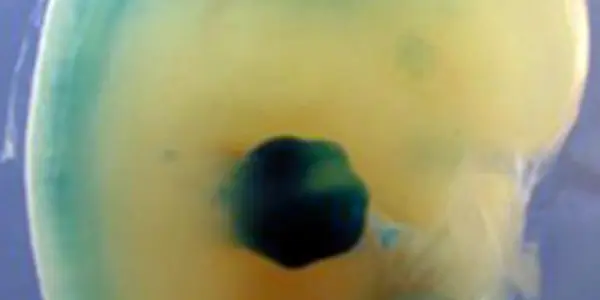
The evolutionary adaptations of ancient lobe-finned fish transformed pectoral fins used underwater into strong, bony structures that enabled emerging tetrapods, animals with limbs, to allow them crawl in shallow water or on land.
The disconnect between paleontology and evolutionary biology has been why the modern structure called the autopod, comprising wrists and fingers or ankles and toes, has no obvious morphological counterpart in the fins of living fishes.
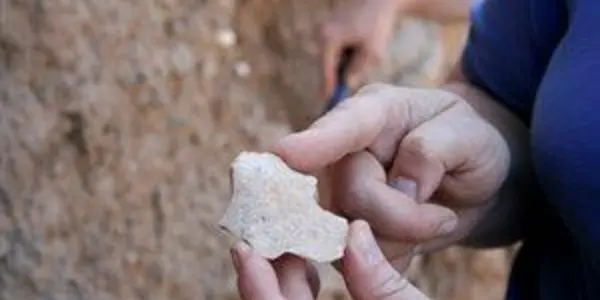
The oldest recorded stone tool found to-date has been unearthed in Turkey.
The chance find of a humanly-worked quartzite flake, in ancient deposits of the river Gediz in western Turkey, show that humans passed through the gateway from Asia to Europe much earlier than previously thought, approximately 1.2 million years ago and provides new insight into when and how early humans dispersed out of Africa and Asia.
The international team used high-precision equipment to date the deposits of the ancient river meander, giving the first accurate time-frame for when humans occupied the area.
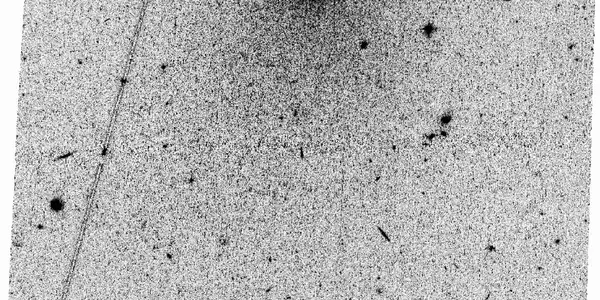
Our Milky Way is part of a cluster of more than 50 galaxies that make up the ‘Local Group’, a collection that includes the famous Andromeda galaxy and many other far smaller objects. And now one more, a tiny and isolated dwarf galaxy almost 7 million light years away, named KKs3. KKs3 was found using the Hubble Space Telescope Advanced Camera for Surveys (ACS) in August 2014 in the southern sky in the direction of the constellation of Hydrus and its stars have only one ten-thousandth of the mass of the Milky Way.

In the first James Bond novel, Casino Royale (1953), British MI6 agent James Bond designed his own martini, comprising three measures of Gordon's gin, one of vodka and half a measure of Kine Lillet (vermouth) shaken until it's ice cold and served with a slice of lemon peel. He named it a 'Vesper' after his love interest Vesper Lynd but he never drank the Vesper again in the books.Shaking a martini was...working class. Drink experts knew then and know now that you don't do it, because it aerates the drink as ice breaks off. You shake drinks with egg or citrus. It is believed that Fleming had his anti-hero order it shaken to thumb his nose at elites.
We might think that Christmas is more commercial now than in the past - and the season certainly starts earlier - but when it comes to one key barometer the 1950s were pretty bad.Though the 1950s had lots of cultural problems compared to today, economically things were much better, with lower taxes, less government interference, and most families having only one parent forced to work outside the home. And that meant spending money, but there were no malls or online retailers so everyone had to come into town to shop.

Windows with
transparent photovoltaic modules or façades in which microalgae are being bred to provide the house with its own biofuel are just some of the aspects buildings of the future could feature. A new international research effort, coordinated by Friedrich Schiller University in Jena’s materials scientist Lothar Wondraczek, is aiming to change this. In the project ‘Large-Area Fluidic Windows – LaWin’ the scientists intend to develop functional façades and window modules, together with an integrated production process to achieve an as to yet unmatched readiness to market.