Kids Helping Kids Is Universal - But Cultures Help Differently
A simple game reveals a universal instinct in kids
A simple game reveals a universal instinct in kids


In the 1960s, "speed freaks", people hooked on amphetamines, still avoided Ritalin. It was too dangerous. In the 1990s, Ritalin suddenly became a medication. For kids diagnosed with ADD, it sped them up so much it basically slowed them down.
But for people who don't need it, ADD medication is just a stimulant, and nearly 20 percent of students at an Ivy League college reported misusing a prescription stimulant while studying, and one-third of students did not view such misuse as cheating according results presented today at the Pediatric Academic Societies (PAS) annual meeting in Vancouver.
Researchers have identified a section of the anthrax toxin Lethal Factor that could help produce a more effective vaccine.
Anthrax is a potentially lethal disease caused by a bacterium called Bacillus anthracis. The bacteria produce spores that when inhaled, ingested or absorbed into the skin release toxins. When anthrax affects the lungs or intestines it can cause death within a few days whilst infection of the skin (cutaneous anthrax) is less dangerous.
Case Western Reserve researchers have discovered that a protein previously implicated in disease plays such a positive role in learning and memory that it may someday contribute to cures of cognitive impairments. The findings regarding the potential virtues of fatty acid binding protein 5 (FABP5) — usually associated with cancer and psoriasis — appear in the May 2 edition of The Journal of Biological Chemistry.

With the bursting of spring, pollen is in the air. Most of the pollen that is likely tickling your nose and making your eyes water is being dispersed in a sexually immature state consisting of only two cells (a body cell and a reproductive cell) and is not yet fertile. While the majority of angiosperm species disperse their pollen in this early, bicellular, stage of sexual maturity, about 30% of flowering plants disperse their pollen in a more mature fertile stage, consisting of three cells (a body and two sperm cells). And then there are plants that do both.
Findings and Significance: During breast-tissue development, a transcription factor called SLUG plays a role in regulating stem cell function and determines whether breast cells will mature into luminal or basal cells.
Studying factors, such as SLUG, that regulate stem-cell activity and breast-cell identity are important for understanding how breast tumors arise and develop into different subtypes. Ultimately, this knowledge may help the development of novel therapies targeted to specific breast-tumor subtypes.
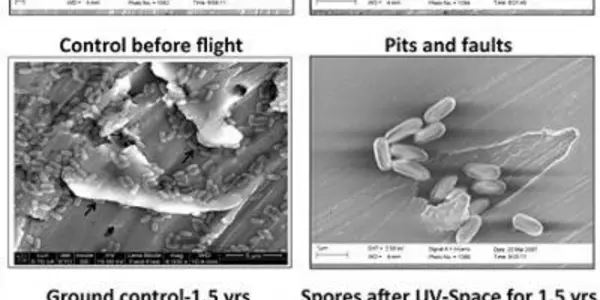
In old movies, humans feared invaders from other planets, but they had better watch out for us.
In "War of the Worlds" we took out the Martians using nothing but microorganisms, so if imagine if we really tried.
Interplanetary exchange of organisms is little discussed in a summer movie world of "Independence Day" invaders, but three recent scientific papers examined the risks using research from the International Space Station.

The so-called Middle East respiratory syndrome (MERS) coronavirus was first found in June 2012 in a patient from Saudi Arabia, who suffered from severe pneumonia. Since this time more than 300 persons have developed an infection, of whom about a third died. The fact that the Arabian camel is the origin of the infectious disease has been confirmed recently. The transmission pathways of the viruses, however, have not been clear until now.
Viruses in humans and camels from one region are identical
Public health works. In 2000, the United Nations drafted aggressive goals for both standards of living and public health. So far, they are ahead of schedule on both.
Two analyses by the Institute for Health Metrics and Evaluation (IHME) at the University of Washington show that international efforts to address maternal and child mortality have resulted in millions of lives being saved globally.
The Millennium Development Goals (MDGs) were created to drive maternal and child deaths down by 2015. They had been dropping in most countries since the 1980s but the pace accelerated and, if the trend continues, child deaths will fall from over 6 million in 2013 to fewer than 4 million in 2030.

The periodic table of the elements is about to get crowded on the heavy side.
Evidence for the artificial creation of element 117 was recentlyobtained at the GSI Helmholtz Centre for Heavy Ion Research, an accelerator laboratory located in Darm-stadt, Germany.
Given a choice, it's better to be miserable in a heated jacuzzi than be homeless on the streets of New York City during a blizzard.
But that 'money can't buy happiness' saying arose because some people just can't be happy - and money won't help. Psychology is subjective and relative so we're only left with averaging surveys but, generally, people who spend more on life experiences are happier than people who just buy stuff. Plenty of people are happy when they buy a new phone or a TV but it quickly becomes commonplace. If you are a football fan, and finally buy that trip to the Super Bowl, you are pretty happy.
It's not only the biology of lakes that varies with the climate and other environmental factors, it's also their chemistry. More knowledge about this is needed to understand the ecology of lakes and their role in the carbon cycle and the climate. Today an international research group led by Uppsala University is publishing a comprehensive study of the composition of organic compounds in the prestigious journal Nature Communications.
New York, NY, May 1, 2014 – We may soon be able to make easy and early diagnoses of prostate cancer by smell. Investigators in Finland have established that a novel noninvasive technique can detect prostate cancer using an electronic nose. In a proof of principle study, the eNose successfully discriminated between prostate cancer and benign prostatic hyperplasia (BPH) by "sniffing" urine headspace (the space directly above the urine sample). Results using the eNose are comparable to testing prostate specific antigen (PSA), reports the Journal of Urology®.