You Feel Colder As You Age: The Science Reason Why
Older people report feeling colder, enough that it is clearly happening, but why has been a mystery. Until now.
Older people report feeling colder, enough that it is clearly happening, but why has been a mystery. Until now.


James Lovelock, the Godfather of Global Warming, says we are doomed and the only recourse left is to retreat to climate-controlled cities. Others claim we can solve the problem if we just shut off all of the power plants. Others contend we simply need to stop building them.

Synthetic collagen invented at Rice University may help wounds heal by directing the natural clotting of blood.
The material, KOD, mimics natural collagen, a fibrous protein that binds cells together into organs and tissues. It could improve upon commercial sponges or therapies based on naturally derived porcine or bovine-derived collagen now used to aid healing during or after surgery.
The lab of Jeffrey Hartgerink, a chemist and bioengineer based at Rice's BioScience Research Collaborative, developed synthetic collagen several years ago. The lab's analysis of KOD for use as a hemostat, or clotting agent, appears this month in the American Chemical Society journal Biomacromolecules.
Coral Gables, FL (April 9, 2014) -- Approximately 26 percent of the U.S. population has impaired fasting glucose, which is a predisposition for developing type 2 diabetes, and chromium supplementation has been suggested as a method that may help control and prevent the disease.
A new study by a University of Miami (UM) researcher analyses nearly three decades of data on the effect of chromium supplementation on blood sugar and concludes that chromium supplements are not effective at lowering fasting blood sugar in healthy individuals, or diabetics.
Chromium is a mineral required by humans in minute concentrations and is obtained naturally in the diet. Actually, few cases of deficiency have been documented.

Harvard evolutionary biologist Professor David Haig believes that infants that wake frequently at night to breastfeed are delaying the resumption of the mother's ovulation and therefore preventing the birth of a sibling with whom they would have to compete.
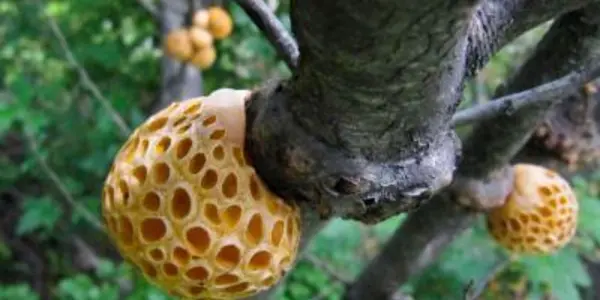
Not many people care about where the yeast that makes much of modern beer possible came from. But science cares.
The cold-adapted yeast that blended with a distant cousin to make the lager-churning hybrid has been a biological black box for the last 500 years of industrial fermentation, even though fermentation underpins the production of everything from soy sauce to biofuel. A few years ago, scientists identified the South American yeast that, hundreds of years ago, somehow hitched a ride to Bavaria and combined with the domesticated Old World yeast used for millennia to make ale and bread to form the hybrid that makes lager or cold stored beer.

Parasitic butterfly larvae may mimic ants' acoustic signals to aid in the infiltration of their host colonies, according to results published April 9, 2014, in the open access journal PLOS ONE by Marco Sala from University of Turin, Italy, and colleagues.

WHAT:
A National Institutes of Health (NIH) study reports that a rare genetic disease, while depleting patients of infection-fighting antibodies, may actually protect them from certain severe or recurrent viral infections. Researchers found that HIV and influenza viruses replicate in the cells of people with congenital disorder of glycosylation type IIb (CDG-IIb) at a much lower rate than in healthy donor cells, creating fewer and less infectious viruses. The study, published in The New England Journal of Medicine, was led by Sergio Rosenzweig, M.D., Ph.D., director of the Primary Immune Deficiency (PID) Clinic at the NIH's National Institute of Allergy and Infectious Diseases (NIAID).
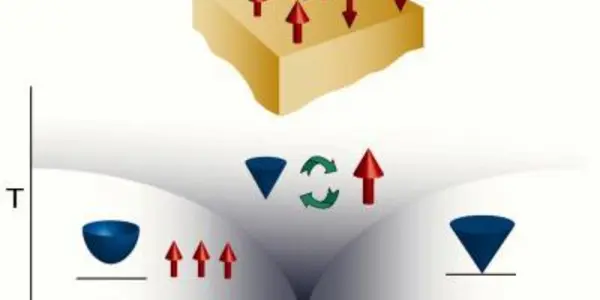
U.C. Santa Barbara physicist Tarun Grover says he has definitive mathematical evidence for supersymmetry in a condensed matter system. Sought after in the realm of subatomic particles by physicists for several decades, supersymmetry describes a unique relationship between particles.
The fundamental constituents of matter — electrons, quarks and their relatives — are fermions. The particles associated with fundamental forces are called bosons. Several decades ago, physicists hypothesized that every type of particle in the Standard Model of particle physics, a theory that captures the dynamics of known subatomic particles, has one or more superpartners — other types of particles that share many of the same properties but differ in a crucial way.

The team has so far identified 14 vulnerable HTML5-based apps from three types of mobile systems, including Android, iOS and Blackberry. Developers of those vulnerable apps have been informed and in an effort to give them time to fix the problem, researchers have decided not to disclose the names of the vulnerable apps.
"Imagine you're at the airport and you want to find the free Wi-Fi. When you scan, your phone is going to display the Wi-Fi access points. That could be an easy channel for a hacker to inject malicious worm code into your smartphone," Du says. "Once the worm takes control, it can duplicate itself, and send copies to your friends via SMS messages, multimedia file sharing, and other methods."
The legacy of European science and biotechnology is good - Europeans say that health research is important - but modern acceptance of science remains lacking. However, a new survey by Institut National de la Santé et de la Recherche Médicale - Inserm - shows that Europeans may discard their recent stance against science and embrace progress again. It will take a culture of science literacy on par with the United States and a culture that shakes off government control, according to the results.
On the less glamorous side of space exploration, there's the more practical problem of waste — in particular, what to do with astronaut pee. But rather than ejecting it into space, scientists are developing a new technique that can turn this waste burden into a boon by converting it into fuel and much-needed drinking water.
Humans are unique in their ability to acquire language. But how? A new study published in the Proceeding of the National Academy of Sciences shows that we are in fact born with the basic fundamental knowledge of language, thus shedding light on the age-old linguistic "nature vs. nurture" debate.
While languages differ from each other in many ways, certain aspects appear to be shared across languages. These aspects might stem from linguistic principles that are active in all human brains. A natural question then arises: are infants born with knowledge of how the human words might sound like? Are infants biased to consider certain sound sequences as more word-like than others?
BLA, ShBA, LBA