Kids Helping Kids Is Universal - But Cultures Help Differently
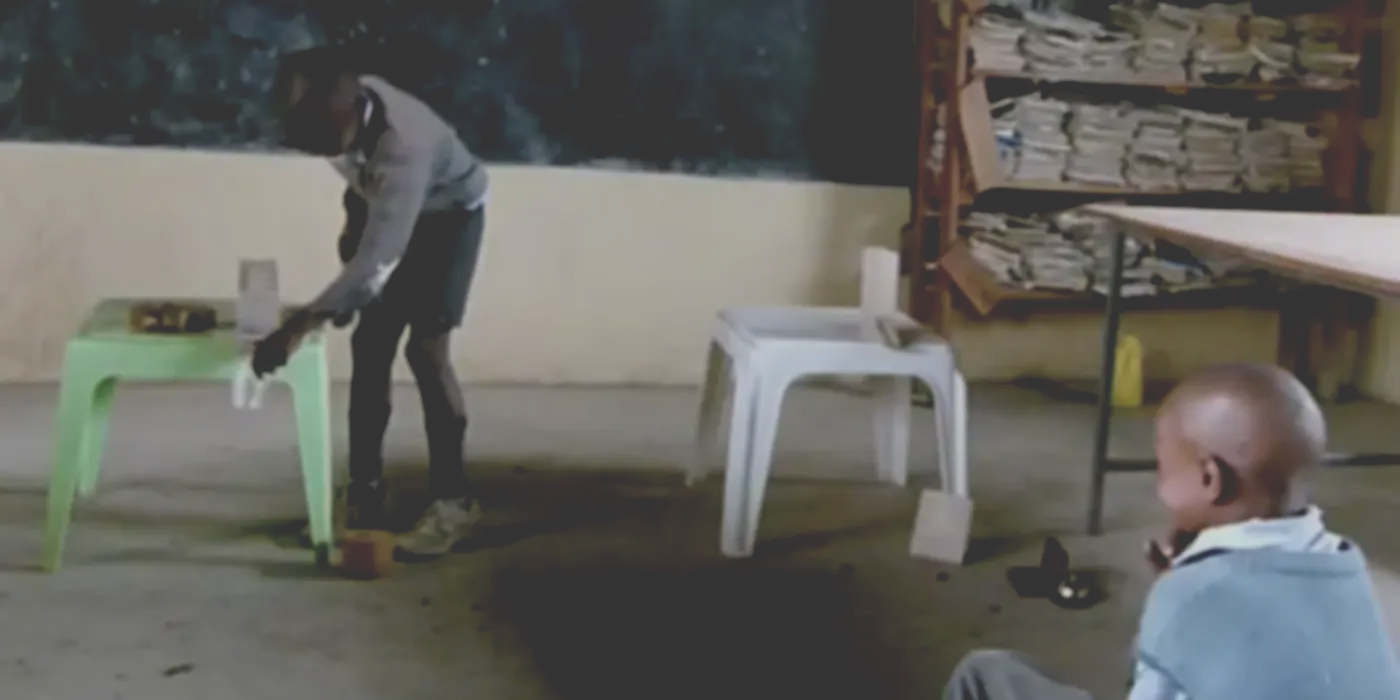
A simple game reveals a universal instinct in kids
A simple game reveals a universal instinct in kids


A new tabletop display has a personal screen made from a curtain of mist. It allows users to move images around and push through the fog-screens and onto the display.MisTable, led by Professor Sriram Subramanian and Dr Diego Martinez Plasencia from the University of Bristol’s Department of Computer Science, is a tabletop system that combines a conventional interactive table with personal screens, built using fog, between the user and the tabletop surface.

A report in The Lancet describes the first instance of human recipients receiving laboratory-grown vaginal organs. The research team describes long-term success in four teenage girls who received the vaginal organs, engineered with their own cells.
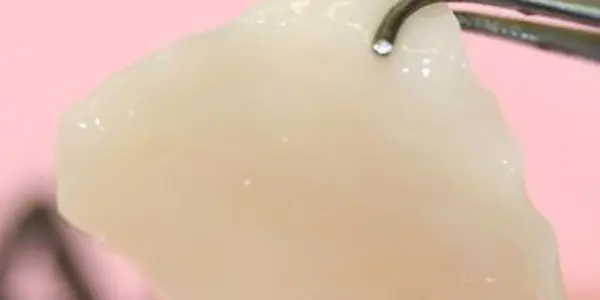
The first ever successful nose reconstruction surgery using cartilage grown in the laboratory has been done by the University of Basel. The details are upcoming in The Lancet.
The cartilage cells were extracted from the patient's nasal septum, multiplied and expanded onto a collagen membrane and then the engineered cartilage was then shaped according to the defect and implanted. The cartilage was grown from the patient's own adult stem cells and the technique was used with five patients, aged 76 to 88 years, with severe defects on their nose after skin cancer surgery.
Depending on how a topic is framed, people quickly change their minds when the discussion is about medical liability. If the scenario is presented as 'Doctor X was incompetent and did Y' the perception is that incompetent people should have to pay but when the scenario is presented as unlimited lawsuits crippling health care, people feel like we need tort reform.
Most people believe that malpractice insurance is the biggest problem after infrastructure costs and employees, but that isn't so; the biggest cost that gets passed on to consumers and health insurance carriers is defensive medicine - running every possible test and covering unnecessary bases so if anything ever goes wrong, a lawyer will not win a lawsuit claiming they are careless.
The Tibetan Plateau — the world's largest, highest, and flattest plateau — had a larger initial extent than previously documented.
Known as the "Roof of the World," the Tibetan Plateau covers more than 970,000 square miles in Asia and India and reaches heights of over 15,000 feet. The plateau also contains a host of natural resources, including large mineral deposits and tens of thousands of glaciers, and is the headwaters of many major drainage basins.
The existence of exotic hadrons — a type of matter that cannot be classified within the traditional quark model - has been confirmed in a forthcoming article prepared by the Large Hadron Collider beauty (LHCb) Collaboration at CERN in Geneva, Switzerland.
Quarks are hard, point-like objects found within the nucleus of an atom. When quarks combine in threes, they form compound particles known as baryons. Protons are probably the best-known baryons. Sometimes, quarks interact with corresponding anti-particles (i.e., anti-quarks), which have the same mass but opposite charges. When this happens, they form mesons. These compounds often turn up in the decay of heavy man-made particles, such as those in particle accelerators, nuclear reactors, and cosmic rays.
If religiously-motivated terrorists attack, they may claim it is an Act of God. You had better hope your insurance company does not. To insurance companies, an act of God is any event not influenced by man and minimum coverage often does not include it.
Because of the fuzzy nature of those definitions, there is specific terrorism insurance. But after Muslim fundamentalists hijacked and crashed planes on Sept. 11, 2001, terrorism risk insurance quickly became very expensive or unavailable. Congress reacted by passing the Terrorism Risk Insurance Act, which provides an assurance of government support after a catastrophic attack. This kept terrorism risk insurance cheaper for businesses without crippling insurers.

The universe is big, as you can imagine. Even our galaxy is almost beyond comprehension. But measure it we do, at least as best we can.
The most reliable method for making astronomical distance measurements is to use geometry - the 186-million-mile diameter of Earth's orbit is used to construct a baseline of a triangle, much as a land surveyor would use.
It's been a decades-long experiment to throw darts at a dartboard and see if it outperforms the picks of experts. Darts win and lose at the same rate as the average of experts.
Some people clearly make money in financial markets but the old saying among brokers = 'we make money selling stocks, not buying them' - still applies.
Yet someone must know what they are doing. And backtesting is a good way to seem empirical. Example: Your financial advisor calls you up to suggest a new
investment scheme. Drawing on 20 years of data, he has set his
computer to work on this question: If you had invested according to
this scheme in the past, which portfolio would have been the best?
His model assembles thousands of such simulated portfolios and
Fruit flies are secretly harboring the biochemistry needed to glow in the dark —otherwise known as bioluminescence - according to a paper in
Proceedings of the National Academy of Sciences.

Ruminant cows and sheep account for a major proportion of the methane produced around the world - an estimated 20 percent of global methane emissions stem from ruminants.
In the atmosphere, methane is a shorter-term problem than CO2 but has 23X the warming effect – that's why researchers are looking for ways of reducing methane production. Comparatively little is known about the methane production of other animal species, but one thing seems to be clear: Ruminants produce more of the gas per amount of converted feed than other herbivores.
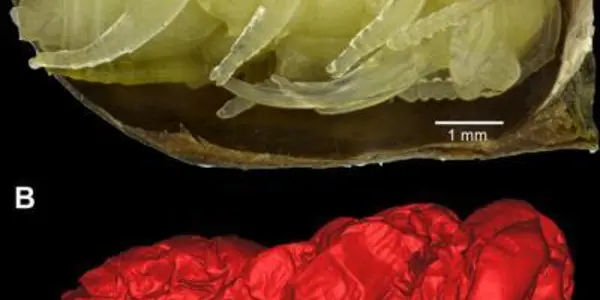
The La Brea Tar Pits in California are known for saber-toothed cats and mastodons but they also have insects. Recent examination of fossil leafcutter bee nest cells, led by Anna Holden of Natural History Museum of Los Angeles County and colleagues, reveal insights into the habitat and climate at the La Brea Tar Pits toward the last Ice Age.
Holden conducted the study with bee specialists Jon B. Koch and Dr. Terry Griswold from Utah State University, paleobotanist Dr. Diane M. Erwin, from the University of California Berkeley, and Justin Hall from NHM, who used micro CT scans to reconstruct images of the nest cells and bees.