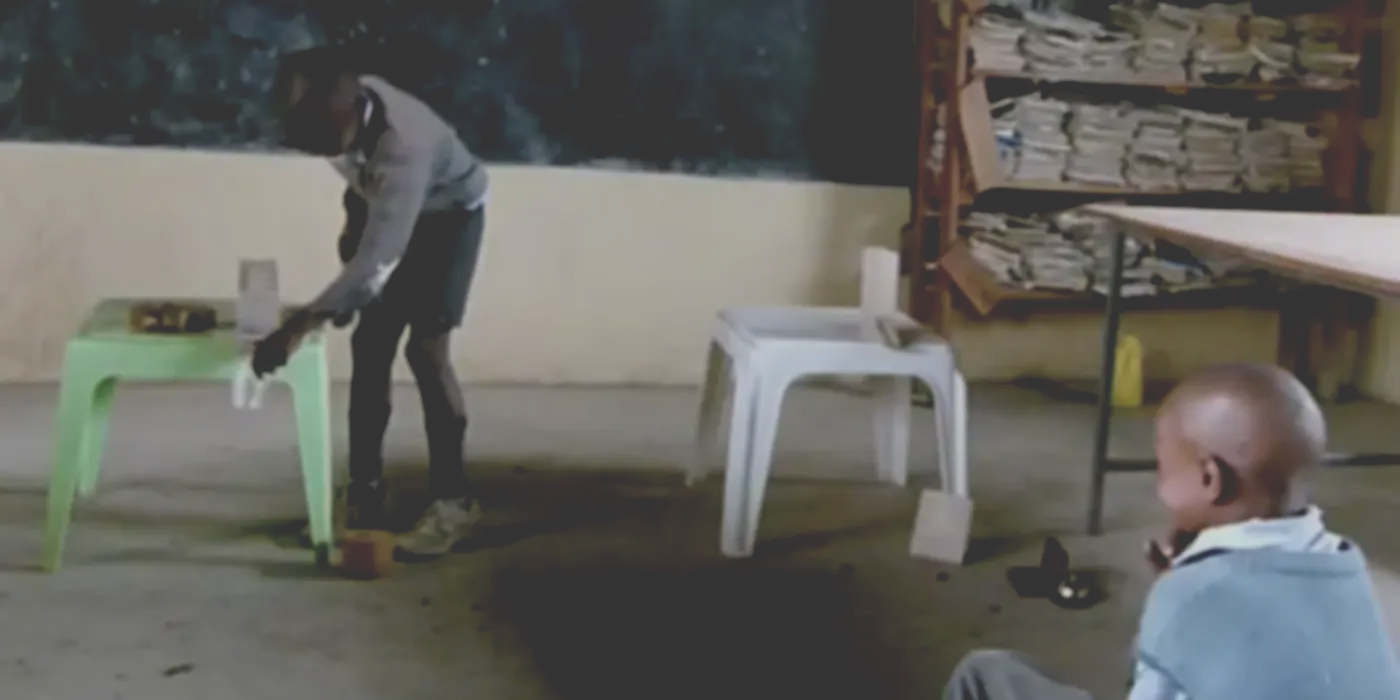
Kids Helping Kids Is Universal - But Cultures Help Differently
A simple game reveals a universal instinct in kids
A simple game reveals a universal instinct in kids


Scientists at Yale University have devised a dramatically faster way of identifying and characterizing complex alloys known as bulk metallic glasses (BMGs), a versatile type of pliable glass that's stronger than steel.
Using traditional methods, it usually takes a full day to identify a single metal alloy appropriate for making BMGs. The new method allows researchers to screen about 3,000 alloys per day and simultaneously ascertain certain properties, such as melting temperature and malleability.
"Instead of fishing with a single hook, we're throwing a big net," said Jan Schroers, senior author of the research, which was published online April 13 in the journal Nature Materials. "This should dramatically hasten the discovery of BMGs and new uses for them."
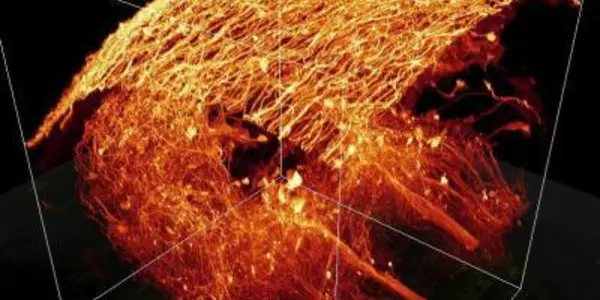
The complexity of biology can befuddle even the most sophisticated light microscopes because biological samples bend light in unpredictable ways, returning difficult-to-interpret information to the microscope and distorting the resulting image.
New imaging technology developed at the Howard Hughes Medical Institute's Janelia Farm Research Campus rapidly corrects for these distortions and sharpens high-resolution images over large volumes of tissue.
In a new study, researchers from North Carolina State University, UNC-Chapel Hill and other institutions have taken the first steps toward creating a roadmap that may help scientists narrow down the genetic cause of numerous diseases. Their work also sheds new light on how heredity and environment can affect gene expression.

Live electronic music is an oxymoron. Clearly if you have hired Paris Hilton as a deejay, you are not hiring her because she is any sort of keen ear. If she never showed up, the music would go on.University of British Columbia music professor Bob Pritchard has seen enough uninspiring laptop music sets to know what is wrong with the genre - backing tracks can only take you so far - and has an idea how to fix it.Pritchard and UBC’s Laptop Orchestra believe digital cameras and other gadgets might just save live electronic music from itself - so they did a concert without actually touching their laptops. “That’s one of our rules,” says Pritchard, “Avoid touching the laptop!”
Self-healing materials can repair themselves by restoring their initial molecular structure after the damage and scientists from Evonik Industries
and the Karlsruhe Institute of Technology have developed a chemical crosslinking reaction that ensures good short-term healing properties of the material under mild heating.

Researchers recently used an array of high-speed video cameras operating at 7,500 frames a second to capture the wing and body motion of Drosophila hydei
after they encountered an image of an approaching predator.
The fruit flies are about the size of a sesame seed and rely on a fast visual system to detect approaching predators. And scientists found out that even Top Gun pilots might be envious of the screaming-fast banked turns and slick moves the flies employed. In the midst of a banked turn, the flies can roll on their sides 90 degrees or more, almost flying upside down at times.

In 2017, the British will introduce a new coin that should be difficult to counterfeit. The last time a Queen Elizabeth sat on the throne they tried the same thing, to deter “divers evil persons” from damaging the reputation of English coinage and, with it, the good name of the nation. And they tried it plenty of times since. And before.As long as there has been money, there has been counterfeiting. Today, the Royal Mint estimates retailers lose about $25 million a year due to counterfeits and up to 3% of their £1 coins are fake.
How is nitrogen removed from the ocean? Some new findings may provide answers.
The debate centers on how nitrogen, one of the most important food sources for ocean life and a controller of atmospheric carbon dioxide, becomes converted to a form that can exit the ocean and return to the atmosphere where it is reused in the global nitrogen cycle.
Researchers have argued over which of two nitrogen-removal mechanisms, denitrification and anammox, is most important in the oceans. The question is not just a scientific curiosity, but has real world applications because one mechanism contributes more greenhouse gases to the atmosphere than the other.

This news release is available in German.
Apoptosis is used by cells that are changed by disease or are simply not needed any longer to eliminate themselves before they become a hazard to the body—on a cellular level, death is part of life. Disruption of this process can lead to cancer or immunodeficiencies, but also to autoimmune diseases, in which cells attack their own body.
London, UK, Saturday 12 April 2014: A UK study[i] investigating the link between low vitamin D status and non-alcoholic fatty liver disease (NAFLD) in British children has identified a genetic variant associated with the disease's severity.
The research, conducted by the King's College Hospital Paediatric Liver Centre and the University of Surrey's School of Biosciences and Medicine, and funded by the Children's Liver Disease Foundation retrospectively analysed the medical records of 120 paediatric patients with NAFLD.

It's no secret that bacterial parasites can change creatures. The parasitic lancet liver fluke infects the brain of ants, compelling them to climb to the tip of a blade of grass and into the mouth of a grazing animal. Another parasite is thought to change the behavior of rats to make them more susceptible to predation. They basically become zombies. And some bacterial parasites can even turn plants into the living dead.

Scientists who monitored skuas in Adélie Land and the Kerguelen Islands for ten years have found when these seabirds exhibit high mercury levels in their blood, their breeding success decreases. The researchers from the Centre d'Etudes Biologiques de Chizé and from the Littoral, Environnement et Sociétés Laboratory (CNRS / Université de La Rochelle) say that this is the first time that toxicological measurements have been combined with a population study carried out over such a long period in the Antarctic and Subantarctic.