You Feel Colder As You Age: The Science Reason Why
Older people report feeling colder, enough that it is clearly happening, but why has been a mystery. Until now.
Older people report feeling colder, enough that it is clearly happening, but why has been a mystery. Until now.

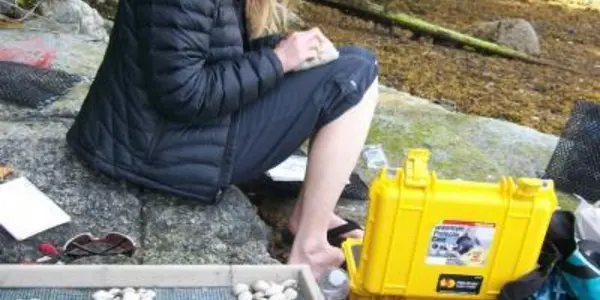
A three-year study of ancient clam gardens in the Pacific Northwest has led researchers, including three from Simon Fraser University, to make a discovery that could benefit coastal communities' food production. PLOS ONE, a peer-reviewed science journal, has just published their study.
Amy Groesbeck, an SFU alumna, SFU professors Anne Salomon, an ecologist, and Dana Lepofsky, an archaeologist, and Kirsten Rowell, a University of Washington biologist are the authors.
The researchers discovered that ancient clam gardens made by Aboriginal people produced quadruple the number of butter clams and twice the number of littleneck clams as unmodified clam beaches. This is the first study to provide empirical evidence of ancient clam gardens' superior productivity.
Obesity isn't always presenting an accurate picture of health. BMI is a nice metric for television shows but in reality, simplistic notions of height, weight and circumference are only a guideline when it comes to predicting health.
A lack of physical activity, a poor diet and hours every day reading Science 2.0 isn't a great idea, but obesity alone is not providing insult into metabolic fitness. Not everyone obese is going to get diabetes, though you'd be hard-pressed to know that if you read the New York Times or watch Dr. Oz.
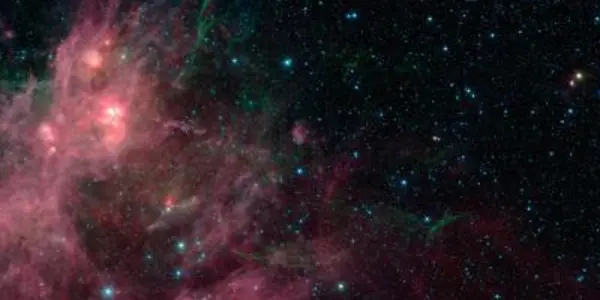
2 million images collected by NASA's orbiting Spitzer Space Telescope, which went into space in 2003, have been stitched together to create a 360 degree portrait of the Milky Way.

The muscles of the inherently thin may give them an edge, according to a new paper by Chaitanya K. Gavini et al., who previously found that aerobic capacity is a major predictor of daily physical activity level in laboratory animals. In their new study, they compared female rats with high aerobic capacity (genetic tendency toward leanness) or low aerobic capacity (genetic tendency toward obesity) to investigate how muscle physiology affects leanness.
Worldwide installations of solar and wind power has skyrocketed. Since 2009, the heyday of government subsidies, global solar photovoltaic installations have increased about 40 percent a year on average, and the installed capacity of wind turbines has doubled.

Humans are creatures of sight, then we think in terms of feel and then sound. The human sense of smell does not get the credit it deserves, according to a new paper.
In an experiment led by Andreas Keller, of Rockefeller's Laboratory of Neurogenetics and Behavior, the ability of volunteers to distinguish between complex mixtures of scents was tested. Based on the sensitivity of these people's noses and brains, the team calculated the human sense of smell can detect more than 1 trillion odor mixtures - the existing generally accepted number is just 10,000.
As the expansion of health care coverage becomes mandatory nationwide, people are looking to Massachusetts, which had already expanded health insurance coverage to nearly everyone in the state, for implications.
The answer may be a source of dread for states like California, where high taxes and an onerous business climate have caused most of the middle class to disappear: Emergency Room visits went up, even as uninsured visits went down, and that means higher cost.
The new report in the Annals of Emergency Medicine can't determine why they went up; perhaps people did not go before because they did not have coverage or perhaps people went more afterward because fewer private doctors accept their plans and the waiting period was too long.
Neuroimages are playing a growing role in biomedical research, medicine, and courtrooms. Unfortunately, that often means they are used to bolster weak observational studies and imply correlation and causation. The people most likely to commit scientific sins with brain imaging, psychologists and neuroscientists, are least likely to acknowledge their acquisitions parameters and many other things that scientists know influence data and conclusions.
In the 2012 election campaign, Mitt Romney was vilified for saying something everyone knew to be true and extrapolating motivation from it - that each party was going to get 47 percent of the vote no matter what and that dictated economic policy. Only 3 percent of the people on each side were really up for grabs, everyone else was voting for a ticket no matter who was on it.

If you become saucer-eyed when afraid or you squint from disgust, it may not be cultural - it may be biology. Near-opposite facial expressions like squinting and being wide-eyes are rooted in emotional responses that exploit how our eyes gather and focus light to detect an unknown threat, according to a study by Adam Anderson, professor of human development in Cornell's College of Human Ecology, and colleagues.

States that have hunting industries have the best of both possible worlds; instead of having state union workers expensively managing wildlife, they get the public to do it - and pay for the privilege. That money is then used to pay for state biologists and conservation programs.
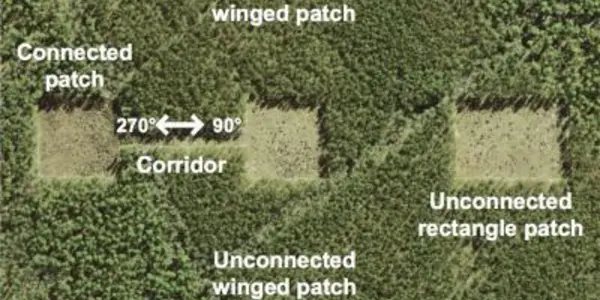
A forest in South Carolina, a supercomputer in Ohio and some glow-in-the-dark yarn have helped a team of field ecologists conclude that woodland corridors connecting patches of endangered plants not only increase dispersal of seeds from one patch to another, but also create wind conditions that can spread the seeds for much longer distances.
The idea for the study emerged from modern animal conservation practices, where landscape connectivity – the degree to which landscapes facilitate movement – is being used to counteract the impacts of habitat loss and fragmentation on animal movement.