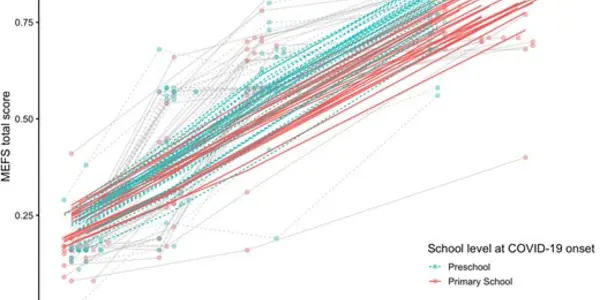
Kids Helping Kids Is Universal - But Cultures Help Differently
A simple game reveals a universal instinct in kids
A simple game reveals a universal instinct in kids

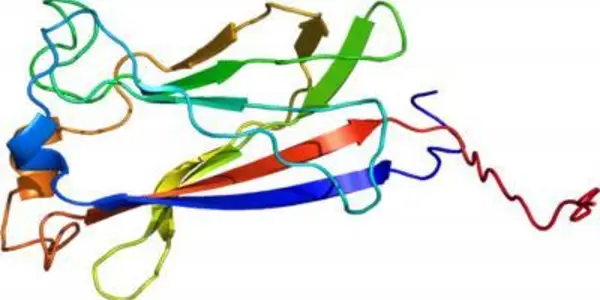
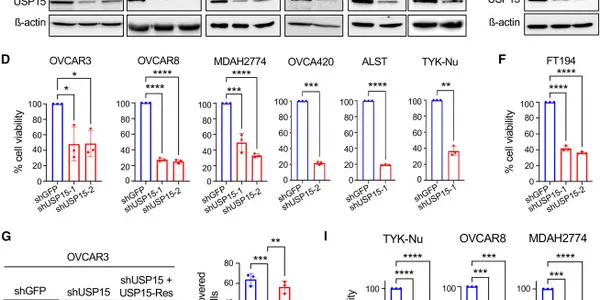
The shortage of oxygen, or hypoxia, created when rapidly multiplying kidney cancer cells outgrow their local blood supply can accelerate tumor growth by causing a nuclear protein called SPOP—which normally suppresses tumor growth—to move out of the nucleus to the cytoplasm, where it has the opposite effect, promoting rapid proliferation.
In the March 20, 2014, issue of the journal Cancer Cell, researchers from Chicago and Beijing describe the mechanisms that enable hypoxia to cause the overexpression of SPOP. They show that hypoxia also stimulates the shuttling of SPOP out of the nucleus, where it normally prevents tumor growth, to the cytoplasm, where it shuts down protective pathways that should restrict tumor growth.
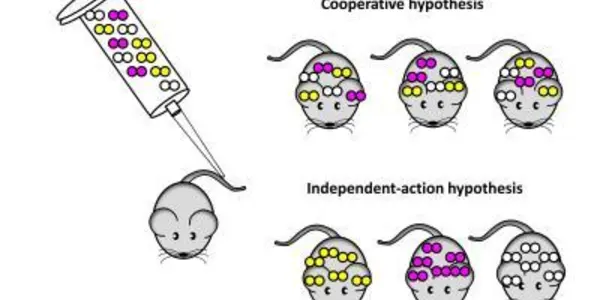
We carry numerous bacteria on our skin, in our mouth, gut, and other tissues, and localized bacterial infections are common and mostly not harmful. Occasionally, however, a localized infection turns into dangerous systemic disease (sepsis), and scientists have new clues as to how that happens. A study published on March 20th in PLOS Pathogens shows that after intravenous injection of a million bacteria into a mouse, the resulting systemic disease is often started by only a single one of them.

Listeria is a rod-shaped bacterium highly prevalent in the environment and generally not a threat to human health. One species however, Listeria monocytogenes, can cause listeriosis, a very dangerous disease. This pathogen can be present in raw milk and soft cheeses, smoked fish, raw meat and ready-to-eat products. In Austria, health care providers are required to report all cases of listeriosis, which can be fatal particularly for patients with weakened immune systems. In 2009 and 2010, a dairy in Hartberg (Styria, Austria) produced Quargel cheese contaminated with Listeria monocytogenes leading to a multinational listeriosis outbreak in Austria, Germany and the Czech Republic, ultimately forcing the dairy to shut down.

TORONTO, ON — A joint study by researchers at the University of California San Diego and the University of Toronto has found that a computer system spots real or faked expressions of pain more accurately than people can. The work, titled "Automatic Decoding of Deceptive Pain Expressions," is published in the latest issue of Current Biology.
"The computer system managed to detect distinctive dynamic features of facial expressions that people missed," said Marian Bartlett, research professor at UC San Diego's Institute for Neural Computation and lead author of the study. "Human observers just aren't very good at telling real from faked expressions of pain."
This news release is available in German.
Scientists of the KIT and the University of Kiev have produced an antibiotic, whose biological activity can be controlled with light. Thanks to the robust diarylethene photoswitch, the antimicrobial effect of the peptide mimetic can be applied in a spatially and temporally specific manner. This might open up new options for the treatment of local infections, as side effects are reduced. The researchers present their photoactivable antibiotic with the new photomodule in a "Very Important Paper" of the journal "Angewandte Chemie".

Every dark cloud has a silver lining and the silver lining for a thawing permafrost is...still a dark cloud.
The climate is warming in the Arctic at twice the rate of the rest of the globe. That has led to a longer growing season and increased plant growth, which captures atmospheric carbon - that is good - but it is thawing the permafrost, which releases carbon into the atmosphere. Permafrost contains three to seven times the amount of carbon sequestered in tropical forests. A thawing permafrost which will result in the release of carbon dioxide and methane into the atmosphere creating feedbacks to climate change – more warming and greater permafrost thaw.
(SACRAMENTO, Calif.) — Researchers at UC Davis have found that the investigational cancer vaccine tecemotide, when administered with the chemotherapeutic cisplatin, boosted immune response and reduced the number of tumors in mice with lung cancer. The study also found that radiation treatments did not significantly impair the immune response. The paper was published on March 10 in the journal Cancer Immunology Research, an American Association for Cancer Research (AACR) publication.
Washington, DC (March 13, 2014) — A fatty fold of tissue within the abdomen that is a rich source of stem cells can help heal diseased kidneys when fused to the organs, according to a study conducted in rats. The findings, which appear in an upcoming issue of the Journal of the American Society of Nephrology (JASN), suggest that stem cells from within a chronic kidney disease patient's own abdomen could be used to preserve and possibly improve kidney function.
The same gene family that may have helped the human brain become larger and more complex than in any other animal also is linked to the severity of autism, according to new research from the University of Colorado Anschutz Medical Campus.
The gene family is made up of over 270 copies of a segment of DNA called DUF1220. DUF1220 codes for a protein domain – a specific functionally important segment within a protein. The more copies of a specific DUF1220 subtype a person with autism has, the more severe the symptoms, according to a paper published in the PLoS Genetics.
Women who are pregnant or trying to fall pregnant and taking a folic acid supplement may be at risk of reducing their folate benefit through sun exposure, a new QUT study has warned.
In a paper titled Exposure to solar ultraviolet radiation is associated with decreased folate status in women of childbearing age, published in the Journal of Photochemistry and Photobiology B:Biology, QUT researchers found UV exposure significantly depleted folate levels.
Professor Michael Kimlin and Dr David Borradale, from QUT's AusSun Research Lab, said the study of 45 young healthy women in Brisbane aged 18 to 47, showed high rates of sun exposure accounted up to a 20 per cent reduction in folate levels.
There was a time when advocates knew that linking weather events to climate change was a bad idea; it left the science open to criticism if Al Gore was giving a talk on global warming during a blizzard.
Yet since 2012, when SuperStorm Sandy was linked to climate change and a reason to vote for President Obama, claims that every weather event, be it drought or flood, hot or cold, is evidence of global warming, have gotten more prevalent.
Extending national breast cancer screening programs to women over the age of 70 does not decrease cancers detected at advanced stages, according to new research at the European Breast Cancer Conference.
Instead, extending screening programs to older women results in a large proportion of women being over-treated, and at risk from the harmful effects of such treatment, because these women were more likely to die from other causes than from any tumors detected in the early stages of growth.