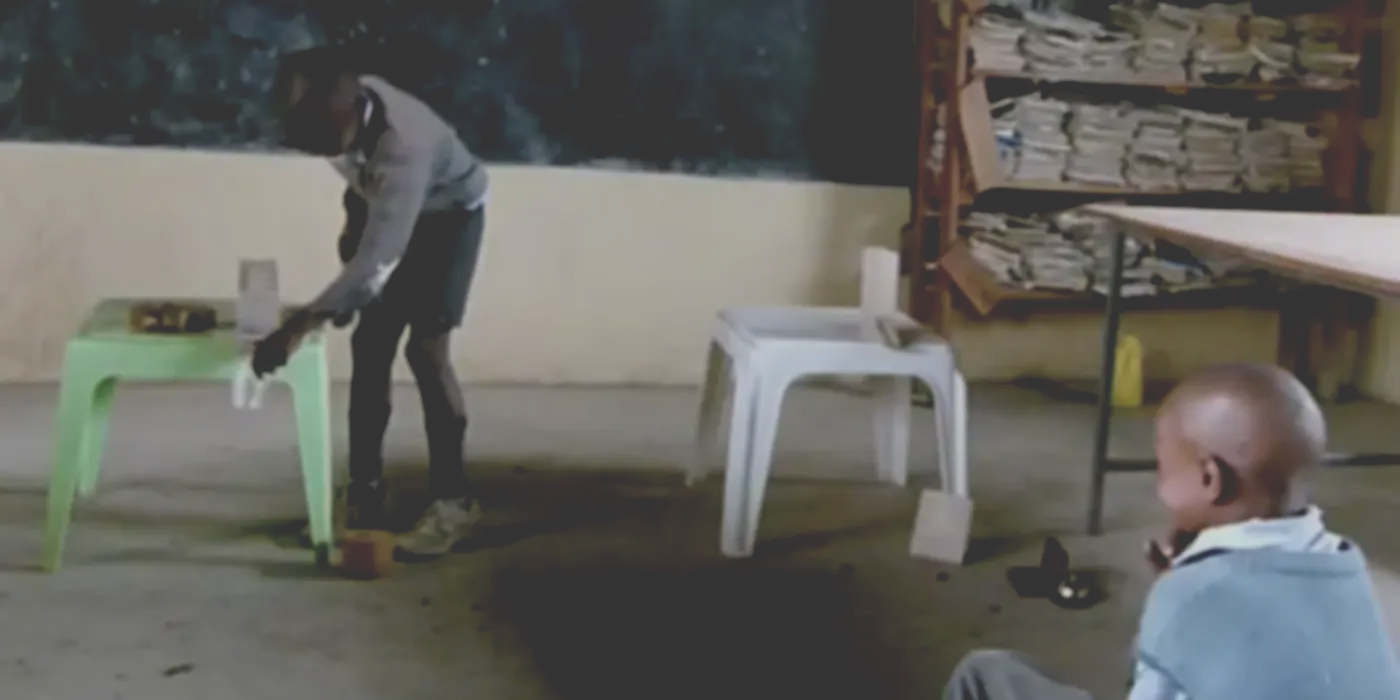
Kids Helping Kids Is Universal - But Cultures Help Differently
A simple game reveals a universal instinct in kids
A simple game reveals a universal instinct in kids

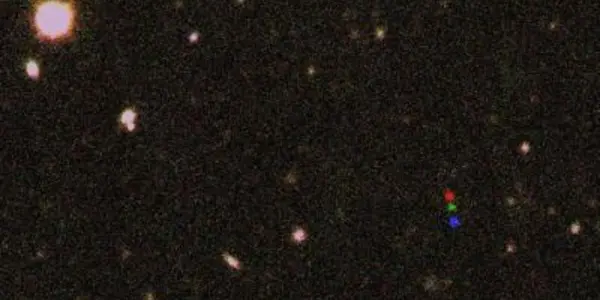
We know the Voyager spacecraft has left the solar system. What no one can really say is when. Boundaries in space are entirely human vanities, there is no 'Now leaving the Local System' sign after Pluto.
Well, it's all so unsettled that two percent of astronomers even decided Pluto wasn't even a planet.
But no matter how we define a planet, the solar system has a new most-distant member, according to new work from Carnegie's Scott Sheppard and Chadwick Trujillo of the Gemini Observatory. In Nature, they report the discovery of the distant dwarf planet 2012 VP113 beyond the known 'edge' of the Solar System.

Natural history, the study of organisms in the environment, is in steep decline and for good reason.
A large part of the modern chemophobia that has undermined science acceptance in America is due to natural history - it became a haven for weak observational studies that got media headlines or, in the case of Rachel Carson and "Silent Spring", a book of anecdotes and observations. Modern scientists prefer experiments rather than observations and so the primary use of natural history has been for 'spray and count' practitioners who need to demonize pesticides or BPA or whatever the scare journalism of the week is.
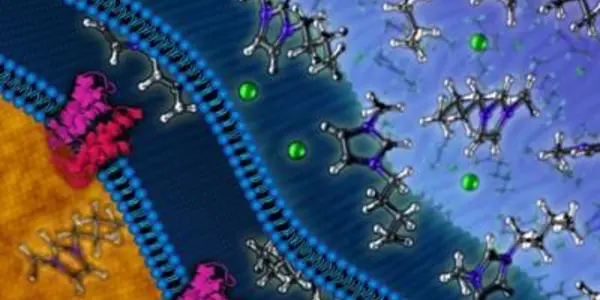
Researchers with the U.S. Department of Energy Joint BioEnergy Institute have identified the genetic origins of a microbial resistance to ionic liquids, based on a pair of genes discovered in a bacterium native to a tropical rainforest in Puerto Rico, and successfully introduced this resistance into a strain of E. coli bacteria.
Yes, it's Frankenfuel, but hopefully anti-science zealots won't make creating an abomination of nature that leads to less fossil fuels.

Astronomers have announced the surprise discovery that the asteroid Chariklo is surrounded by two dense and narrow rings, by far the smallest object to have rings. The rings of Saturn are, of course, one of the most spectacular sights in the sky. Despite many careful searches, no rings had been found around smaller objects orbiting the Sun in the Solar System. Now observations of the distant minor planet (10199) Chariklo as it passed in front of a star have shown that it is surrounded by two fine rings. Minor planet? Yes, the IAU which demoted Pluto has generally made a mess of things and so asteroid and minor planet are interchangeable in common parlance.

Health officials say that holding in your urine when you really have to go can be harmful. But every public pool has signs that prohibit peeing in the pool.
Yet a lot of Olympic swimmers admit to doing it anyway and if you are visiting a public water park and it's not 20 percent urine, count yourself lucky.
In season 5 of Seinfeld, George and Jerry had this very discussion:
George Costanza: It's not good to hold it in. I read that in a medical journal. Jerry: Did the medical journal mention anything about standing in a pool of somebody else's urine?

The popular TV series "CSI" may be fiction but real-life crime scene investigators and forensic scientists have been collecting and analyze evidence to determine what happened at crime scenes almost as long as there have been crime scenes.
There is evidence during the Qin dynasty that the Chinese used handprints as evidence in crimes as far back as 2,200 years ago and by the 1860s the process for lifting fingerprints from evidence was developed. As guns became more common, gunpowder residue became a way to know if a weapon was fired.
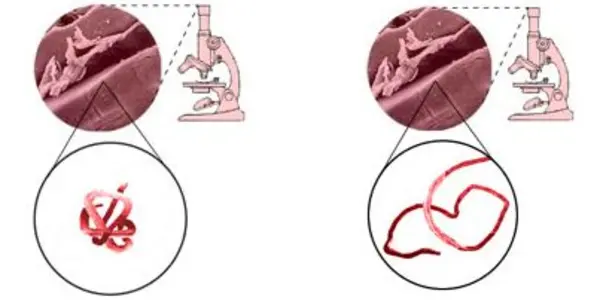
Sausage experts know that the key to perfect meat is simmering in beer first - and in Science 2.0's definitive article on outdoor cooking, The Science Of Grilling, we learned that beer has multiple uses in cuisine, and an article in the Journal of Agricultural and Food Chemistry adds to this important body of work, noting that a beer marinade helps reduce the formation of potentially harmful substances in grilled meats.

A decades old space mystery has been solved by an international team of astronomers who investigated hot, young, white dwarfs — the super-dense remains of Sun-like stars that ran out of fuel and collapsed to about the size of the Earth.
It has been known that many hot white dwarfs atmospheres, essentially of pure hydrogen or pure helium, are contaminated by other elements – like carbon, silicon and iron. What was not known, however, was the origins of these elements, known in astronomical terms as metals.
"The speed at which the goats completed the task at 10 months compared to how long it took them to learn indicates excellent long-term memory," said co-author Dr Elodie Briefer, now based at ETH Zurich.
Before each learning session, some of the goats had the opportunity to watch another goat to demonstrate the task.
Dr Briefer added: "We found that those without a demonstrator were just as fast at learning as those that had seen demonstrations. This shows that goats prefer to learn on their own rather than by watching others."
Doctors make people nervous. Most people don't go unless something is wrong so they are already anxious. Thus, it is no surprise doctors routinely record blood pressure levels that are significantly higher than levels recorded by nurses, according to a a systematic review led by the University of Exeter Medical School.
The results show that that recordings taken by doctors are significantly higher (by 7/4mmHg) than when the same patients are tested by nurses.
Genghis Khan is famous in evolution because a giant chunk of the world carries is DNA. A recent story of brown bears shows that males roam much greater distances than females, and mating is part of the agenda.
Researchers from the University of California, San Diego School of Medicine say occasional use of stimulant drugs, such as cocaine and amphetamines, and prescription drugs such as Adderall have shown up as impaired neuronal activity in the parts of the brain associated with anticipatory functioning among 18- to 24-year-old users.
Among the study's main implications is the possibility of being able to use brain activity patterns as a means of identifying at-risk youth long before they have any obvious outward signs of addictive behaviors.