Kids Helping Kids Is Universal - But Cultures Help Differently
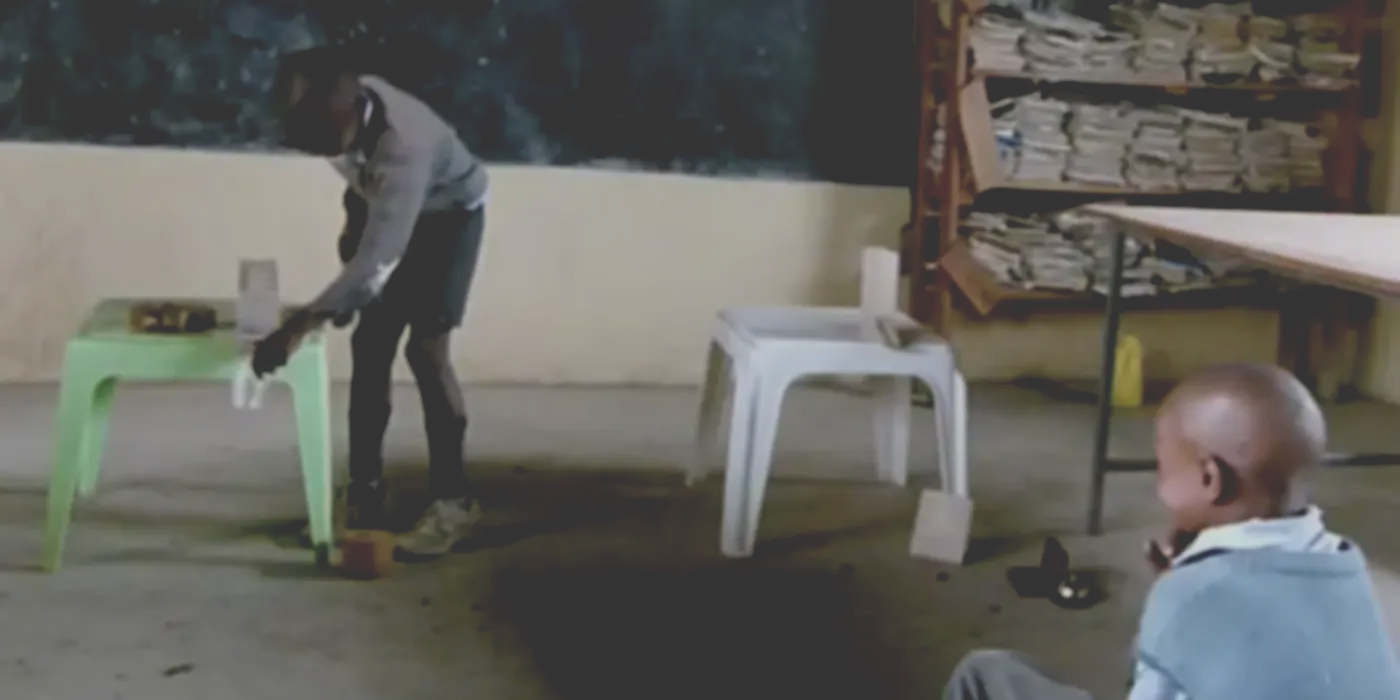
A simple game reveals a universal instinct in kids
A simple game reveals a universal instinct in kids


While instruments an provide an objective measure of earthquake intensity, the intensity of ground motion is often anecdotal. How accurate and reliable are public perceptions?
A new study in Seismological Research Letters suggests that a person's activity at the time of the quake influences their perception of shaking more than their location. So whether a person is at rest or walking plays a greater role in their perception of ground motion than whether they were asleep on the first or sixth floor of a building.
People in motion had the worst perception.
Flocks of birds manage to navigate through difficult environments by individuals having predispositions to favour the left- or right-hand side, according to research published in PLOS Computational Biology this week.
Scientists at The University of Queensland's Queensland Brain Institute (QBI) and the Australian Research Council Centre of Excellence in Vision Science found that budgerigars display individual bias to fly to the left or right. This allows flocks to quickly navigate past obstacles by being able to split and not slow down due to crowding.
Dr Partha Bhagavatula, the study's first author, says:

This news release is available in Portuguese.
Our intestines harbour an astronomical number of bacteria, around 100 times the number of cells in our body, known as the gut microbiota. These bacteria belong to thousands of species that co-exist, interact with each other and are key to our health. While it is clear that species imbalances may result in disease, it is unclear at what pace does each species in the gut evolves, a process that contributes to the chance of a particular innocuous species becoming harmful to the host.
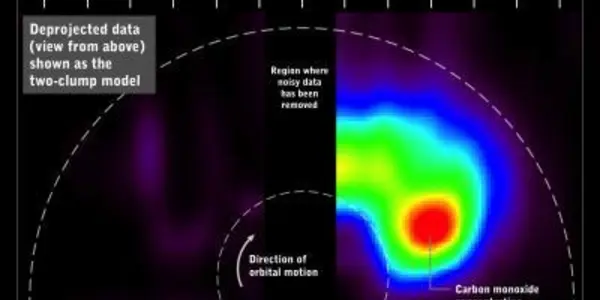
A vast belt of carbon monoxide located at the fringes of the Beta Pictoris system is concentrated in a single clump located about 8 billion miles from the star, or nearly three times the distance between the planet Neptune and our sun.
The total amount of CO observed exceeds 200 million billion tons, equivalent to about one-sixth the mass of Earth's oceans.
The presence of all this gas is interesting because ultraviolet starlight breaks up CO molecules in about 100 years, much faster than the main cloud can complete a single orbit around the star.

People born unable to see are readily capable of learning to perceive the shape of the human body through soundscapes that translate images into sound, according to a new article in Current Biology.
With a little training, soundscapes representing the outlines and silhouettes of bodies cause the brain's visual cortex—and specifically an area dedicated in normally sighted people to processing body shapes—to light up with activity.
With no more than 70 hours of training on average, study participants could recognize the presence of a human form. What's more, they were able to detect the exact posture of the person in the image and imitate it.

Some recent claims have warned about a link between eating red and processed meat and the risk of developing cancer. While vegetarians unleashed their confirmation bias in full force, they were happy to ignore the uncertainties in the evidence.
As often happens, concerns about reports, rather than data, lead to action and there have been called for new nutritional recommendations cautioning people to limit their intake of red and processed meats. A recent review in Meat Science examines the evidence and seeks to improve the foundation for future recommendations on the intake of red meat.
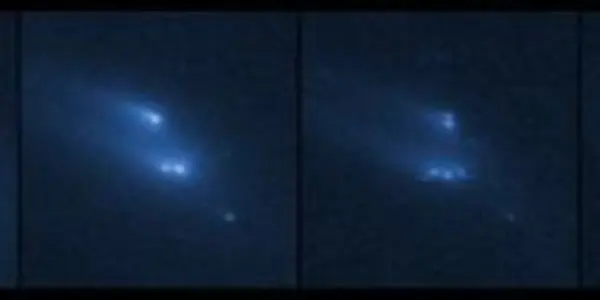
The Hubble Space Telescope has captured a never-before-seen break-up of an asteroid, P/2013 R3, which has fragmented into as many as ten smaller pieces.
Although fragile comet nuclei have been seen to fall apart as they approach the Sun, nothing like the breakup of P/2013 R3 has ever been observed before in the asteroid belt.
In the War On Smart Kids Department, tiger mom mentalities may cause ethnic outcasts, say sociologists.
Smart Asian kids will be shunned for being too smart? of course not. Instead, the scholars argue, the children who don't achieve might be. Sociologists Jennifer Lee of UC Irvine Min Zhou of Nanyang Technological University in Singapore detail in Race and Social Problems their weak observational study based on a small sample to make their headline-grabbing conclusion.
The data was surveys of 82 adult children of Chinese and Vietnamese immigrants, who were randomly selected from the survey of Immigration and Intergenerational Mobility in Metropolitan Los Angeles.

This news release is available in German.

Researchers from North Carolina State University have developed a new technique that uses existing technology to allow researchers and natural resource managers to collect significantly more information on water quality to better inform policy decisions.
"Right now, incomplete or infrequent water quality data can give people an inaccurate picture of what's happening – and making decisions based on inaccurate data can be risky," says Dr. François Birgand, an assistant professor of biological and agricultural engineering at NC State and co-author of a paper describing the work. "Our approach will help people get more detailed data more often, giving them the whole story and allowing them to make informed decisions."

The banana variety Yangambi km5 produces toxic substances that kill the nematode Radopholus similis, a roundworm that infects the root tissue of banana plants – to the frustration of farmers worldwide. The finding bodes well for the Grande Naine, the export banana par excellence, which is very susceptible to the roundworms.

This news release is available in German.
Scientists in Freiburg may have discovered a fundamental aggravating factor in autoimmune diseases. If B-lymphocytes lack the protein PTP1B, the cells will become hyperactive for stimulatory signals and can thus promote an autoimmune attack. This study offers an additional explanation to how B-cells regulate an immune response.