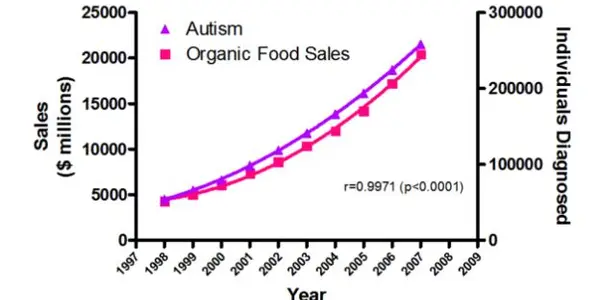
Protein-maxxing is the latest rage in people who learn just enough science to be wrong about nutrition health, but if you adopted a gluten-free diet despite not being celiac, that vaccines cause autism, or swore off carbs, or believe a class 1 carcinogen like wine prevents cancer, there is good news in the condiment space.
Science is embracing the protein craze. Researchers have extracted proteins from Chlorella vulgaris algae and augmented ketchup with the microbiology and in taste tests using ketchup recipes containing one to 13 percent algal protein it tasted like ketchup. Slightly tangy, slightly sweet, up to three percent algae, maybe a little algal but that's an acquired taste, like blended whiskey. Up to about 5 percent, where the change in taste was more pronounced.
If it goes to market it can join vegan seafood, which is so scientific you can 3-D print and deep-fry squid-ring analogues supplemented with this algae.
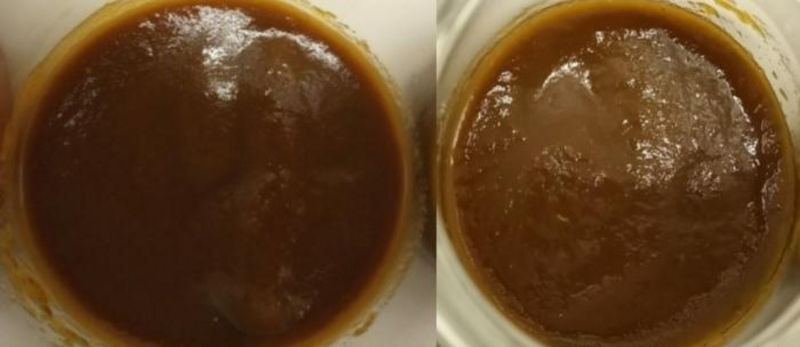
You can hardly taste the science. On the left is the 3% algal protein extracts and the right is 5%. Credit: Adapted from ACS Food Science & Technology 2026, DOI: 10.1021/acsfoodscitech.6c00450
Because tomatoes, sugar, salt, etc. are all natural, as is algae, they can even declare this Organic™. Both the U.S. National Organic Standards Board and the European Organic Certification system classify C. vulgaris as organic, because it was used as a supplement long before the Clinton administration overruled his own USDA scientists and got the federal government into the organic certification racket.(1)
The reason they used algae rather than whey or soy is also environmentally terrific. “Chlorella vulgaris can be cultivated rapidly throughout the year using comparatively little land and freshwater, making it a potentially more resource-efficient protein source than many terrestrial crops,” says co-author Dr. Parise Adadi of the University of Otago in New Zealand.
It brings other marketing benefits, minerals and antioxidants and such,
Citation: Kambele, Jonas; Okechukwu, Queency N.; Adadi, Parise; Adepoju, Feyisayo O.; Kovaleva, Elena G. (2026). Physicochemical, Nutritional, Microbial, Sensory, and Antinutritional Evaluation of Tomato Ketchup Fortified with Chlorella vulgaris Protein Isolates. ACS Publications. Collection. DOI:10.1021/acsfoodscitech.6c00450
NOTE:
(1) They won't use the government sticker, not unless one of the 75 companies the marketing reps on the National Organic Standards Board allow to sell Organic stickers agrees, but there is no science reason they can't just write Organic on the label and then have a fine-print disclaimer the way supplement grifters are allowed when making supernatural claims about their latest potion. No one cares about "USDA Organic" because the country knows it is just a government marketing designation and their panel exempts dozens and dozens of synthetic ingredients that allow the sticker to be kept - because they want the additive but there is no "organic" alternative.