As societies have evolved throughout history, so have morals, concerns and fears. Monsters and scary stories erupt from what society currently fears, so society has shaped the evolution of the scary story and we can see that progression throughout history. The presentation of monsters in science fiction and horror, as well as the contemplation of their creation, are also visions of possible futures. The way we view human nature affects the way we conceive of monsters.
A monster is generally a term used to describe what one finds loathsome, terrifying, or dangerous and is applied when dealing with either imaginary creatures or hyperbole about other people. Defined by the Merriam-Webster Dictionary, a monster is one who deviates from normal or acceptable behavior or character, a threatening force, or an animal of strange or terrifying shape. The word originates from the ancient Latin monstrum, meaning "omen", from the root of monere ("to warn") but also meaning "prodigy" or "miracle".
Typical myths, legends and monsters we've seen stories of in recent history: ghosts, mad scientists, vampires, giant snakes, zombies, clowns, murderers, zombies, sharks, giant squid, dolls, super animals, leprechauns, a Loch Ness monster, Godzilla (and a baby Godzilla), chupacabra, spiders, aliens, Bigfoot, dragons, dinosaurs, mummies, gross deformities, terrorists, serial killers, radiation, abnormalities, confined spaces, monsters in the darkness. And that's in just one episode of Charmed.

These stories prey on common phobias:
• Necrophilia- Fear of death.
• Acrophobia- Fear of heights.
• Claustrophobia- Fear of enclosed spaces.
• Agrophobia- Fear for open spaces.
• Autophobia- Fear of being alone.
• Socialphobia- Fear of people.
• Nyctophobia- Fear of the Dark
• Arachnophobia- Fear of Spiders.
• Spectrophobia/Phasmophobia- Fear of ghosts.
• Xenophobia- Fear of strangers or the unknown.
• Misophobia- Fear of Germs.
Theoretical possible causes of our fears:
17th Century -Witches: Most famously in the Salem Witchcraft Trials of 1692, when nineteen men and women, all having been convicted of witchcraft, were carted to Gallows Hill, a barren slope near Salem Village, for hanging.
18th Century -Vampires: The original legends of Vampires started in Hungary and Romania around the early 16th century. Travelers in Eastern Europe reported encounters with Vampires, and these reports spread through much of Europe, gradually becoming accepted into the states, and the fear of vampires began.
19th Century - Science. The Invisible Man by H.G. Wells, the Strange Case of Dr Jekyll and Mr Hyde by Robert Louis Stevenson, Murders In The Rue Morgue. You name it and the 19th century had it. The 19th century saw science as both savior and prophet of doom. But none of those could compare to the two 19th century creations that would launch the monster craze of the 20th - Frankenstein And Dracula.
But before that could happen the world would transform from a literature to cinema, and so would its monsters.
1920s - Movie versions of The Hunchback of Notre Dame, Dr. Jekyll and Mr. Hyde and Nosferatu were setting the stage for the Golden Age of movie monsters.
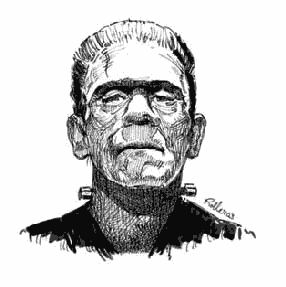
But that wasn't all. The Mummy, The Ghoul, White Zombie, The Invisible Man, Dr. Jekyll and Mr. Hyde - every monster of the 19th century was back and better than ever in the 1930s.
1940s - You'd think there were none, since we had Nazis, but they were all trying to recapture the magic of the 1930s. So we had Sons, Brides and whatever else related to monsters of the 1930s.
1950s -Terror from beyond: By 1950 a lot had changed. Man had been able to do a lot more things in real life than movies of the 1930s could have imagined. Nothing could top concentration camps and atomic bombs. But atomic bombs had a last effect - radiation - and no one knew what it could do. Plus, we were entering a space race. As usual, books led the way. With the advent of modern science fiction, UFO sightings became more and more frequent and paranoid fantasies of invasion were a staple of cinema. If we weren't battling giant insects or hungry Blobs, we could fight off Invaders from Mars.
By the end of the 1950s, parodies started to appear, like I Was a Teenage Frankenstein. But classic horror was not done yet - to retain its shock value, it just had to get bloodier. Roger Corman and Hammer Films would see to that.
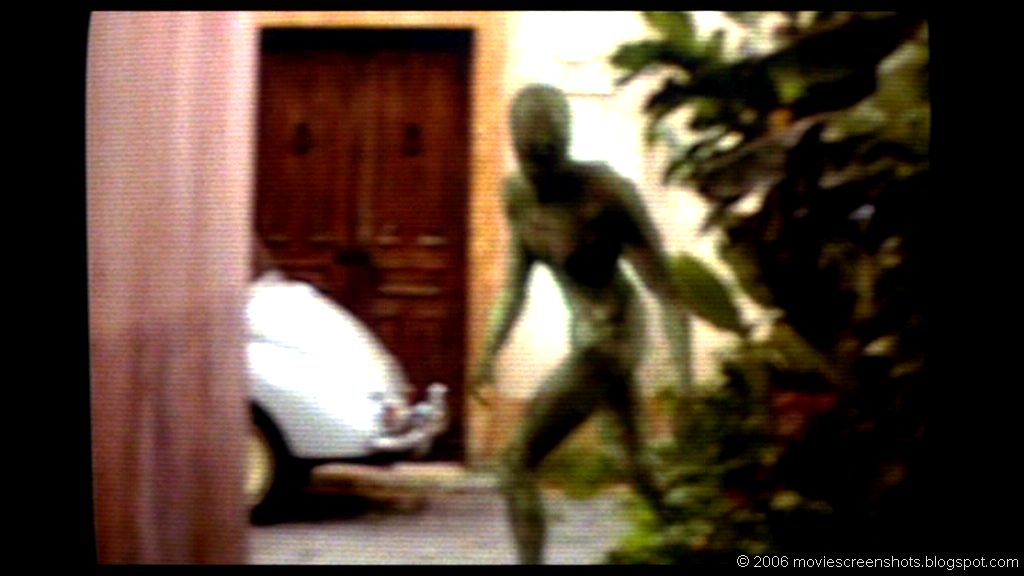
A chilling scene from the movie Signs where an alien invader is caught on film.
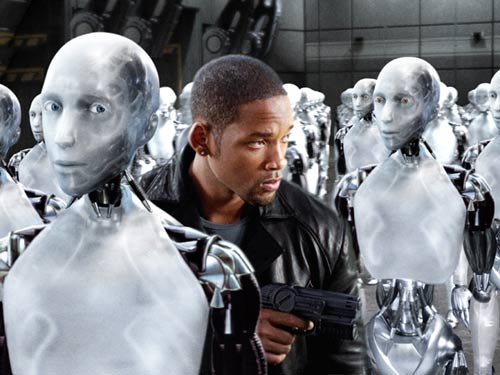
1955-Robots: The fear of man-made creation of robots is similar to that of Frankenstein monster. People were new to technology and were afraid of what was to come from these creations. Movies such as The Forbidden Planet (1956) and Robot Monster (1953) were the first to present a cultural connection between Americans and their acceptance of robotic advantages. Today we see movies such as Red Planet (2000) and I, Robot (2004) which features robots betraying their human creators.
1970-Overpopulation: With the Baby Boomer generation after World War II, fears of overpopulation began spreading throughout the country. Society began fearing the possibility of losing resources and hunger. Paul Ehrlich’s book The Population Bomb, published in 1968, warned of worldwide shortages in food and natural resources. These sort of fears were reflected in films such as Soylent Green (1973) where the need for sustainable food sources led to drastic (and inhumane) measures.
1980- Terrorism, Communism, and Russia: American's realism of fighting a mindless enemy sponsored movies which incorporated mindless drones. Enemies who blindly follow orders and who have no emotional connections pushed a trend towards monsters who behaved the same. Invasion of the Body Snatchers (1978) duplicated the image of the communist enemy by supplying monsters that were immune to feelings.
1990-Genetic Creations: Whether it be the fear of humans as "God-like" producers of life, or fear of the byproducts, genetics were a fearful topic for many in the 1990s. The Hulk was a popular movie as were Jurassic Park(1993), Gatacca(1993), and Gremlins. The ability of creating or genetically altering animals, like in Jurassic Park, frightened society. This possibility should not exist say many, but with technology anything is possible, and in Jurassic Park, it was used to re-create the dinosaurs, leading the the near extinction of a few humans. We fear a loss of control almost as much as we fear being devoured, both of these are overwhelming in this time period.

Pre-2000 Era-Y2K, Technophobes: Society began fearing technological advances when the era of Y2K approached. Rumors of technology coming alive spread There was a symbolic death at the hands of machines, and many are afraid of helplessness and a loss of control. The Matrix was a popular movie that represented technological fear at that time.
2000-Terrorism and Fear of the Unknown: With the Terrorist attacks of 9/11 a trend started to emerge in the film industry. Unknown terrorists as well as enemies hiding among people presented a major fear of the time. Many classic movies were remade at this time, and these ideals represented themselves in films like The Others.
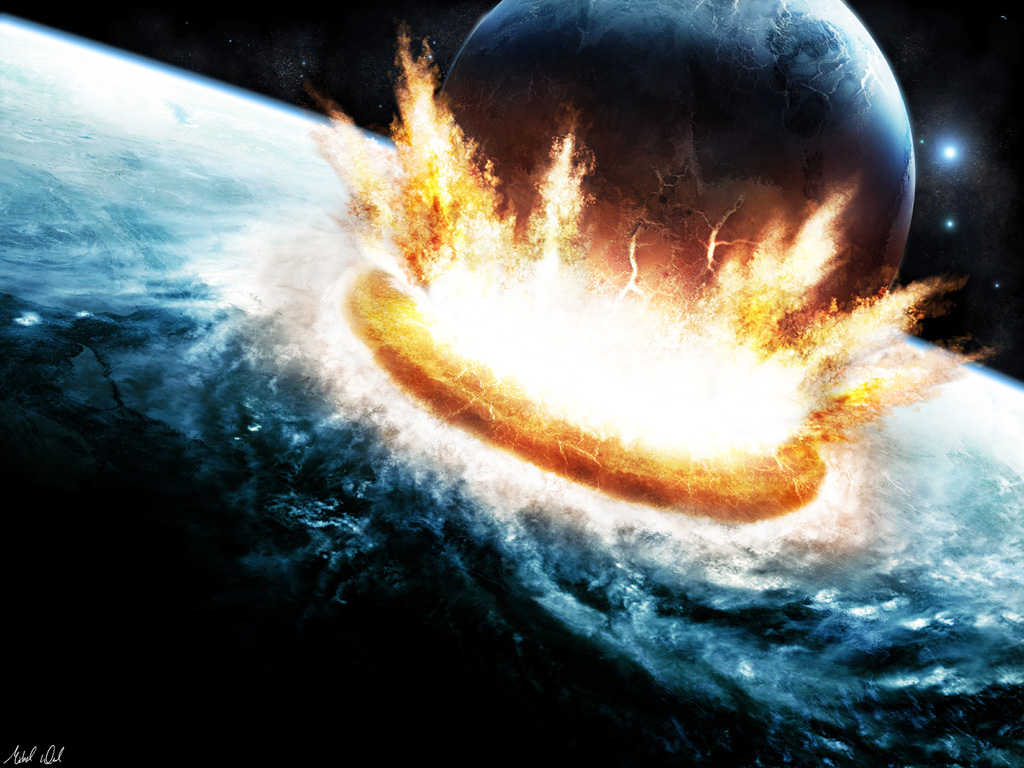
2121- Apocalypse: Humans are existentially wired with a valid fear of death; we know that our time is temporary and being so, we accept that eventually we will expire. Not to say that all humans want to accept that fact, but we’re more fearful for how death will present itself than the actual realism of dying. Movies like Armageddon (1998) and Deep Impact (1998) occurred in result of human fear of the end of the world.
As time passes and different circumstances present themselves, society presents monsters as the visible connection to that fear. By studying monsters we get a deeper understanding of the psycodynamics of individuals within a cultural context. We're drawn to what we're afraid of, and studying the meanings behind monsters leads to understanding of the culture that conjured them.