Kids Helping Kids Is Universal - But Cultures Help Differently
A simple game reveals a universal instinct in kids
A simple game reveals a universal instinct in kids

There's good news and there's bad news to deliver. Which do you want to give first? What if you are getting it? The best strategy depends on whether you are the giver or receiver of the bad news, and if the news-giver wants the receiver to act on the information, according to a new paper.
The process of giving or getting bad news is difficult for most people, particularly when news-givers feel unsure about how to proceed with the conversation, psychologists Dr. Angela M. Legg and Professor Kate Sweeny note. "The difficulty of delivering bad news has inspired extensive popular media articles that prescribe 'best' practices for giving bad news, but these prescriptions remain largely anecdotal rather than empirically based."

Researchers in a new paper say that one way to gauge the extent of prescription opioid pain reliever abuse is to count the number of health care providers.
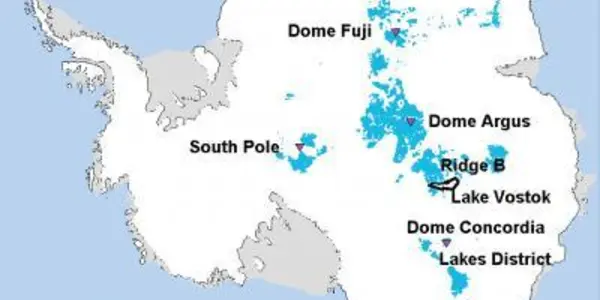
Climate understanding of the past is based primarily on ice cores. By studying information about Earth's climate and greenhouse gases in past, scientists can understand better how temperature responds to changes in greenhouse-gas concentrations in the atmosphere and make better predictions about how climate will change in the future.
Researcher have now identified regions in Antarctica they say could store information from as far back as 1.5 million years, almost twice as old as the oldest ice core drilled to date.
If you have wondered why a disease like anorexia seems to impact primarily middle class white girls, a new paper in JAMA Pediatrics will shed some new light on the issue.
A new paper analyzed survey responses of 5,527 teenage males from across the U.S.and found that 17.9% of these young men are suffering under the yoke of female body expectations and are extremely concerned about their weight and physique. These boys were found to be more likely to start engaging in risky behaviors, including drug use and frequent binge drinking.
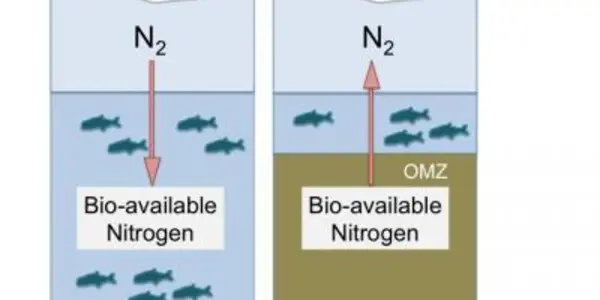
Every organism needs nitrogen to survive and grow and many organisms do not have the ability to obtain nitrogen from molecular nitrogen (N2), the major component in the atmosphere because they lack the nitrogen fixation pathway and have to rely on supply of nitrogen that has been fixed by others.
The availability of fixed nitrogen, in the form of ammonium, nitrite and nitrate, consequently often limits primary production in the environment. That's one of the reasons why many fertilizers are rich in fixed nitrogen.
While politics is not yet post-racial - every criticism of the politics of a minority member of government is labeled racism - dating seems to be, according to UC San Diego sociologist Kevin Lewis after looking at patterns of 126,134 US users of the dating site OkCupid.com

A rudimentary form of life,
Haloferax volcanii, part of the family of single-celled organisms called archaea that until recently were thought to be a type of bacteria, is found in some of the harshest environments on earth. Now researchers have determined it is able to sidestep normal replication processes and reproduce by the back door.

A new computer model says it can predict, by census block group, where burglaries are likely to occur.
Using the model developed by a University of California Riverside sociologist Prof. Robert Nash Parker, the Indio police department in souther California has developed interventions to address the problem, and can better anticipate hot spots of criminal activity and deploy officers accordingly. They say they have had an 8 percent decline in thefts in the first nine months of 2013 - too small a variation to attribute to just the model but it certainly hasn't hurt.
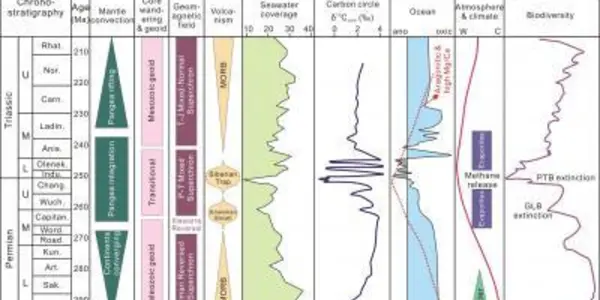
Supercontinents have formed and broken apart throughout the geological history of Earth (see Rodinia) and about 300 million years ago, the Pangaea supercontinent was cobbled together.
While we generally attribute some instances of animal and plants existence in isolated areas to splitting continents, researchers in a new paper have instead linked Pangaea being formed to the largest mass extinction known, the Permian extinction, when up to 95% of species, 82% of genera and over 50% of families became extinct.
A research study headed by Victoria Leavitt, Ph.D. and James Sumowski, Ph.D., of Kessler Foundation, provides the first evidence for beneficial effects of aerobic exercise.
Hippocampal atrophy seen in MS is linked to the memory deficits that affect approximately 50% of individuals with MS. Despite the prevalence of this disabling symptom, there are no effective pharmacological or behavioral treatments.

Many people know about ultrasound because of its popularity in prenatal imaging - grainy, grey outlines of babies made using reflected sound waves. A new 'acoustic diode' could dramatically improve future ultrasound images by changing the way those sound waves are transmitted.

A new paper in Cell Reports finds that it doesn't take a lot of genetic changes to spur the evolution of new species—even if the original populations are still in contact and exchanging genes.
Once evolutionary divergence happens, though, it evolves rapidly, ultimately leading to fully genetically isolated species.
To reveal genetic differences critical for speciation,the researchers analyzed the genomes of two closely related butterfly species, Heliconius cydno and H. pachinus, which only recently diverged. Occupying similar ecological habitats and able to interbreed, these butterfly species still undergo a small amount of genetic exchange.