You Feel Colder As You Age: The Science Reason Why
Older people report feeling colder, enough that it is clearly happening, but why has been a mystery. Until now.
Older people report feeling colder, enough that it is clearly happening, but why has been a mystery. Until now.


Since their invention, antibiotics have made it possible to cure lethal bacterial infections but in recent years the efficacy of antibiotics has been drastically reduced due to overuse and resulting bacterial resistance.
Today, bacteria resistant to nearly all known antibiotics are prevalent in many parts of the world and in Europe alone more than 25,000 people die each year from infections caused by multi-resistant bacteria.
Researchers from
University of Copenhagen and the University of British Columbia
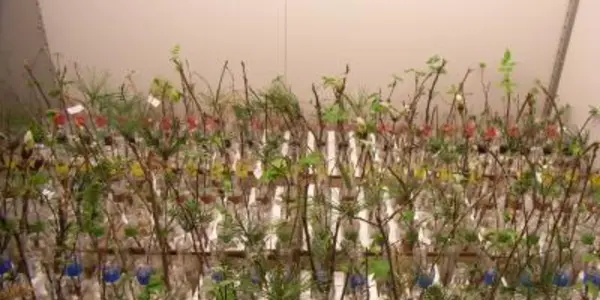
People who live in regions where there is a real change of seasons know that plants go 'dormant' in the winter and then spring to life again as the weather warms.
But a new study found a counter-intuitive effect; instead of a colder winter causing trees to hold off growth for a longer period of time, that happens during a warmer winter, according to an examination of 36 tree and shrub species. The colder the winter, the earlier native plants begin to grow again.
If global warming occurs and we get warmer winters, the spring development phase for typical forest trees might start later and later, which gives an advantage to shrubs and invasive trees that aren't as impacted by the cold.
A new psychology paper has found that, ethically, we get worn down over the course of a day. Our ability to avoid cheating or lying gets significantly reduced, making us more likely to be dishonest in the afternoon than in the morning, according to the authors - a conclusion which also defaults to the idea that we are biologically inclined to be cheat.

It's not correlation-causation but a new study has found that, among those with mental illnesses, left-handers are far more likely to suffer from psychotic disorders such as schizophrenia.
Scientists and psychologists have long been interested in handedness because the brain develops asymmetrically and some cognitive processes develop from the left or right side. Since hand dominance is a convenient measure it has been a focus for decades, with some research finding a great prevalence of psychosis in left-handed people.

Though the largest Sperm whales weigh up to 50 tons and and the smallest bat barely reaches a gram, they share something in common.
They both use echolocation, biological sonar, for hunting.
Echolocation systems are one of nature's most successful specializations. About 1,100 species of bats and roughly 80 species of toothed whales use the technique – that's 25% of all mammals. But why did such different animals as whales and bats evolve the same technique? It isn't biological kinship, bats and whales are no closer related to each other than all the other mammals that descended from the land vertebrates around 200 million years ago.

Thermal infrared (IR) energy is emitted from all things which have a temperature greater than absolute zero - so, basically all things worth looking at.
Though mechanical detection of IR radiation has been possible since Samuel Pierpont Langley invented the bolometer in 1880, human eyes are primarily sensitive to shorter wavelength visible light and are unable to detect or differentiate between the longer-wavelength thermal IR "signatures" given off both by living beings and inanimate objects.
29% of large clinical trials remain unpublished five years after completion and, of those, 78% have no results publicly available, according to a paper published yesterday.
This means that an estimated 250,000 people have been exposed to the risks of trial participation without the societal benefits that accompany the dissemination of their results, worry the authors. Of course, the participants all volunteered for the trials and had informed consent and many were even paid so claiming they were 'exposed to the risks' is emotional verbage designed to guide the public into one conclusion: all trial results should be published.
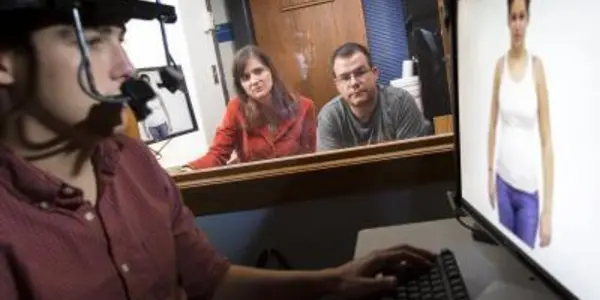
Women can tell when someone's eyes aren't on her face and are instead looking at her body - because it happens all of the time. Men do it ... and so do other women. At least when they are in college.
The oft-rumored "objectifying gaze" is not just anecdotal evidence, say psychologists who set out to document the nature of roving eyes when it came to women's bodies. A new study employed eyetracking technology to map the visual behavior of college aged men and women as they viewed images of different females with different body types.

Humpback dolphin swimming in the waters off northern Australia are a new species previously unknown to science, according to a team of researchers
To determine the number of distinct species in the family of humpback dolphins (animals named for a peculiar hump just below the dorsal fin), the research team examined the evolutionary history of this family of marine mammals using both physical features and genetic data. While the Atlantic humpback dolphin is a recognized species, this work provides the best evidence to date to split the Indo-Pacific humpback dolphin into three species, one of which is completely new to science.
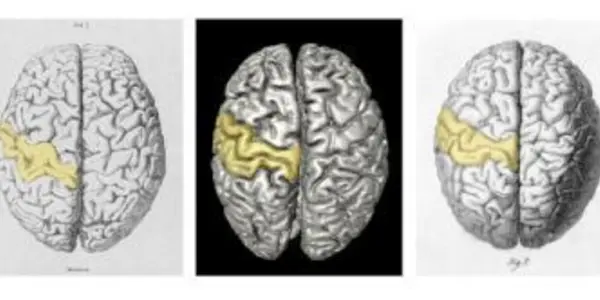
In 1855, a specimen of the brain of mathematician Carl Friedrich Gauss was taken and preserved. But the over 150-year-old slice of his brain, which scientists had long been examining in the belief that it was Gauss's brain, turns out to not be his brain at all.
Instead, the preserved specimens of the brains of Gauss and Göttingen physician Conrad Heinrich Fuchs, a medical scholar and founder of the University of Göttingen's anatomical pathology collection, were switched, probably soon after the death of both men in 1855, says Renate Schweizer, a neuroscientist at Biomedizinische NMR Forschungs GmbH at the Max Planck Institute for Biophysical Chemistry.
After oxygen in the atmosphere and ocean rose about 600 million years ago, earth got the first proliferation of animal life. Between then and now, numerous short lived biotic events took place when oxygen concentrations in the ocean dipped episodically.
Engaging in some Do It Yourself projects or gardening can cut the risk of a heart attack/stroke and prolong life by as much as 30 per cent among the 60+ age group, indicates a new paper.
They might seem like routine activities but they are as good as exercise, and more fun, which is ideal for older people who don't often do that much formal exercise, according to the scholars who based their findings on almost 4,000 sixty-year-olds in Stockholm, Sweden, who had their cardiovascular health tracked for around 12 years. At the start of the study, participants took part in a health check, which included information on lifestyle, such as diet, smoking, and alcohol intake, and how physically active they were.