Kids Helping Kids Is Universal - But Cultures Help Differently
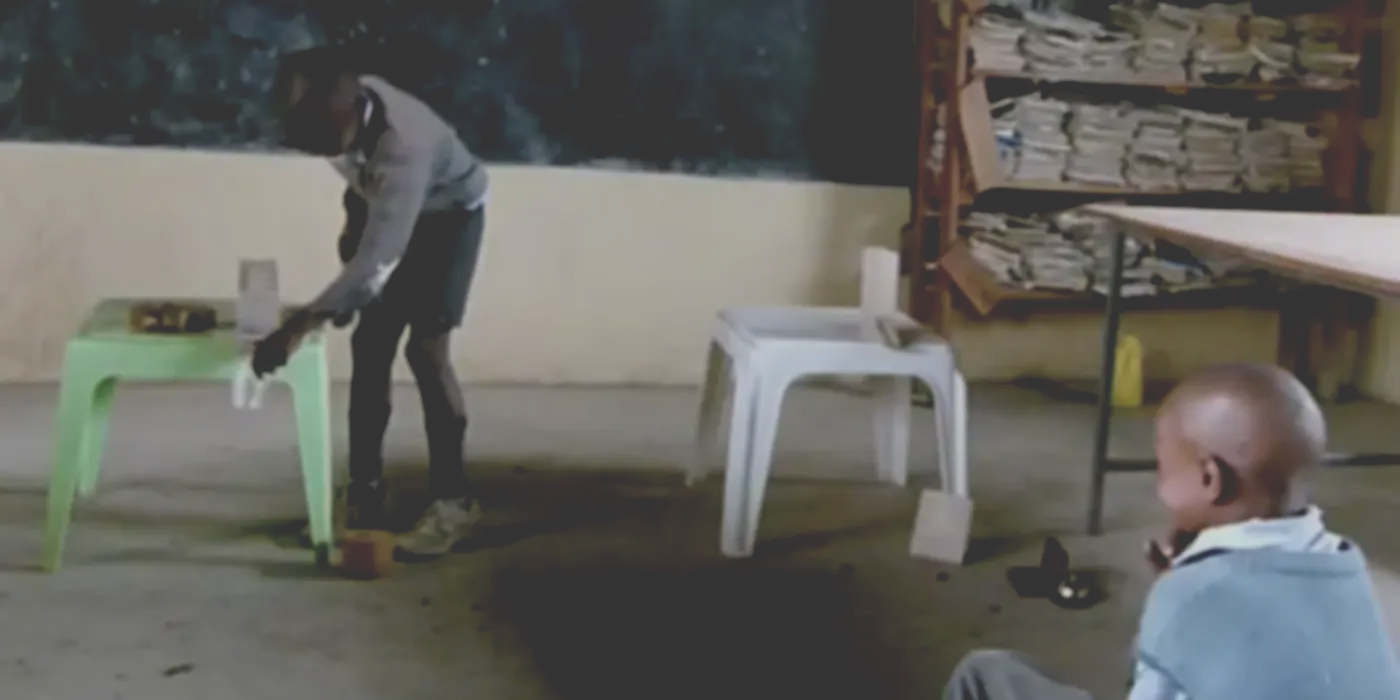
A simple game reveals a universal instinct in kids
A simple game reveals a universal instinct in kids


How do you allocate lifesaving drugs when there aren't enough to go around?
83 percent of cancer doctors surveyed say that they've faced oncology drug shortages, and of those, nearly all say that their patients' treatment has been impacted, according to results presented today at the 2013 annual meeting of the American Society of Clinical Oncology (Abstract #CRA6510).
The shortages are most profound among drugs to treat pediatric, gastrointestinal and blood cancers and have left physicians surveyed unable to prescribe standard chemotherapies for a range of cancers.

Researchers behind a new paper say women's brains appear to be hard-wired to respond to the cries of a hungry infant.They asked men and women to let their minds wander, then played a recording of white noise interspersed with the sounds of an infant crying. Brain scans showed that, in the women, patterns of brain activity abruptly switched to an attentive mode when they heard the infant cries, whereas the men's brains remained in the resting state.
Mouse studies have determined that a small molecule called natriuretic polypeptide b (Nppb) released in the spinal cord triggers a process that is later experienced in the brain as the sensation of itch. Nppb streams ahead and selectively plugs into a specific nerve cell in the spinal cord, which sends the signal onward through the central nervous system. When Nppb or its nerve cell was removed, mice stopped scratching at a broad array of itch-inducing substances. The signal wasn’t going through.
Young entrepreneurs tackling hard problems and billion dollar markets took top prizes at the First Look West (FLoW) regional finals competition with technologies that recover waste energy from energy servers powered by fuel cells, mobile phone apps for tracking home energy use and devices for improving solar panel efficiencies. At an awards celebration held at the University of Southern California on May 7, Pyro-E, Chai Energy and Dragonfly shared $160,000 in prize money and start-up packages that include face time with top investors and legal support.

Scientists have a new theory as to why a woman’s fertility declines after her mid-30s: As women age, their egg cells become riddled with DNA damage and die off because their DNA repair systems wear out. Defects in one of the DNA repair genes, BRCA1, have long been linked with breast cancer and now also appear to cause early menopause.
Researchers have reversed behavioral and brain abnormalities in adult mice that resemble schizophrenia by restoring normal expression to a suspect gene, Neuregulin 1, that is over-expressed in humans with the illness. Targeting Neuregulin 1, which makes a protein important for brain development, may hold promise for treating at least some patients with the brain disorder, say the scientists.Like patients with schizophrenia, adult mice biogenetically-engineered to have higher Neuregulin 1 levels showed reduced activity of the brain messenger chemicals glutamate and GABA. The mice also showed behaviors related to aspects of the human illness. For example, they interacted less with other animals and faltered on thinking tasks.
When a magnet is divided, a new magnet with north and south poles is always created. A monopole, i.e. a north pole without a south pole or a south pole without a north pole has not yet been discovered but in Science researchers describe the discovery of new type of artificial monopole in a solid, i.e. particles, which have similar characteristics to monopoles, but which only exist within materials.
Can climate change be mitigated without hurting the quality of life of people? Food and basic necessities are met before culture and other aspects. Thinking among environmentalists is that if agriculture intensifies in a particular region, it would have an impact on the water sector due to irrigation use, meaning less water for domestic, industrial or environmental needs. Knowing that, they believe that by setting variables such as temperature, rainfall or irrigation’s efficiency, it is possible to predict how maize yields will be affected by these changes and have created a new projection tool.
If Martians wanted to vacation some place exotic, they might pick the Redwood forests of the Pacific, yet if they wanted to feel like they were at home, but with better hotels, a researcher has determined the best analogue of Mars.Australia.Associate Professor Patrice F. Rey (University of Sydney) has recently outlined attributes suggesting that the Australian red center could be a close analogue for the surface of the red planet – and how this unusual weathering has led to the formation of Australia’s opals.
The U.S. Department of Energy has approved a Small Business Innovative Research (SBIR) Phase 1 grant proposal for $149,900 to study the differential data from retrofitting a concentrated solar thermal array to the existing geothermal electrical generation system currently installed at the Oregon Institute of Technology (OIT) in Klamath Falls Oregon.Marc Rappaport of Rappaport Energy Consulting LLC, Ridgefield, WA wrote the proposal with the assistance of Don Jeter, P.E. of Eagle Engineering&Testing Services of Bellingham, WA, and Tanya Boyd of the Oregon Institute of Technology, Geo Heat Center.

Some groups insist that eating meat is bad for the environment. They even invented a bogus metric, it takes a gallon of gas to make a pound of beef, to show the environmental harm of not being a vegetarian.
It's not easy traveling to play 81 games a year across multiple time zones and the major league baseball schedule, 162 games, is the most grueling in professional sports.
Two papers outline how sleep and fatigue are key issues in performance, which makes sense. Fatigue may impair strike-zone judgment during the 162 game Major League Baseball season and a player's sleepiness can predict his longevity in the league, the authors conclude.
One study found that MLB players' strike-zone judgment was worse in September than in April in 24 of 30 teams. When averaged across all teams, strike-zone judgment was significantly worse in September compared with April. The statistical model demonstrated strong predictive value through the season.