You Feel Colder As You Age: The Science Reason Why
Older people report feeling colder, enough that it is clearly happening, but why has been a mystery. Until now.
Older people report feeling colder, enough that it is clearly happening, but why has been a mystery. Until now.


Are 'smart' objects the future?
People certainly like so-called smart phones, and almost every home in America has a computer, and making everything 'smart' might be a future trend, say humanities scholars at Penn State University.
As sensors and computers increasingly become smaller and cheaper, smart objects will appear in more homes and offices and not be hidden or shielded from interacting with people, according to the researchers. For example, smart refrigerators could talk or send tweets to signal when certain food items are almost out, or when expiration dates are nearing.

Imagine being the project scientist for a NASA experiment and getting an email telling you that a 3,100 lb. defunct spy satellite dating back to the Cold War might crash into your baby?
That's what happened to Julie McEnery of NASA's Fermi Gamma-ray Space Telescope, which maps the highest-energy light in the universe, a year ago. When she checked her email on March 29th, 2012, she had an automatically generated report from NASA's Robotic Conjunction Assessment Risk Analysis (CARA) saying that in about a week Fermi might be hit by Cosmos 1805.
In the modern regulatory environment, start-ups and smaller companies tend to be less well-known. The costs are increasingly high and its hard to get venture capital funding without knowing how long it can take to clear government hurdles so if things look promising, companies are acquired instead.
But some are sticking it out and they are trying to gain momentum as they advance their technologies and produce significant clinical data on the road to eventual commercialization of their technologies.
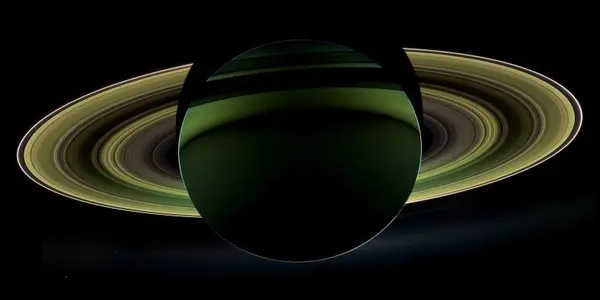
As planets age the general rule is that they become darker and cooler - but Saturn is an exception. Why it looks so young for its age has been a space science topic since the late 1960s but a paper in Nature Geoscience says it has some answers.
Elsevier and the Integrated Earth Data Applications facility at Columbia University have announced a competition to improve preservation of and access to research data in the earth sciences.
Members of the international geosciences community who have worked on preservation and improved access of research data, particularly dark data, can share their work and advise on ways that these data are being processed, stored and used.
Brown and white fat cells in a living organism can be converted from one cell type to the other, according to a study using mice as a model organism.
A drug developed by Gilead Sciences and tested in an animal model at the Texas Biomedical Research Institute in San Antonio suppresses hepatitis B virus infection by stimulating the immune system and inducing loss of infected cells.

Cancer cells that can break out of a tumor and invade other organs are more aggressive and nimble than nonmalignant cells. Such cells exert greater force on their environment and can more easily maneuver small spaces, researchers write, due to a systematic comparison of metastatic breast-cancer cells to healthy breast cells which revealed dramatic differences between the two cell lines in their mechanics, migration, oxygen response, protein production and ability to stick to surfaces.

“Hark! The Herald Angels Sing” is the beginning to one of the world's most popular hymns, yet while millions of people can oddly identify Nicki Minaj, almost no one knows the name of Charles Wesley or his Hymns and Sacred Poems. “Hark! The Herald Angels Sing” became regarded as one of the Great Four Anglican Hymns and was published as number 403 in "The Church Hymn Book". It has been recorded by everyone from Frank Sinatra to the kids on "Charlie Brown"(1) and now the private letters of the composer have been edited by Dr. Gareth Lloyd of The University of Manchester’s John Rylands Library and Professor Kenneth Newport of Liverpool Hope University and published by Oxford University Press. They provide a rare glimpse into both the man and the birth of Methodism.
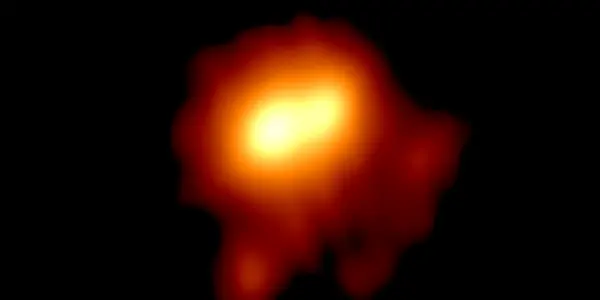
Betelgeuse is visible to nighttime viewers as the bright, red star on the shoulder of Orion the Hunter. The star itself is huge, 1,000 times larger than our Sun, but from 650 light years away it is a tiny dot in the sky even though it is one of the nearest red supergiants to Earth.
Getting into the details of the star and the region around it requires a combination of different telescopes and astronomers have released a new image of the outer atmosphere of Betelgeuse
taken by the e-MERLIN radio telescope array operated from the Jodrell Bank Observatory in Cheshire
and it reveals the detailed structure of the matter being thrown off the star.
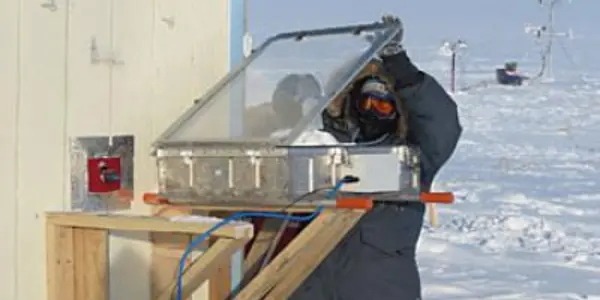
The climate just got a little more complex.
Researchers have found that sunlit snow is a major source of atmospheric bromine in the Arctic and that the surface snowpack above Arctic sea ice plays a previously unknown role in the bromine cycle. Bromine is key to chemical reactions that purge pollutants and destroy ozone.
This means, concludes researchers, that loss of sea ice, which been occurring more rapidly in recent years, has previously unknown and extremely disruptive effects in the balance of atmospheric chemistry in high latitudes. The team's findings suggest the rapidly changing Arctic climate, where surface temperatures are rising three times faster than the global average, could dramatically change its atmospheric chemistry.
A first-ever vaccine for gut bacteria common in autistic children may also help control some autism symptoms, according to a new paper in Vaccine.
Autism diagnoses have increased almost sixfold over the past 20 years, and it is unclear why. Some point to environmental factors while others have focused on the human gut. Some researchers believe toxins and/or metabolites produced by gut bacteria, including C. bolteae, may be associated with symptoms and severity of autism, especially regressive autism.