You Feel Colder As You Age: The Science Reason Why
Older people report feeling colder, enough that it is clearly happening, but why has been a mystery. Until now.
Older people report feeling colder, enough that it is clearly happening, but why has been a mystery. Until now.

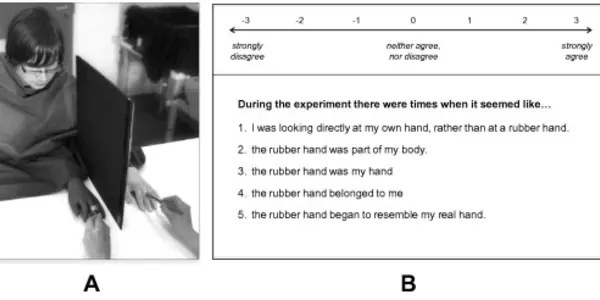
The Rubber Hand illusion never fails to teach us new things - not just about neuroscience, but also about culture.
If you are not familiar with the Rubber Hand illusion, it shows that the combination of seeing a touch on a rubber hand and feeing a touch on your own creates the illusion that the fake hand is now part of your body. In a new paper, scholars did that; they asked participants to look at a fake hand being touched, while at the same time the experimenter touched the participants' own hand, hidden out of view.

Between 1994 and 2008, Canada had 66,716 hospital admissions for cycling accidents. 30% of those were head injuries. Cyclists are vulnerable road users and head injuries account for 75% of cycling-related deaths. It's a dangerous way to travel and so the debate has long been whether or not helmet legislation makes any difference in injuries.
During that time, there was a substantial and consistent fall in the rate of hospital admissions for cycling related head injuries - and reductions were greatest in provinces with helmet legislation - but that trend had been happening before the law was enacted.
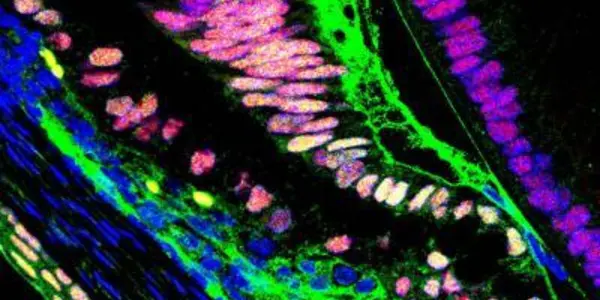
A new study uses mouse genetics to demonstrate how a handful of workhorse signaling pathways interact to construct multiple structures that comprise the vertebrate body and how crosstalk between two of those pathways - those governed by proteins known as Notch and BMP (for Bone Morphogenetic Protein) receptors - occurs over and over in processes as diverse as forming a tooth, sculpting a heart valve and building a brain.
One Notch family protein, Notch2, shapes an eye structure known as the ciliary body (CB), most likely by ensuring that BMP signals remain loud and clear. Understanding CB construction is critical, as excessive pressure is one risk factor for glaucoma.
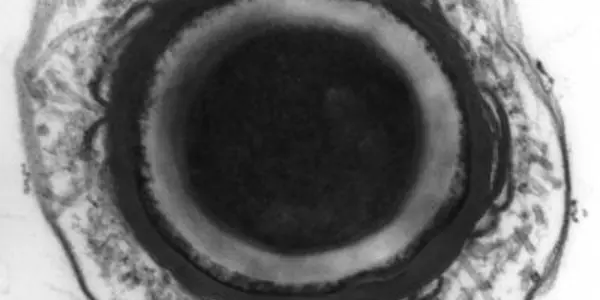
The toxin that causes botulism is the most potent that we know of - just 1/1,000th the weight of a grain of salt can be fatal, which is why so much effort has been put into keeping Clostridium botulinum, which produces the toxin, out of our food.

The evolution of the complex, weight-bearing hips of walking animals from the basic hips of fish was a much simpler process than previously thought, according to a new paper.
Tetrapods, four-legged animals, first came to land about 395 million years ago - a significant step, literally and figuratively, and it was made possible by strong hipbones and a connection through the spine via an ilium, features that were not present in the fish ancestors of tetrapods.
The drug candidate J147 was able to reverse memory deficits and improve several aspects of brain function in mice with advanced symptoms of Alzheimer's disease, according to a new study.
Unique cellular and molecular mechanisms behind tooth renewal in American alligators may help science learn how to stimulate tooth regeneration in people, according to a new study.
We regenerate teeth now. We grow baby teeth and then we replace those with adult teeth. Yet most vertebrates can replace teeth throughout their lives and we cannot, despite the lingering presence of dental lamina, a band of epithelial tissue crucial to tooth development. Because alligators have well-organized teeth with similar form and structure as mammalian teeth and are capable of lifelong tooth renewal, the authors reasoned that they might serve as models for mammalian tooth replacement.
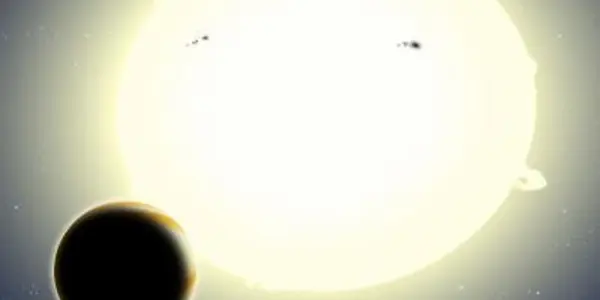
Detecting alien worlds is a significant challenge since they are small, faint, and close to their stars. The two most prolific techniques for finding exoplanets are radial velocity (looking for wobbling stars) and transits (looking for dimming stars).
A team at Tel Aviv University and the Harvard-Smithsonian Center for Astrophysics (CfA) has just discovered an exoplanet and the planet they found, Kepler-76b, was identified by the BEER algorithm; an acronym for relativistic BEaming, Ellipsoidal, and Reflection/emission modulations. BEER was developed by Professor Tsevi Mazeh and his student, Simchon Faigler, at Tel Aviv University in Israel and is a new method that relies on Einstein's special theory of relativity.

We all know that the Earth is in constant motion, rotating beneath our feet, but new research in Nature Geoscience
reveals that the center of the Earth is out of sync with the rest of the planet and is frequently speeding up and slowing down.Associate Professor Hrvoje Tkalcic from the ANU College of Physical and Mathematical Sciences and his team used earthquake doublets to measure the rotation speed of Earth’s inner core over the last 50 years and discovered that not only did the inner core rotate at a different rate to the mantle – the layer between the core and the crust that makes up most of the planet’s interior – but its rotation speed was variable.
Rather than Draconian measures to cut emissions, which will impact people in various regions and economic spheres unfairly, a better solution may be to simply keep places cooler on hot days, which will reduce fuel needed for air conditioning.And outer space can help, Stanford researchers say. They designed an entirely new form of cooling structure that cools even when the sun is shining - by reflecting sunlight back into the chilly vacuum of space.
The movement of nitrate through groundwater to streams can take decades to occur and that long lag time means that changes in the use of nitrogen-based fertilizer (the typical source of nitrate) may take decades to be fully observed in streams, according to a recent study.Water quality experts have been noting in recent years that nitrate trends in streams and rivers do not match their expectations based on reduced regional use of nitrogen-based fertilizer. The long travel times of groundwater discharge, like those documented in this study, have previously been suggested as the likely factor responsible for these observations.

The large majority of non-coding DNA, which is abundant in many living things, may not actually be needed for complex life in at least one carnivorous plant, Utricularia gibba, according to a paper in Nature.
U. gibba, the carnivorous bladderwort plant, genome is the smallest ever to be sequenced from a complex, multicellular plant. The researchers who sequenced it say that 97 percent of the genome consists of genes — bits of DNA that code for proteins — and small pieces of DNA that control those genes.