You Feel Colder As You Age: The Science Reason Why
Older people report feeling colder, enough that it is clearly happening, but why has been a mystery. Until now.
Older people report feeling colder, enough that it is clearly happening, but why has been a mystery. Until now.


Just because you can buy something doesn't mean it works. You can buy a home gym, for example, but it won't make you thin. However, there are some things you can buy that won't work even if you actually try to achieve a result.
You buy devices that control pests using ultrasonic frequencies - they are purported to work for mosquitoes, cockroaches, ants and now there are new versions targeting bed bugs, since those were in the news a lot.
A new paper reports the results of tests of four commercially available electronic pest repellent devices designed to repel insect and mammalian pests by using sound.
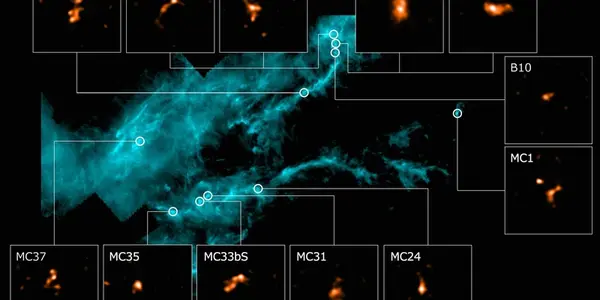
In the constellation Taurus, astronomers have found the youngest still-forming solar system yet seen - an infant star called L1527 IRS, surrounded by a swirling disk of dust and gas 450 light-years from Earth.
The star only has about one-fifth the mass of the Sun, but will likely pull in material from its surroundings and eventually match the Sun's mass. The disk surrounding the young star contains at least enough mass to make seven Jupiters, the largest planet in our Solar System.
Smoke from Arctic wildfires have been drifting over the Greenland ice sheet, tarnishing the ice with soot and making it more likely to melt under the sun, according to satellite observations.
NASA's Cloud-Aerosol Lidar and Infrared Pathfinder Satellite Observation (CALIPSO) satellite captured smoke from Arctic fires billowing out over Greenland during the summer of 2012. Researchers have long been concerned with how the Greenland landscape is losing its sparkly reflective quality as temperatures rise. The surface is darkening as ice melts away, and, since dark surfaces are less reflective than light ones, the surface captures more heat, which leads to stronger and more prolonged melting.
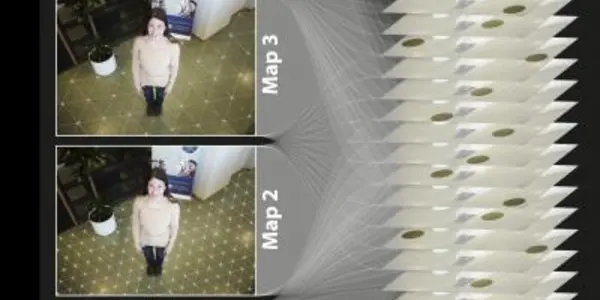
Rather than just a single sense of location, the brain has a number of "modules" dedicated to self-location. Each module contains its own internal GPS-like mapping system that keeps track of movement, and has other characteristics that also distinguishes one from another.
How many different sense of location? It's unclear. At least four and perhaps as many as 10, according to new research from the Kavli Institute for Systems Neuroscience, at the Norwegian University of Science and Technology. They say this is also the first time that researchers have been able to show that a part of the brain that does not directly respond to sensory input, called the association cortex, is organized into modules. The research was conducted using rats.
New cells develop in the heart but how these cardiac cells are born and how frequently they are generated remains unclear. New research from Brigham and Women's Hospital used a novel method to identify these new heart cells and describe their origins - a Multi-isotope Imaging Mass Spectrometry (MIMS) imaging system that demonstrates cell division in the adult mammalian heart.
The universe has always had some trace of heavy elements, such as carbon and oxygen, for as far back as astronomers could 'see'. These elements, originally churned from the explosion of massive stars, formed the building blocks for planetary bodies and eventually for life on Earth.
No more, say researchers who analyzed light from the most distant known quasar, ULASJ112010641, a galactic nucleus more than 13 billion light-years from Earth, and found matter with no discernible trace of heavy elements.
Cycling is safer than driving for young British males ages 17 to 20 - driving brings an almost five times greater risk per hour of an accident than cyclists of the same age.

If your pockets are empty and you have no money for roast beast this Christmas, there may still be hope. You could try remembering a better dinner and trick your brain into feeling full. That's episodic memory.
The memory of having eaten a large meal can make people feel less hungry hours after the meal, according to a paper by experimental psychologists at University of Bristol.
What Charles Darwin famously called "an abominable mystery", the apparent sudden appearance and rapid spread of flowering plants in the fossil record, is the topic of a paper which proposes new evidence that flowering plants - angiosperms - evolved and colonized various types of aquatic environments over about 45 million years in the early to middle Cretaceous Period.
Modern-day gypsies, Europe's widespread Romani population, are now as diverse in language, lifestyle, and religion as any demographic but they all share a common past.
And that past started about 1,500 years ago in northwestern India, according to the first genome-wide perspective on Romani origins and demographic history. With
If you want to go on a quest for solving the mysteries of deafness, discovering the genetic machinery in the inner ear that responds to sound waves and converts them into electrical impulses, the language of the brain, is your holy grail.
Scientists at The Scripps Research Institute (TSRI) say have identified just such a chalice; a critical component of this ear-to-brain conversion is the protein called TMHS. This protein is a component of the mechanotransduction channels in the ear, which convert the signals from mechanical sound waves into electrical impulses transmitted to the nervous system.
Lying, like anything else, can be done pretty well with some practice. Just like not everyone can be a world class pianist but everyone can sound decent with some time and effort, with a little work, one could learn to tell a lie that may be indistinguishable from the truth, say psychologists.
They say that lying is more malleable than previously thought, and with a certain amount of training and instruction, the art of deception can even be perfected.