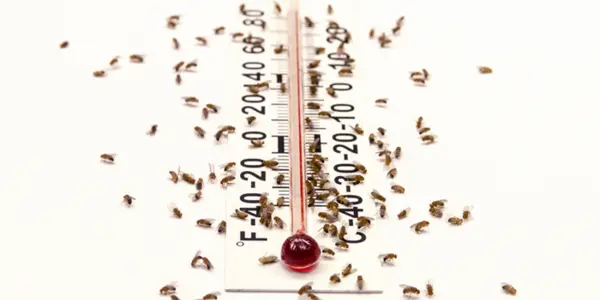
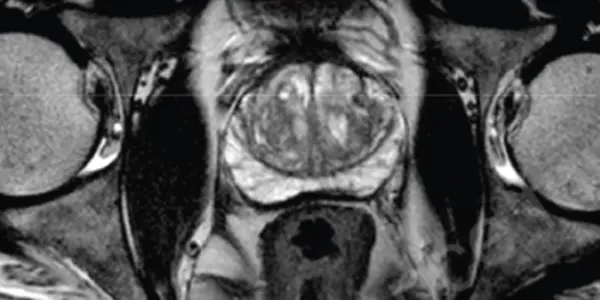
You Feel Colder As You Age: The Science Reason Why
Older people report feeling colder, enough that it is clearly happening, but why has been a mystery. Until now.
Older people report feeling colder, enough that it is clearly happening, but why has been a mystery. Until now.

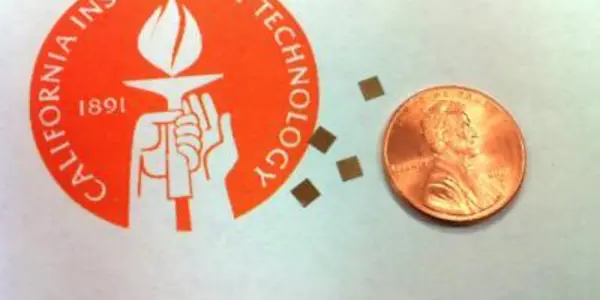
Want a microchip that operates 300 times the speed of chips today? Maybe some day.
Tiny, inexpensive silicon microchips developed by a pair of electrical engineers at the California Institute of Technology (Caltech) generate and radiate high-frequency electromagnetic waves, called terahertz (THz) waves, that fall into a largely untapped region of the electromagnetic spectrum—between microwaves and far-infrared radiation—and that can penetrate a host of materials without the ionizing damage of X-rays.
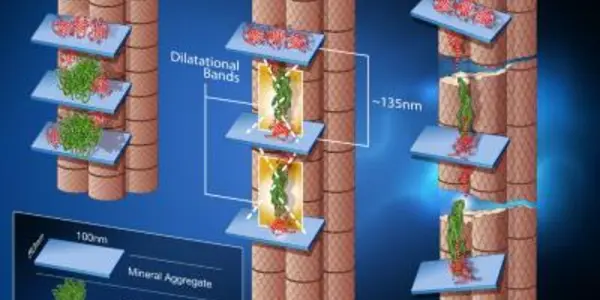
The little-understood protein osteocalcin plays a significant role in the strength of our bones, says a new paper, and the findings could lead to new strategies for fighting osteoporosis and lowering the risk of bone fracture.
Who came up with that? Biologists? Doctors? No, engineers.

From an evolutionary standpoint, homosexuality is a trait that should not develop and persist in the face of natural selection. Yet it exists in most cultures, among men and women. Analyses have noted that homosexuality can run in families, leading researchers to hypothesize a genetic underpinning of sexual preference but no gene or group of genes for homosexuality have been found, despite numerous studies searching for a genetic connection.
Public opinion on environmental issues such as climate change, deforestation, and toxic waste seems to fall along predictable partisan lines but they have little to do with science.
People who deny global warming, for example, conserve just as much energy as people who accept it. And even the unscientific term 'global warming' gains more acceptance across the board when it is replaced with the more accurate 'climate change'.
A new psychology paper even suggests that environmental messages framed in terms of conservative morals, describing environmental stewardship in terms of fending off threats to the "purity" and "sanctity" of Earth and our bodies, may help to narrow the partisan gap. How many conservative sociologists do you know?
An new American Cancer Society analysis found a strong inverse association between coffee and oral/pharyngeal cancer mortality. Real coffee, not that decaffeinated stuff.
The authors say people who drank more than four cups of coffee per day were at about half the risk of death of these often fatal cancers compared to those who only occasionally or who never drank coffee.
Previous epidemiologic studies have suggested that coffee intake is associated with reduced risk of oral/pharyngeal cancer so researchers examined associations of caffeinated coffee, decaffeinated coffee, and tea intake with fatal oral/pharyngeal cancer in the Cancer Prevention Study II, a prospective U.S. cohort study begun in 1982 by the American Cancer Society.
Jazz Pharmaceuticals plc announced that data from the largest safety trial to date of patients treated with Erwinaze® (asparaginase Erwinia chrysanthemi) based on results of a compassionate use protocol in patients who received Erwinaze as part of a multi-agent chemotherapeutic regimen for acute lymphoblastic leukemia who developed a hypersensitivity to E.coli-derived asparaginase.
Citizen science has been around as long as there have been citizens. And science. But with the rise of private- and government-controlled research, science is more of an occupation. Areas like astronomy and paleontology still get valuable contributions from 'amateur' scientists but for the most part when people think of science they think of highly-paid academics and corporate labs.
If you are in the Western world, you likely know the tale of the Three Wise Men who brought gifts for the baby Jesus. The value of gold is still obvious today, but while people have heard of myrrh and frankincense, most don't know what they were for, or why anyone would bring them all that distance to give to a newborn.
Frankincense and myrrh are fragrances that were quite valuable at the time and just as impractical for a baby as gold - but they are also still big business today, though not quite as valuable as gold. Just in Ethiopia, frankincense is a 4,000 ton per year industry. One Boswellia papyrifera tree from which the resin for frankincense is harvested will typically yield about 200g per year.
One way to clean up hazardous heavy metals like arsenic, lead and mercury in contaminated materials could be to use waste from the processing and canning of onions (Allium cepa L.) and garlic (Allium sativum L.)
Biotechnologists Rahul Negi, Gouri Satpathy, Yogesh Tyagi and Rajinder Gupta of the GGS Indraprastha University in Delhi studied the influence of acidity or alkalinity, contact time, temperature and concentration of the different materials present to optimize conditions for making a biological heavy metal filter for industrial-scale decontamination.
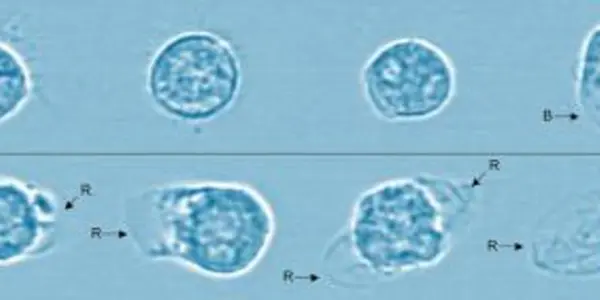
A report based on in vitro tests comparing the digestion of fresh human breast milk and nine different infant formulas found that free fatty acids created during the digestion of infant formula cause cellular death that may contribute to necrotizing enterocolitis, a severe intestinal condition that is often fatal and occurs most commonly in premature infants.
Facial transplantation has ushered in a new era of craniofacial surgery but already surgeons are pushing the boundaries of what can be achieved.
Most candidates for facial transplant have loss of soft tissues only, like skin, muscle, blood vessels, and nerves. Although still a rare and relatively new procedure, facial transplantation now offers a reconstructive option for patients with severe facial deficits and so doctors are creating a roadmap for work on patients with extensive facial defects, including loss of the normal bone and soft tissue landmarks. 'Reverse craniofacial planning' approach can restore normal facial relationships.
Experimental evidence by psychologists concludes that the negative effects of playing violent video games can accumulate over time.
The psychologists found that people who played a violent video game for three consecutive days showed increases in aggressive behavior and hostile expectations each day they played. Those who played nonviolent games showed no meaningful changes in aggression or hostile expectations over that period.
Other experimental efforts have shown that a single session of playing a violent video game increased short-term aggression but this is the first to show longer-term effects, according to Brad Bushman, co-author of the study and professor of communication and psychology at Ohio State University.