You Feel Colder As You Age: The Science Reason Why
Older people report feeling colder, enough that it is clearly happening, but why has been a mystery. Until now.
Older people report feeling colder, enough that it is clearly happening, but why has been a mystery. Until now.


Science can make better corn and, well, better everything - except perhaps the Christmas tree.
The genome of conifers like spruce, pine and fir has remained pretty much the same for the last 100 million years - a remarkable feat of genomic stability. Researchers analyzed the genome of conifers and compared it to that of flowering plants. Both plant groups stem from the same ancestor but diverged about 300 million years ago.

The Linac Coherent Light Source (LCLS) at the SLAC National Accelerator Laboratory is using X-rays to measure, in atomic detail, a key process at work in extreme plasmas like those found in stars, the rims of black holes and other massive cosmic phenomena.
Wilms' tumors, a type of cancer typically found in the kidneys of young children, might have a new weapon against them. A new therapeutic approach that one day might be used to treat some of the more aggressive types of this disease could be possible now that scientists have isolated cancer stem cells that lead to the growth of the tumors.

The Hubble Space Telescope has detected seven primitive galaxies formed more than 13 billion years ago, and also a candidate, at redshift 11.9, for the record for the most distant galaxy found to date.
The images offer the deepest ever view of the Universe at near-infrared wavelengths, which capture the redshifted light of early galaxies. Because light takes so long to travel from these remote objects, astronomers are looking back in time and seeing those galaxies as they appeared just 600 million years after the Big Bang.
Do you prefer to have a few close friends or a larger social circle that is less deep? Social psychologists say your preference reflect your personality but also individual circumstances - like socioeconomic conditions.

The slow loris (Nycticebus) is a primate genus closely related to the lemur and found across South East Asia, from Bangladesh and China's Yunnan province to the island of Borneo.
The slow loris is rare amongst primates for having a toxic bite, and is rated as Vulnerable or Endangered on the IUCN Red List. Maybe not so endangered, since researchers have found a brand new species. A team's analysis of the primate's distinctive facial fur markings, published in the American Journal of Primatology, reveals the existence of one entirely new species, while two possible sub-species are being officially recognized as unique.

A miniature extraterrestrial version of Africa's Nile River Valley has been spotted on Saturn’s moon Titan - it stretches more than 400 km from its "headwaters" to a large sea. Have you ever before seen such a large river system in high resolution outside Earth? No, you have not. Scientists deduce that the river is filled with liquid because it appears dark along its entire extent in the high-resolution radar image, indicating a smooth surface.
Titan is the only other world we know of that has stable liquid on its surface. While Earth’s hydrologic cycle relies on water, Titan’s equivalent cycle involves hydrocarbons such as ethane and methane.
Today it is common to refer to sugar and high-fructose corn syrup as "sugary ingredients." Sugar produced from sugar cane or sugar beets is called sucrose, which is a chemical compound in which glucose and fructose -- two different six-carbon, so-called simple sugars -- are chemically bound together.
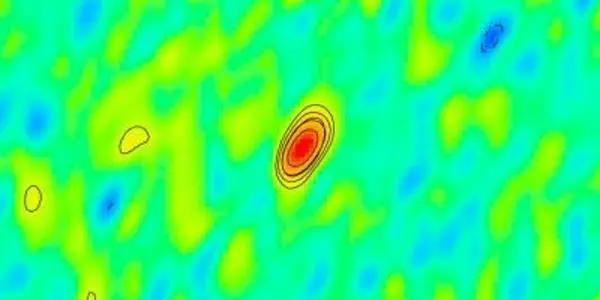
In January of 2012, a new X-ray source flared and rapidly brightened in the Andromeda galaxy (M31), l2.5 million light-years from earth. The event was classified as an ultraluminous X-ray source (ULX), the second ever seen in M31 and efforts with X-ray telescopes and radio observatories resulted in the first detection of radio-emitting jets from a stellar-mass black hole outside our own galaxy.
A ULX is thought to be a binary system containing a black hole that is rapidly accreting gas from its stellar companion. To account for the high-energy output, gas must be flowing into the black hole at a rate very near a theoretical maximum - which astronomers do not yet fully understand.
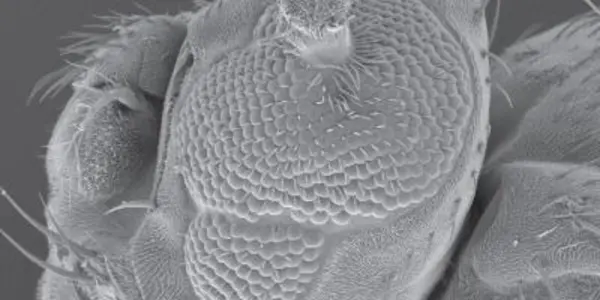
Retinoblastoma tumor suppressor proteins is, shall we say, untraditional. But it could mean new ways to treat cancer.
As an organism grows, proteins essential for fueling its prosperity typically toe a tight line, performing their jobs at the right place and time. If these proteins go rogue, disasters such as cancer can result.
It's a good idea to know a second language for lots of reasons but English has long been the business standard.
How do cities ranks? A new list of 25 global cities has the answer.
The average premiums paid by employer-sponsored family health insurance plans rose from $9,249 to $15,022 per year between 2003 and 2011 - a 62 percent increase, according to a new Commonwealth Fund report. The new report by the advocacy group tracks state trends in employer health insurance coverage and shows that health insurance costs rose faster than incomes in all states.
Workers are also paying more out-of-pocket costs; as employer costs rose, employee payments for their share of health insurance premiums also rose, by 74 percent on average, and deductibles more than doubled, up 117 percent between 2003 and 2011, they say.